Why Tuscan Olive Oil Tastes Different: Climate, Varieties, and Tradition Explained
Pour a good Tuscan extra virgin olive oil and you notice it straight away — a vivid green-gold colour, a fresh herbal scent, and that unmistakable peppery catch at the back of your throat. That sensation is not a quirk; it is the result of a very specific set of conditions that exist almost nowhere else in Italy. Understanding what drives the distinctive Tuscan olive oil taste means looking at three things together: the cool hillside climate, the native olive varieties, and centuries of tradition that shape when and how the olives are picked — as BRUMI’s cultivar guide thoroughly documents.
The Tuscan Climate: Cool Hills, Big Flavour
Tuscany sits in what the FAO classifies as the cooler northern olive-growing zone of Italy — a genuinely different environment from the sun-drenched flatlands of Puglia or Sicily. The hillside groves of Chianti, Maremma, and the Lucchesi hills sit at elevations where temperatures swing noticeably between day and night.
That thermal variation matters enormously. The day-to-night temperature shift encourages polyphenol accumulation inside the fruit, giving Tuscan oils their characteristic fruity, herbaceous notes with pronounced bitterness and pungency. Polyphenols are the plant compounds responsible for the peppery throat sensation — and in Tuscany, the climate helps build them up naturally.
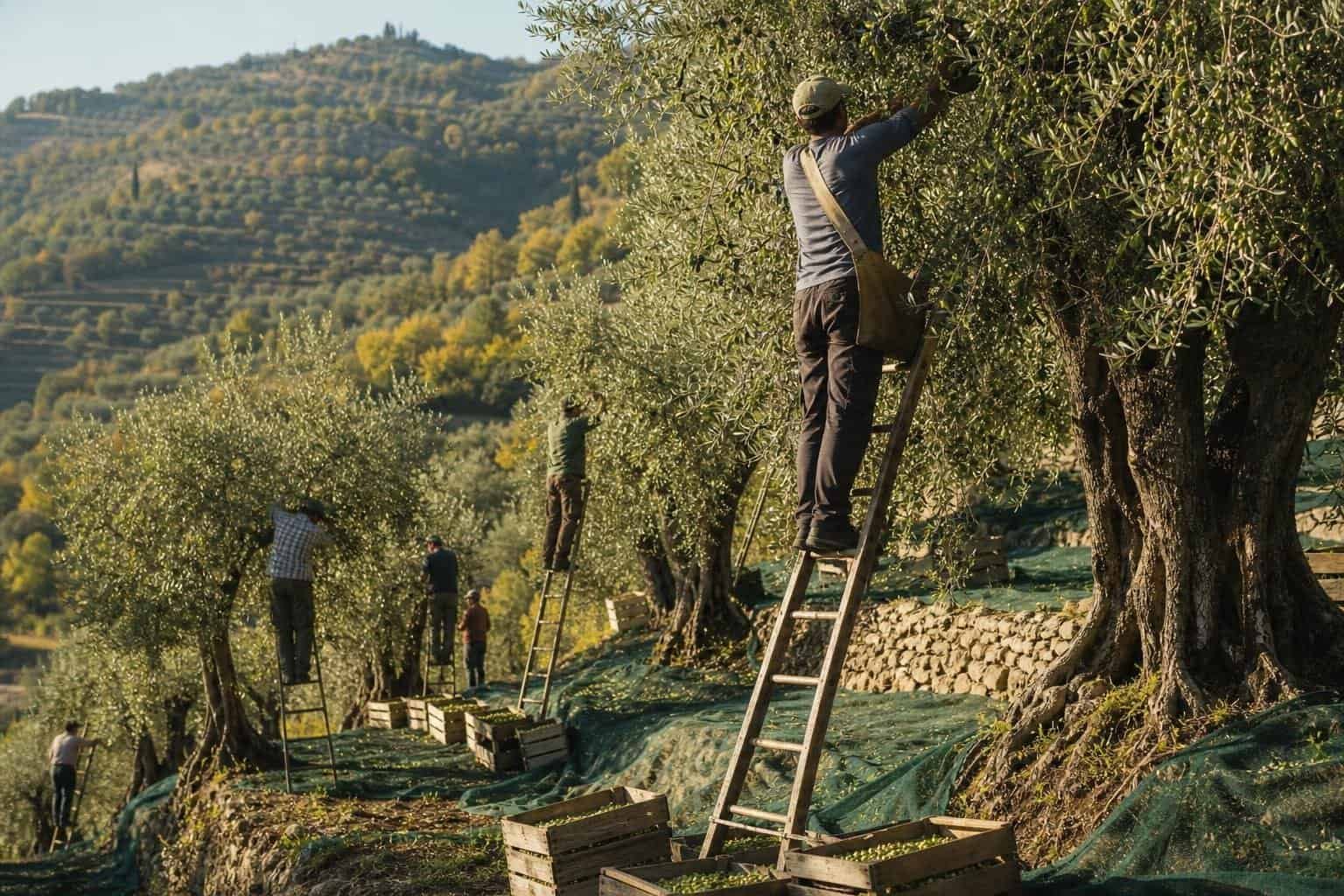
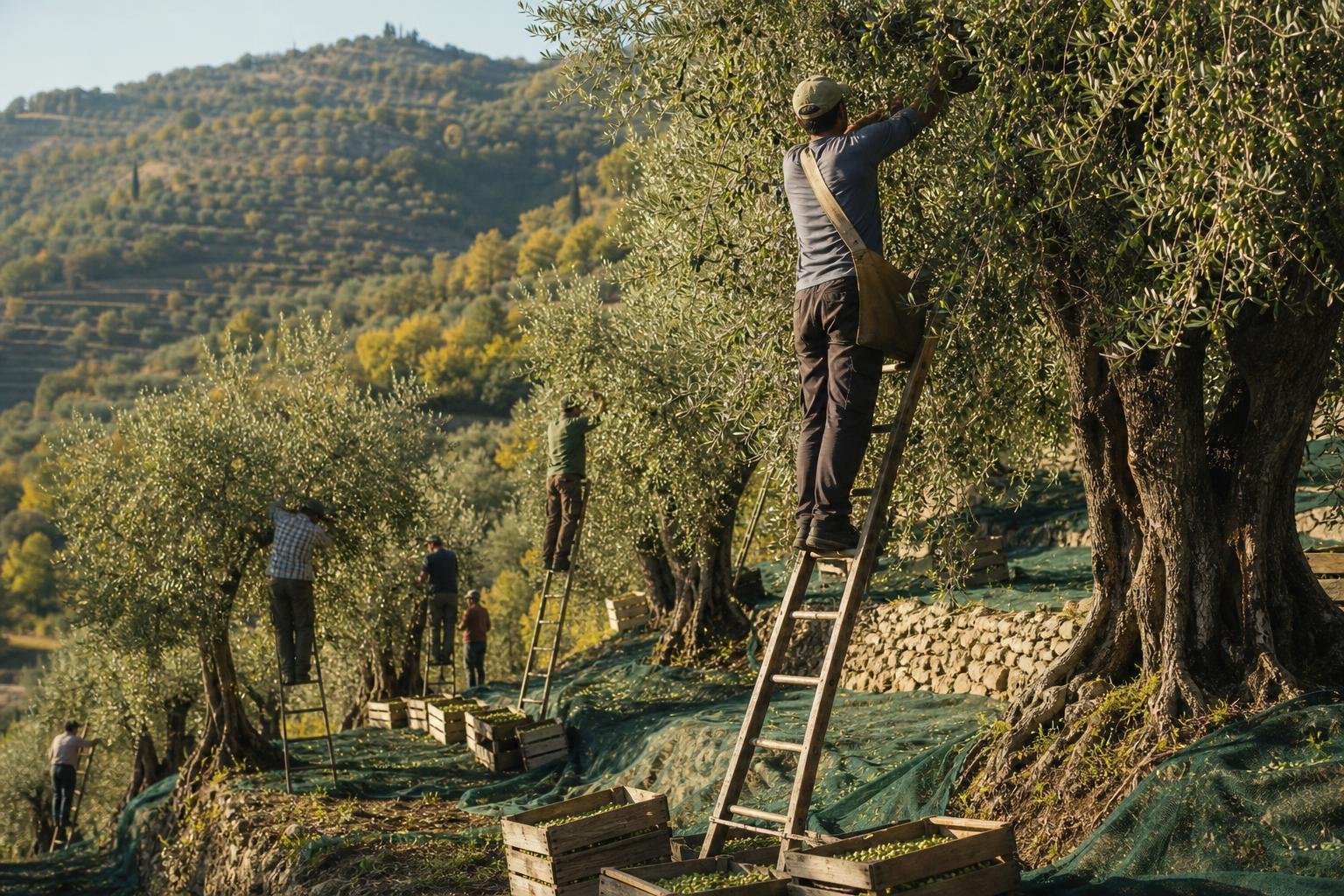
The cooler conditions also mean a shorter, more pressured growing season. Tuscan farmers have always needed to pick earlier than producers in the south, before winter frost arrives. Early harvesting, when fruit is still a mix of green and purple rather than fully ripe, locks in more polyphenols and produces a more intense, greener oil.
Compare that to Puglia or Sicily in the deep south, where the climate is warmer, the season longer, and olives ripen more fully before picking. The result there is noticeably different:
-
Puglia (Coratina, Ogliarola): softer, rounder, more buttery, with a milder bitterness
-
Sicily (Nocellara del Belice): buttery texture, fruity aroma, hints of fresh tomato and almond
-
Tuscany (Frantoio, Moraiolo, Leccino): green, herbaceous, peppery, with marked bitterness and a lingering finish
Puglia accounts for around 40% of Italy’s total olive oil output, while Tuscany contributes a modest 2–3%. That scarcity is part of why genuinely Tuscan extra virgin olive oil tends to be priced accordingly — and why it is worth knowing exactly what you are buying.
The Three Varieties That Define Tuscan Extra Virgin Olive Oil
Tuscany is home to an astonishing 119 olive cultivars — a biodiversity almost unmatched anywhere in Italy. But three varieties dominate the groves and define the classic flavour profile. According to Biology Insights, Frantoio, Leccino, and Moraiolo together make up around 80% of Tuscany’s olive-growing heritage.
Frantoio
The workhorse of Tuscan production. Frantoio olives have an oil content of 17–22% and yield an extra virgin oil known for its intense green colour and notes of fresh grass, artichoke, and green almond, with a balanced bitterness and peppery finish. It is the variety chefs reach for when they want an oil with real presence on the plate.
Leccino
The most adaptable of the three, and the most widely planted across Italy because it handles cold and drought well. Leccino produces a delicate to medium-intensity oil — balanced pungency, mild bitterness, with notes of fresh almond and subtle wild herbs. It softens blends and adds roundness to the final oil.
Moraiolo
The variety most responsible for Tuscany’s distinctive bite. Moraiolo is sometimes called the “two-cough” variety — a term used affectionately among olive oil enthusiasts to describe oils so peppery they prompt a cough on the finish. The oil is prized for aromas of artichoke, herbs, and a robust peppery character driven by high polyphenol content.
Most classic Tuscan extra virgin olive oils are blends of all three — combined to balance intensity with smoothness. The proportions shift between producers and between sub-regions, which is part of why Chianti Classico DOP oil tastes different from a Lucca DOP, even though both are Tuscan.
For a deeper look at how Tuscan extra virgin olive oil compares across sub-regions and what to look for on the label, the guide to Tuscan Extra Virgin Olive Oil: What Makes It Different walks through the key markers of authenticity.
Tradition, Timing, and How the Oil Is Made
Climate and varieties set the stage, but Tuscan tradition determines when and how the olives are harvested — and that decision shapes everything else.
Tuscan farmers have harvested early for generations, partly out of necessity (winter frosts arrive early in the hills) and partly because they learned that early-picked olives produce the style of oil the region is known for. The olives go from tree to mill quickly — Chianti Classico DOP rules, for instance, require pressing within three days of harvest. That speed matters: the longer olives sit after picking, the more the oil degrades.
Cold-pressing preserves the aromatic compounds and polyphenols that make the oil what it is. The Toscano IGP certification — which covers the whole region — requires that olives be grown and processed within Tuscany, with attention to both tradition and quality. Tuscany holds four DOP certifications and one IGP for extra virgin olive oil: Toscano IGP, Chianti Classico DOP, Terre di Siena DOP, Lucca DOP, and Seggiano DOP.
The elevation of the groves also plays a role. Tuscan olive cultivation typically takes place at around 200–250 metres above sea level in the hillside areas — higher than most southern Italian production, which further contributes to the slower ripening and more concentrated flavour compounds in the fruit.
-
Early harvest (late October to early November): green, peppery, high-polyphenol profile
-
Cold-pressing: preserves aromatics and polyphenol content
-
Hill cultivation at altitude: slow ripening, more complex fruit
-
Short tree-to-mill time: maintains freshness and reduces oxidation
-
Blend of Frantoio, Leccino, and Moraiolo: achieves balance of bitterness, pepper, and fruit
If you want to see how these qualities translate directly into the kitchen, the article on How to Use Pasquini Olive Oil in the Kitchen offers ten practical everyday ideas. Or if you want to prepare a good meal you can take a look here: Authentic Italian Meal with Mancini Pasta & Premium Ingredients
Pasquini Extra Virgin Olive Oil: Freshly Pressed Tuscan Quality
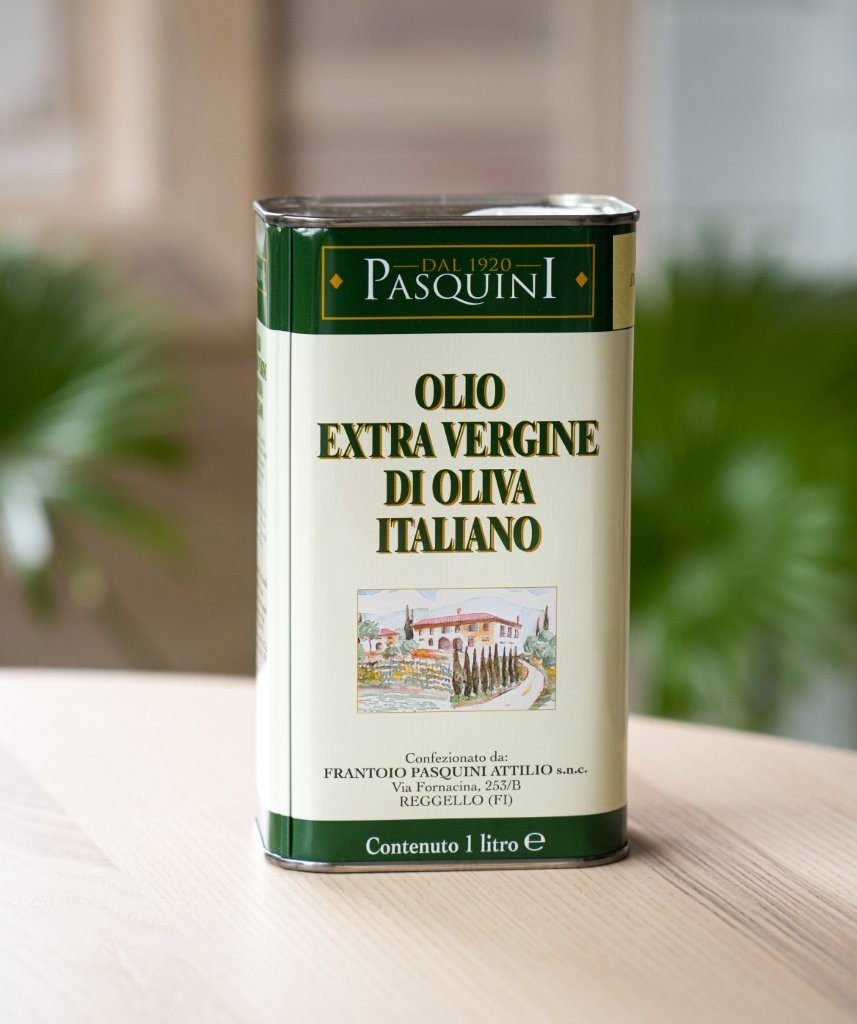
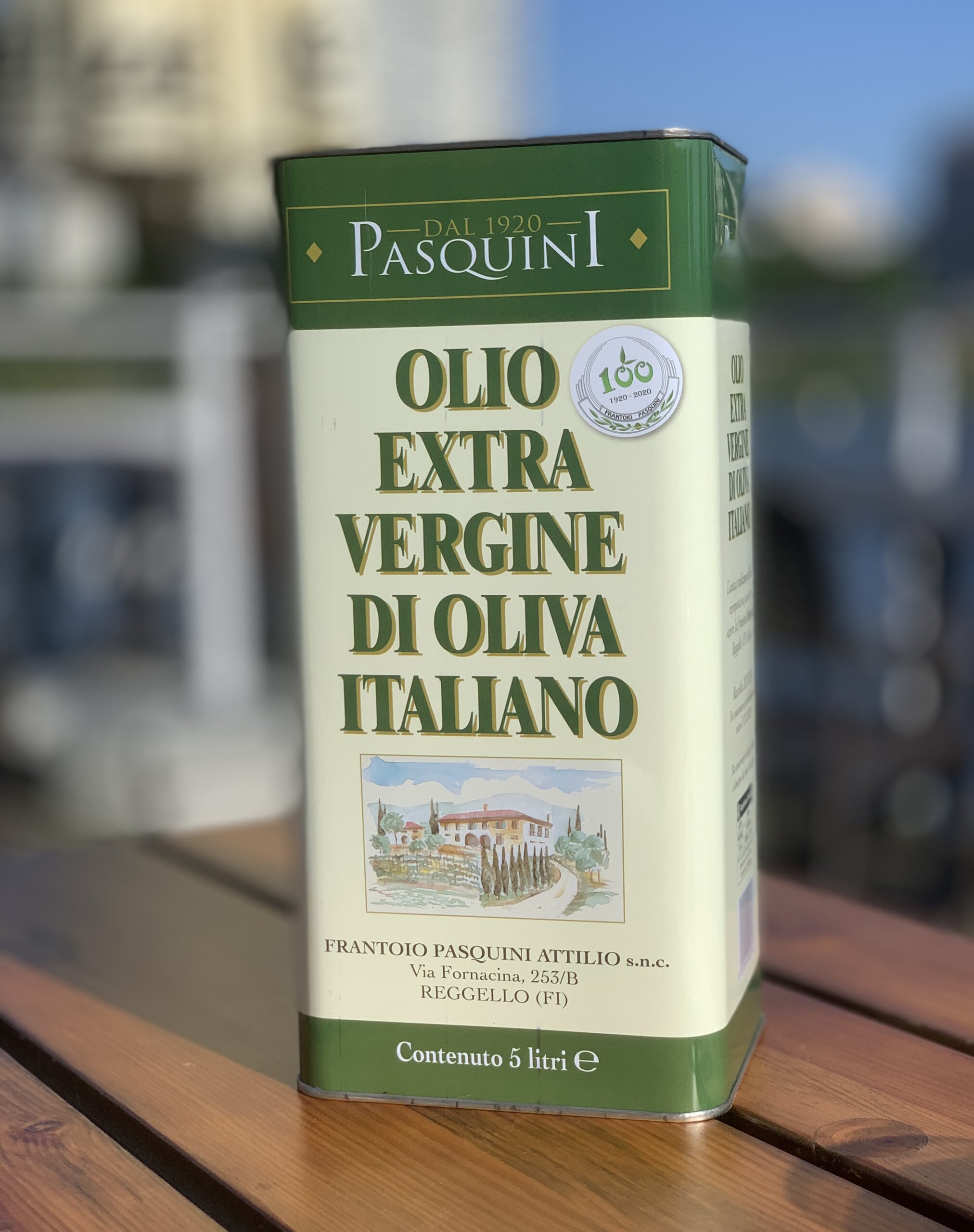
Pasquini extra virgin olive oil brings together exactly the qualities described above — produced from Tuscan olives, cold-pressed, and available freshly pressed for the 2025 harvest. The oil works beautifully as a finishing drizzle over soups, grilled vegetables, bruschetta, or pasta, where its herbaceous character and peppery finish can really come through. It also holds up well in everyday cooking, adding depth without overwhelming more delicate ingredients.
Pasquini Extra Virgin Olive Oil vs Supermarket Oils
Whether you cook for two or feed a family regularly, there is a size that fits:

What the Flavour Difference Really Means for Your Kitchen
Once you understand why Tuscan olive oil tastes the way it does, it becomes much easier to use it well. The peppery finish and herbal bite are not just pleasant sensory notes — they signal high polyphenol content and freshness. A good Tuscan extra virgin olive oil is at its best used raw or as a finishing oil, where those flavours stay vivid and intact.
Southern Italian oils, with their softer, fruitier, more buttery profiles, are excellent too — and often better suited to cooking at higher heat, where the more delicate character of a Tuscan oil might get lost. Neither style is objectively superior; they simply serve different purposes in the kitchen.
When shopping, look for the harvest date on the label — not just a best-before date. The harvest date tells you directly when the olives were picked, which determines freshness and polyphenol content. Tuscany contributes just 2–3% of Italy’s total olive oil output, so genuine Tuscan extra virgin olive oil is always a considered choice rather than a commodity purchase. The guide to recognising genuine Tuscan EVOO is a useful companion when navigating labels.
The combination of cool hillside climate, the trio of Frantoio, Leccino, and Moraiolo olives, and generations of early-harvest tradition is what makes the Tuscan olive oil taste so recognisable — and so hard to replicate anywhere else.
Frequently Asked Questions
Q: Why does Tuscan olive oil taste more peppery than olive oils from southern Italy?
A: The peppery sensation comes from high polyphenol content, which builds up when olives are grown at cooler hillside elevations and harvested early — conditions typical of Tuscany but much less common in the warmer south.
Q: What are the main olive varieties used in Tuscan extra virgin olive oil?
A: The three dominant varieties are Frantoio, Leccino, and Moraiolo, which together make up around 80% of Tuscany’s olive-growing heritage and are almost always blended to create the classic Tuscan flavour profile.
Q: How can I tell if I’m buying genuine Tuscan olive oil?
A: Look for a clearly stated harvest date on the label, check for a Toscano IGP or one of Tuscany’s four DOP certifications (Chianti Classico, Terre di Siena, Lucca, or Seggiano), and buy from producers who are transparent about their origin and pressing methods.