How to Use Pasquini Olive Oil in the Kitchen: 10 Simple Ideas for Everyday Meals
A good extra virgin olive oil can quietly change the way everyday meals taste — and Pasquini olive oil is the kind you reach for more than you expect. Whether you’re tossing pasta, roasting vegetables or just dunking bread before dinner, these ten ideas will help you get more from every bottle. For a deeper look at what shapes the flavour of a Tuscan-style EVOO, Why Tuscan Olive Oil Tastes Different covers the essentials in plain language. According to UC Davis Health, olive oil contains the highest levels of monounsaturated fatty acids (MUFAs) of any plant-based cooking oil — and using it daily fits neatly within the recommended 27 grams of added oils per day for a standard 2,000-calorie diet.
Why EVOO Belongs at Every Stage of Cooking
There’s a common idea that extra virgin olive oil is too delicate to cook with — that you should save it purely for salads. That’s not quite right. The Culinary Institute of America, in collaboration with the North American Olive Oil Association, actually recommends olive oil for all methods of cooking, noting that the best, most aromatic extra virgin oils are ideal for raw or finishing use — but that EVOO can handle heat at moderate temperatures without losing its value.
Research cited by the North American Olive Oil Association found that while polyphenol content decreased by around 40% at 258°F and up to 75% at 338°F compared to raw EVOO, the levels of antioxidants and polyphenols remained relatively high even after heating. That’s reassuring when you want to sauté a quick soffritto or roast a tray of vegetables on a weeknight.
The practical rule of thumb:
-
Raw and finishing uses — let the full flavour shine; polyphenols stay intact
-
Low to medium heat (sautéing, light frying, roasting) — EVOO handles it well
-
Very high heat or deep frying — this is where more refined oils are better suited
Keeping that in mind, here are ten ways to weave Pasquini olive oil into your cooking week.
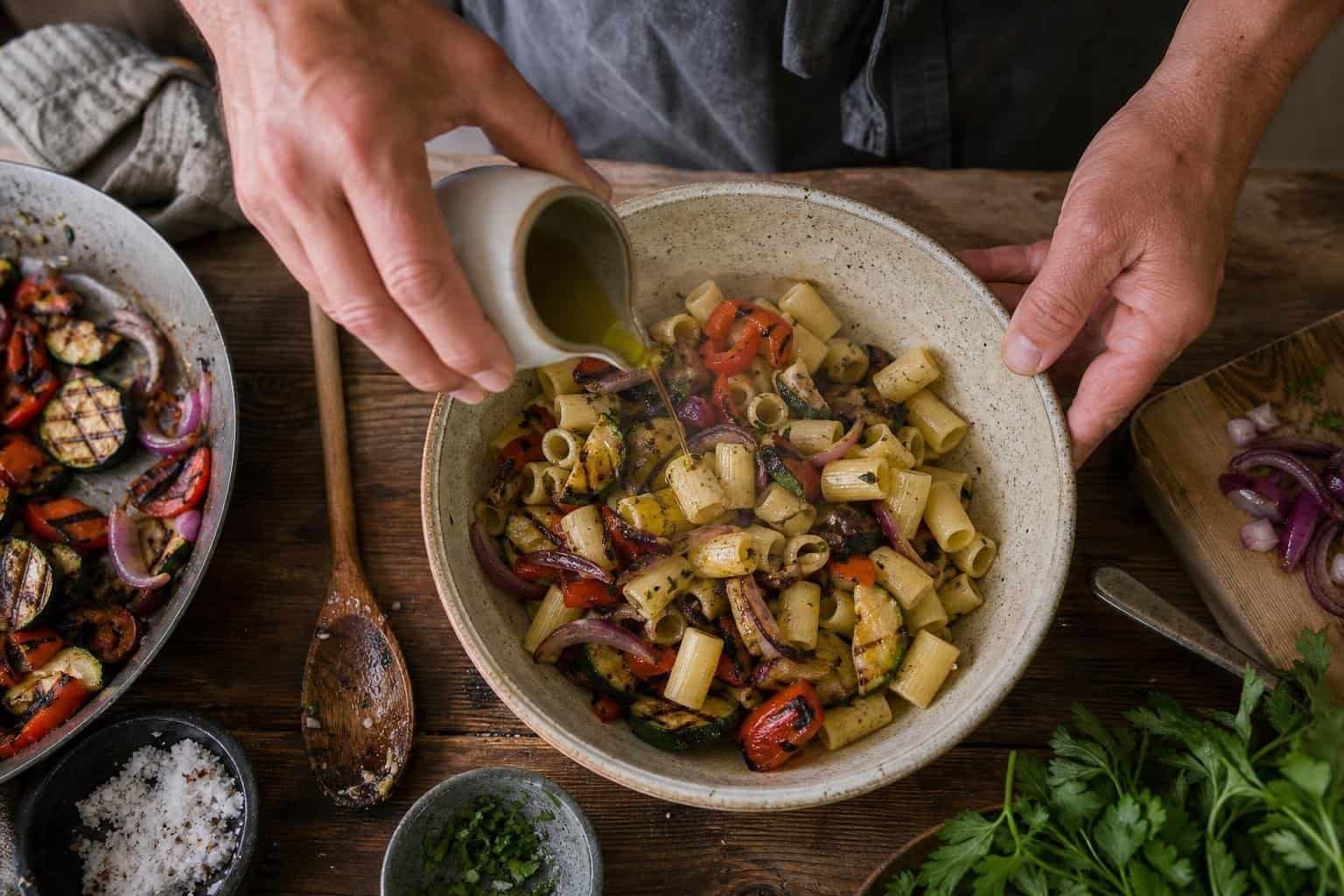
[IMAGE: home cook pouring extra virgin olive oil from a small ceramic jug over a bowl of maccheroni pasta with grilled vegetables, overhead shot on a kitchen counter, hands and steam visible, candid documentary style]
10 Practical Ways to Use Pasquini Olive Oil Every Day
1. The finishing drizzle — your most important habit
A thin drizzle of good EVOO over a finished dish does something no amount of earlier seasoning can replicate. It adds aroma, a slight peppery finish, and a silky texture that ties the plate together. Try it over soups, roasted cauliflower, grilled fish, or a simple bowl of Mancini maccheroni tossed with just garlic and parsley.
2. Pasta water and tossing
Add a generous spoonful to the drained pasta before saucing — it prevents sticking and coats each tube with flavour. With Mancini Maccheroni’s bronze-die texture and porous surface, the oil clings and creates a subtle richness before the sauce even arrives.
3. Salad dressings from scratch
Whisking EVOO with lemon juice, a pinch of salt, and pepper takes about 60 seconds and beats any bottled alternative. The monounsaturated fats also help the body absorb fat-soluble vitamins from leafy greens — a small practical bonus beyond flavour.
4. Sautéing aromatics
Start almost any Italian-inspired dish — a tomato sauce, a bean stew, a quick aglio e olio — with a splash of Pasquini olive oil warming in the pan. It carries the flavour of garlic and onion into the whole dish in a way neutral vegetable oil simply doesn’t.
5. Roasting vegetables
Toss your vegetables thoroughly in olive oil before they go into the oven. The oil coats rather than absorbs, which means the vegetables roast more evenly and develop better caramelisation. A light hand is all you need — especially with Borettana onions, where the sweetness does most of the work.
6. Bread dipping
Pour a little into a small bowl, add a pinch of flaky salt and maybe a grind of black pepper. That’s it. Good bread plus good oil is one of those combinations that never gets old.
7. Marinades for meat, fish, or vegetables
Olive oil forms a thin barrier around food during marinating that helps lock in natural moisture — making it particularly effective before grilling. Combine it with lemon juice, garlic, and whatever herbs you have; the result is noticeably juicier than dry-spiced alternatives.
8. Soup finishing
A thread of olive oil over a bowl of minestrone, lentil soup, or white bean stew right before serving adds a completely different layer. The warmth of the soup blooms the oil’s aroma instantly. It’s one of those small moves that feels very Italian and takes under five seconds.
9. Baking — a butter swap
EVOO works as a substitute for butter or neutral oil in many savoury bakes: focaccia, flatbreads, olive oil cakes. It keeps baked goods moist and adds a subtle character that butter doesn’t. For savoury breads, Pasquini’s grassy, peppery notes are a genuinely good match.
10. A simple pasta sauce base
For days when the fridge is nearly empty, olive oil, garlic, good pasta, and a handful of parsley or chilli flakes is a real meal. How to Build an Authentic Italian Meal pairs Pasquini olive oil and Mancini pasta with other quality Italian ingredients for a fuller picture of how they work together on the plate.
Three Products Worth Keeping in Your Kitchen
These ten ideas work best when the ingredients themselves are good. A freshly pressed extra virgin olive oil, a pasta with real texture, and a ready-made vegetable that’s already been transformed in oil — those three things cover a surprising number of everyday meals without much effort.
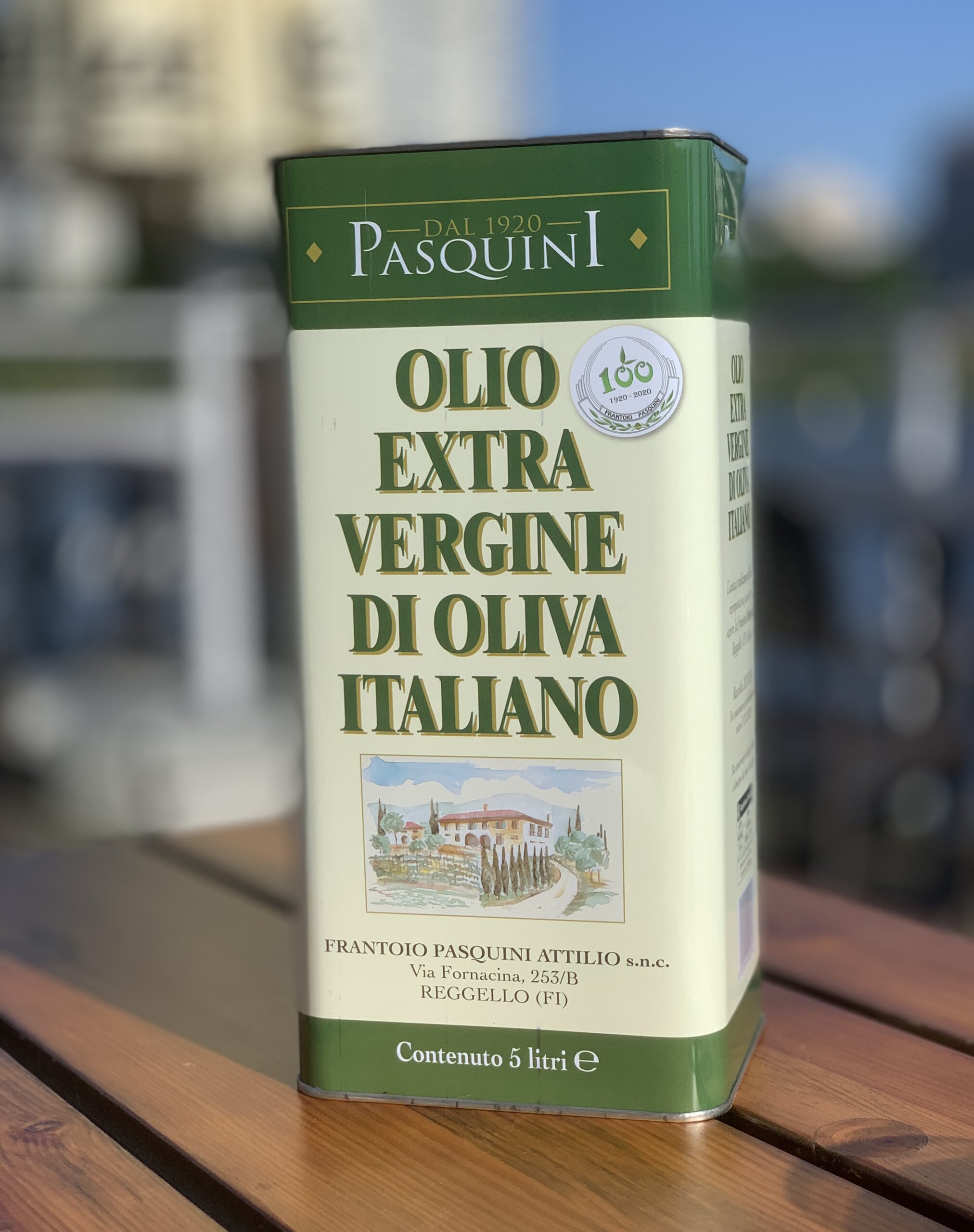
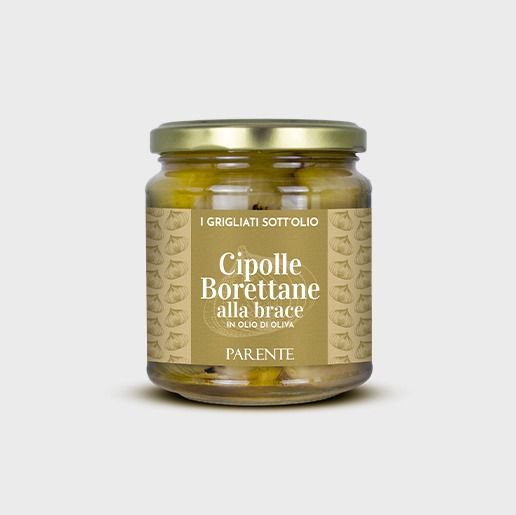
The Pasquini Olive Oil Extra Virgin 5L freshly pressed 2025 means you’ll have enough for generous daily use — finishing, cooking, dressings — without rationing. Maccheroni Mancini brings the kind of bronze-die texture that makes a simple aglio e olio feel properly satisfying. And Grilled Borettana onions in olive oil are one of those antipasto staples that go just as well alongside a main as they do on a board before dinner.

A Few Final Thoughts on Getting the Most from Your Olive Oil
The simplest upgrade you can make with Pasquini olive oil is using it as a finishing oil more consistently. It’s the habit that most noticeably improves everyday food — and one that costs almost nothing extra once you have a good bottle on the counter.
For cooking over heat, moderate temperatures are your friend. The Culinary Institute of America notes that olive oil is suitable for frying and sautéing — it stays stable and keeps more nutritional value than many other oils when used at the right temperatures. Knowing this removes any hesitation about reaching for your EVOO when the pan goes on.
If you want to understand more about what to look for when choosing a quality bottle, How to Recognise Genuine Tuscan Extra Virgin Olive Oil is a useful and friendly guide to the key markers. Pair that knowledge with a 5-litre freshly pressed bottle, a packet of Mancini pasta, and the ideas above — and most weeknight meals quietly take care of themselves.
Frequently Asked Questions
Q: Can I cook with Pasquini extra virgin olive oil over heat, or should I only use it cold?
A: You can use it for low to medium heat cooking such as sautéing and roasting. For very high heat or deep frying, a more refined oil is better suited — reserve your best EVOO for finishing and raw applications to preserve the most flavour and polyphenols.
Q: How much olive oil should I be using each day?
A: The 2020–2025 Dietary Guidelines for Americans recommends around 27 grams (just under 2 tablespoons) of added oils per day for a 2,000-calorie diet — spread across dressings, cooking, and finishing uses, that’s easy to reach naturally.
Q: Why does Mancini Maccheroni work especially well with olive oil–based sauces?
A: Mancini extrudes its pasta through bronze dies and slow-dries it at low temperatures, giving the pasta a rough, porous surface that holds sauce — including olive oil–based ones — much more effectively than smoother industrial pasta.