How to Make an Authentic Italian Pasta Dinner with Mancini
A truly authentic Italian pasta dinner starts long before the pot hits the stove — it starts in the field. Mancini Pastificio Agricolo, based in the heart of Le Marche, Italy, grows and harvests its own durum wheat, mills it, and shapes it into pasta — all on the same estate. Italy produces around 3.3 million tonnes of pasta per year across more than 139 factories, but only one producer in the entire country can call itself a true farmstead pasta maker: Mancini.
From Field to Fork: The Mancini Story
The Mancini family has been farming wheat in Le Marche since 1938, when Mariano Mancini founded the family’s agricultural estate. Three generations later, his grandson Massimo — an agronomist by training — built a pasta factory right in the middle of those same golden fields.
The idea was straightforward but genuinely rare: produce pasta exclusively from wheat grown and harvested on their own land, year after year. As Lorenzo Mancini, the fourth generation of the family, puts it: “We are first farmers, then pasta makers.”
According to Zingerman’s Community of Businesses, four distinct wheat varieties go into Mancini pasta — Maestà, Nazareno, Farah, and Nonno Mariano (the last one named for Massimo’s grandfather and developed with agronomist Oriana Porfiri). Each harvest brings slightly different flavour characteristics, making every batch genuinely seasonal.
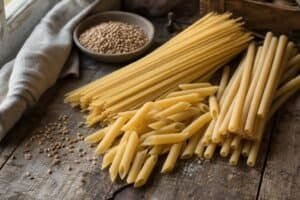
What makes this matter in the kitchen? The wheat is milled fresh, mixed at low temperature, extruded through bronze dies, and slow-dried for up to 48 hours for long formats. That rough, porous surface — a hallmark of bronze-drawn pasta — means sauce clings to every strand or tube instead of sliding off.
The Italian Techniques That Make the Difference
Great pasta starts with the right water ratio. A useful rule of thumb used in Italian culinary tradition is 1 litre of water per 100 g of dry pasta — so a full 500 g pack needs about 5 litres. Give the pasta room to move freely as it cooks.
Salt the water generously before adding the pasta. Italians typically reach for coarse sea salt here, and the water should taste pleasantly seasoned — not just a pinch. This is the one moment you can season the pasta itself from the inside out.
Cook until al dente — tender but with a gentle resistance when you bite. The Accademia Italiana Chef describes it well: al dente pasta should “oppose a slight resistance to chewing” without any hard white core at the centre. Taste a piece a minute or two before the package time is up — that’s the most reliable guide.
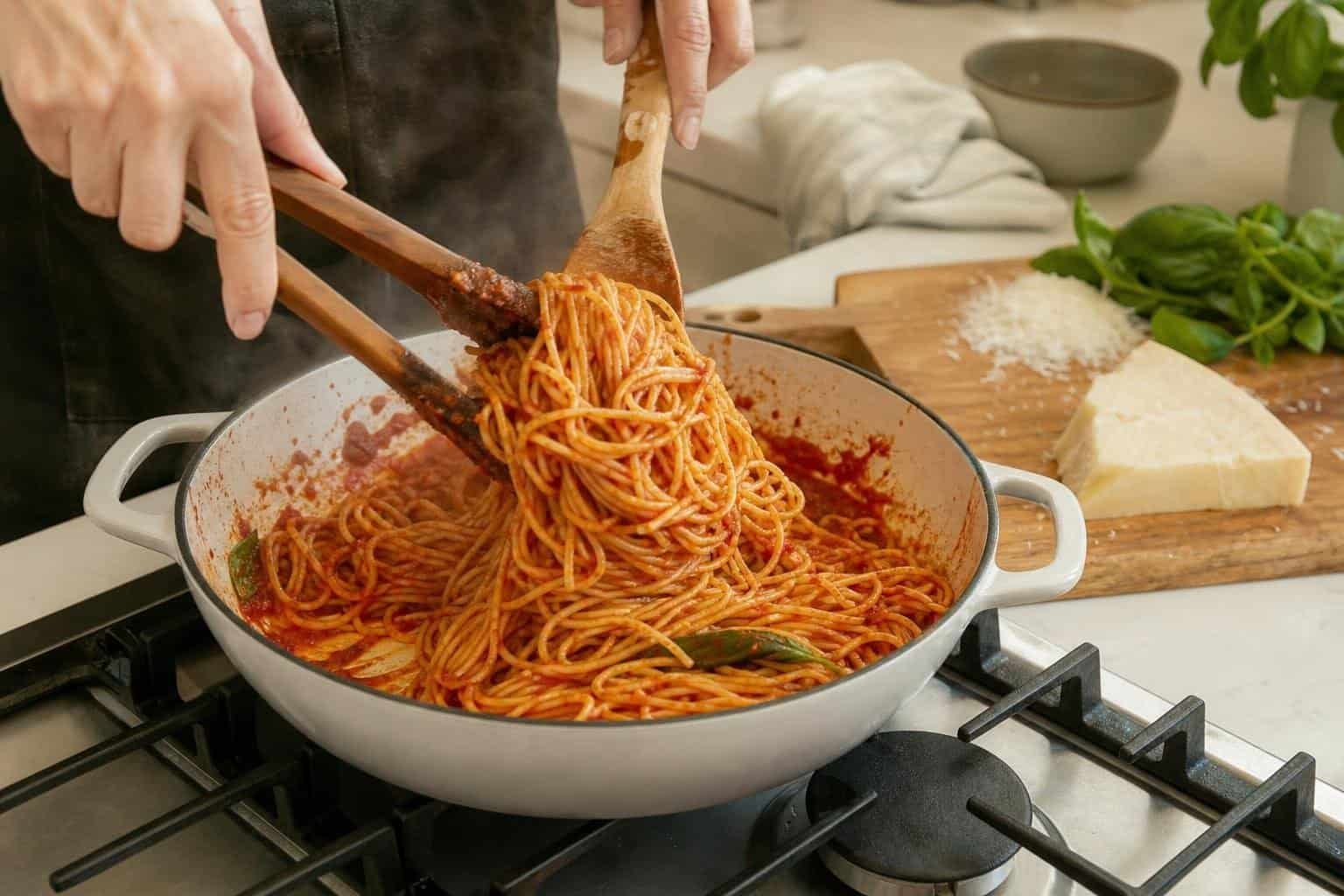
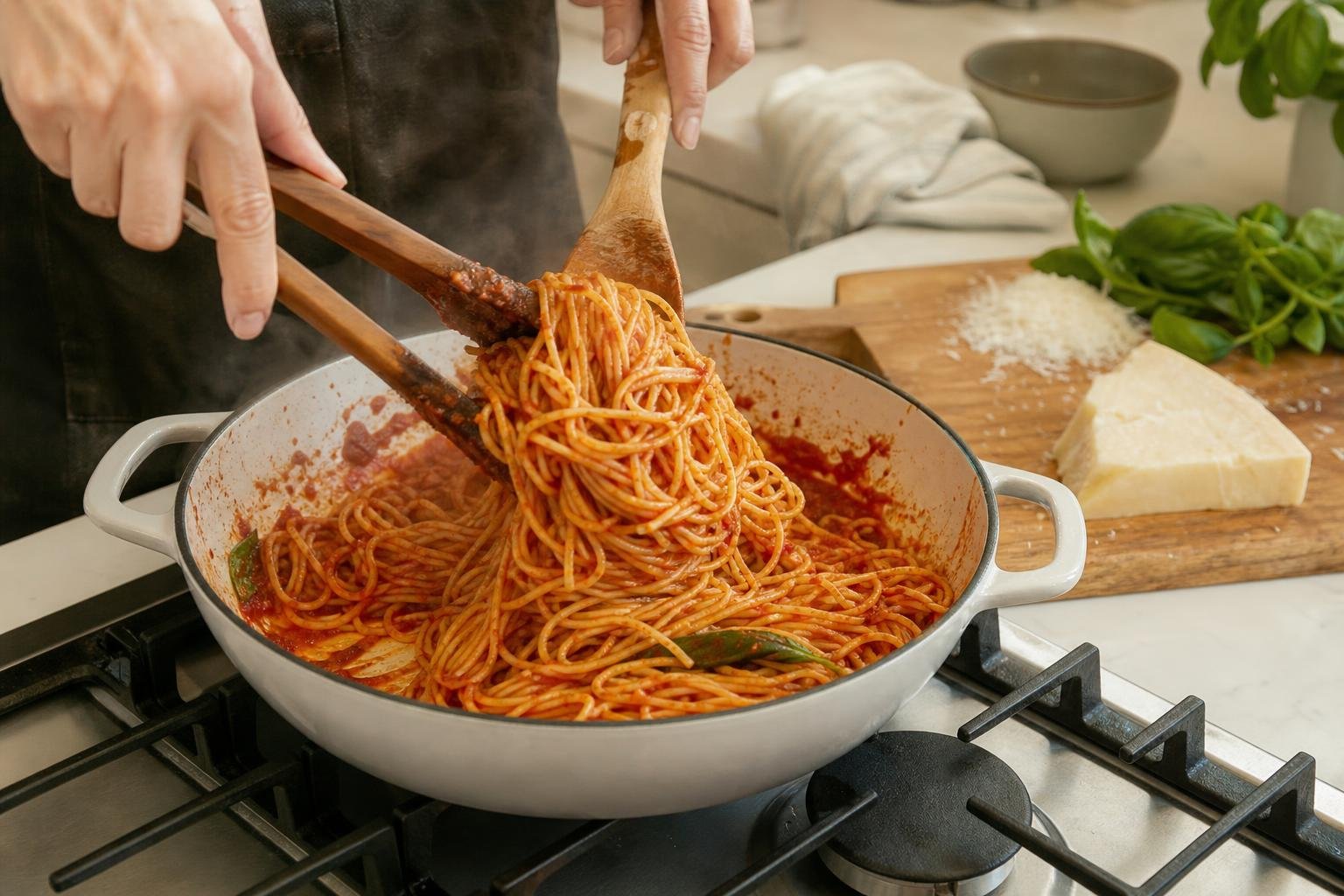
Then comes the step most home cooks skip: finish the pasta in the sauce. Transfer it directly from the pot into a pan with your warm sauce, and add a splash of the starchy cooking water. That liquid helps the sauce emulsify and coat every piece. Toss over medium-high heat for a minute, and the result feels completely different from simply spooning sauce on top of drained pasta.
A few key tips to keep in mind:
- Don’t rinse the pasta after draining — the surface starch is what helps the sauce stick.
- Reserve a cup of pasta water before draining — it’s invaluable for loosening thick sauces.
- Pull the pasta slightly early — it keeps cooking in the hot pan with the sauce.
- Add cheese off the heat — stir it in after turning off the burner to avoid clumping.
- Match the shape to the sauce — penne works beautifully with chunky or creamy sauces; spaghetti-style formats suit lighter oil-based or tomato preparations.
For a deeper look at pairing shapes with flavours and building a complete Italian meal from scratch, the guide on authentic Italian meal with pasta on this site is a handy companion read.
Which Mancini Pasta to Choose — and Why It Matters
Mancini produces a focused range of shapes, each suited to different preparations. Choosing the right one is less complicated than it sounds — think about the sauce first, and the shape will follow naturally.
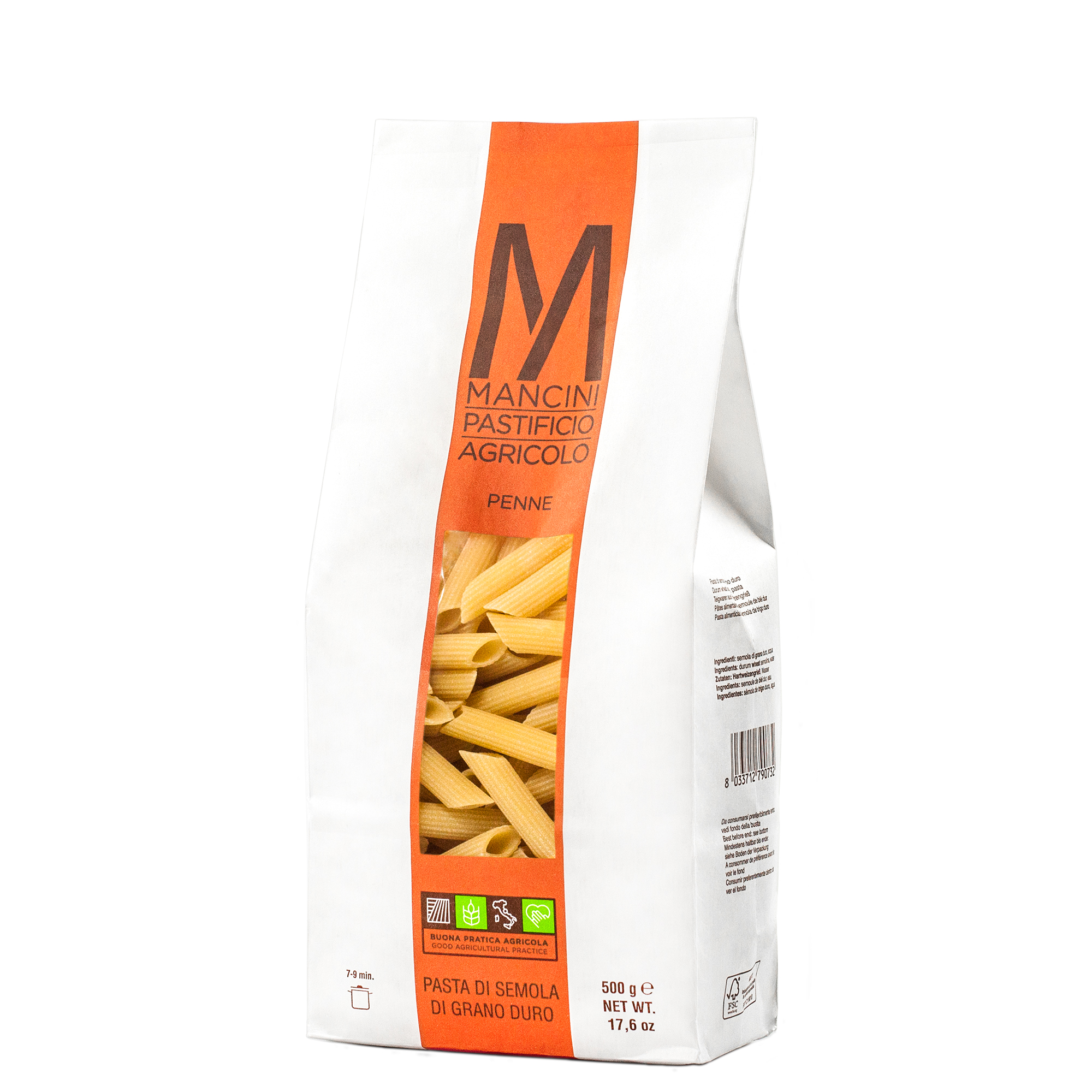
Penne Rigate is a ridged tube that catches chunky tomato sauces, meat ragù, or roasted vegetables inside and out. It’s a reliable weeknight format that works for quick dinners, relaxed family meals — and, with a simple buttered version, it’s gentle enough for toddlers and young children as an easy pasta dinner idea.
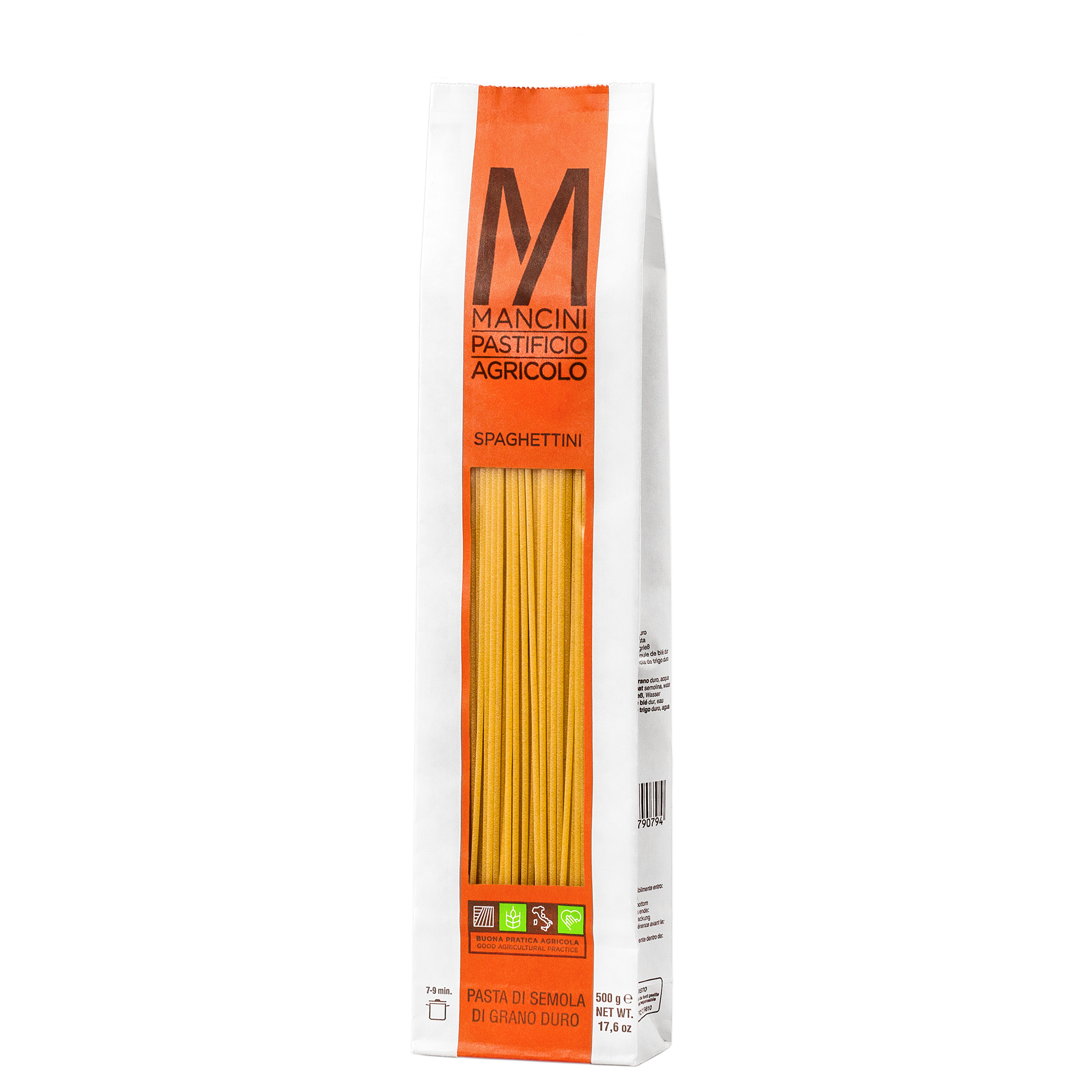
Spaghettini is a slender long strand — thinner than spaghetti — that pairs beautifully with delicate sauces: a light clam sauce, garlic and olive oil (aglio e olio), or a fresh tomato with basil. Because it cooks quickly, it’s a smart format for a fast dinner from scratch.
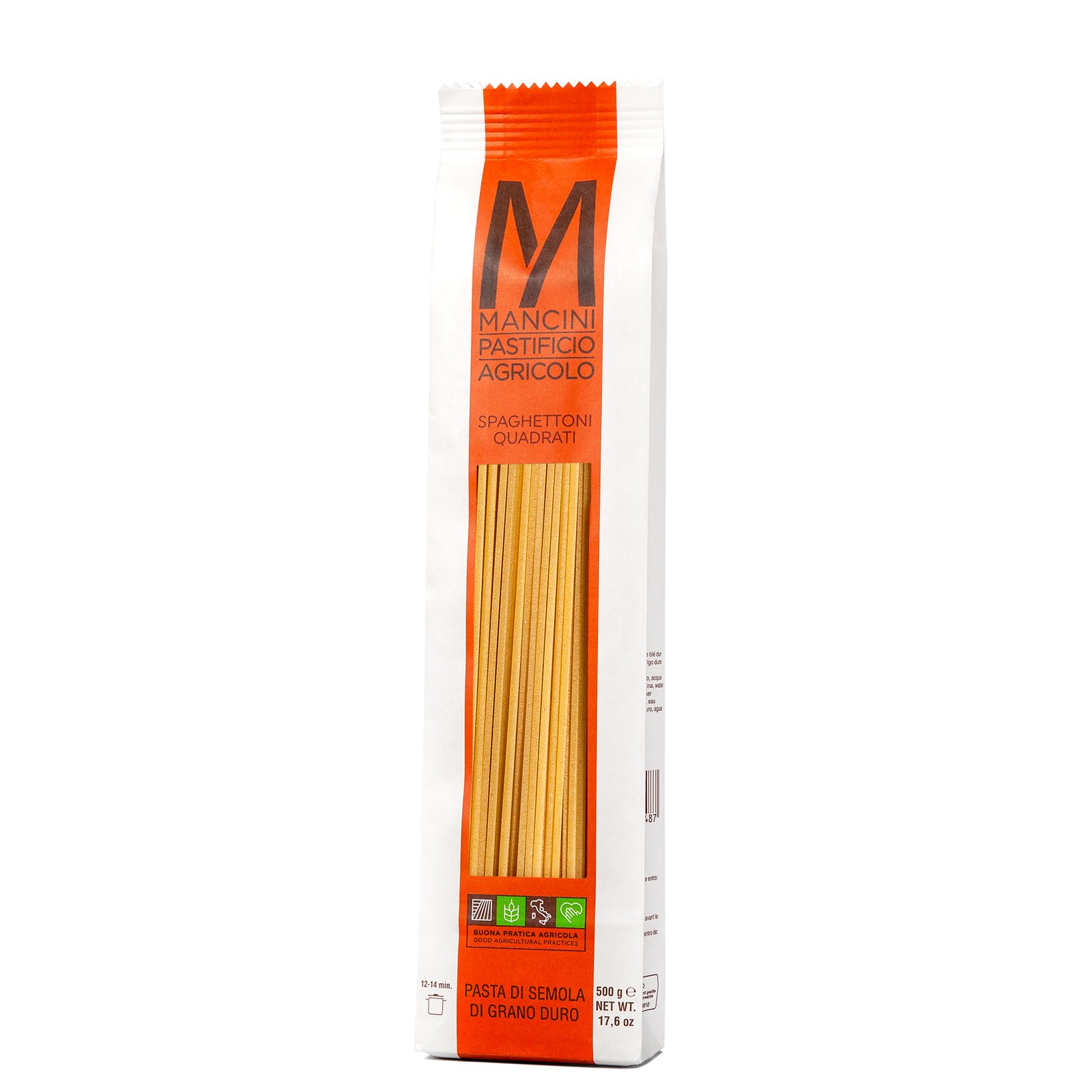
Spaghettoni Quadrati is Mancini’s signature square-section thick spaghetti. The square profile means four textured sides for sauce to grip, and the extra mass holds up well to richer, more robust preparations — think a slow-cooked amatriciana or a braised meat sauce.
Why This Pasta Is Worth the Attention
An authentic Italian pasta dinner doesn’t require dozens of ingredients or hours at the stove. What it does require is pasta that can carry a simple preparation without disappearing into the background. Mancini’s estate-grown approach — single-origin wheat, bronze dies, slow drying — produces a pasta with enough flavour and texture to make even a four-ingredient dish feel complete.
The Le Marche region has been a centre of durum wheat cultivation since Roman times, and Mancini remains the only farmstead pasta producer in Italy — meaning the pasta is made in the same place the wheat is grown. That matters for traceability, for flavour consistency, and for the story behind what’s on your plate.
Whether you’re pulling together a quick dinner on a weeknight, looking for an easy pasta idea for the whole family, or cooking something a little more considered for guests — start with good pasta, treat it right in the pot, and finish it properly in the pan. That, more than anything, is the Italian way.
FAQ
Q: What makes Mancini pasta different from standard supermarket pasta?
Mancini is Italy’s only farmstead pasta maker — it grows, mills, and shapes its own estate-grown durum wheat on the same property, giving each batch a traceable, seasonal character that commodity pasta can’t replicate.
Q: Which Mancini shape is best for a quick, simple weeknight dinner?
Spaghettini cooks quickly and suits light sauces like garlic and olive oil or fresh tomato, making it a reliable choice when you want a satisfying Italian dinner on the table fast.
Q: How do I know when Mancini pasta is perfectly al dente?
Taste it a minute before the package time is up — it should have a gentle bite with no hard white centre. Transfer it straight into the sauce pan and toss for a final minute; it will finish cooking there.
}