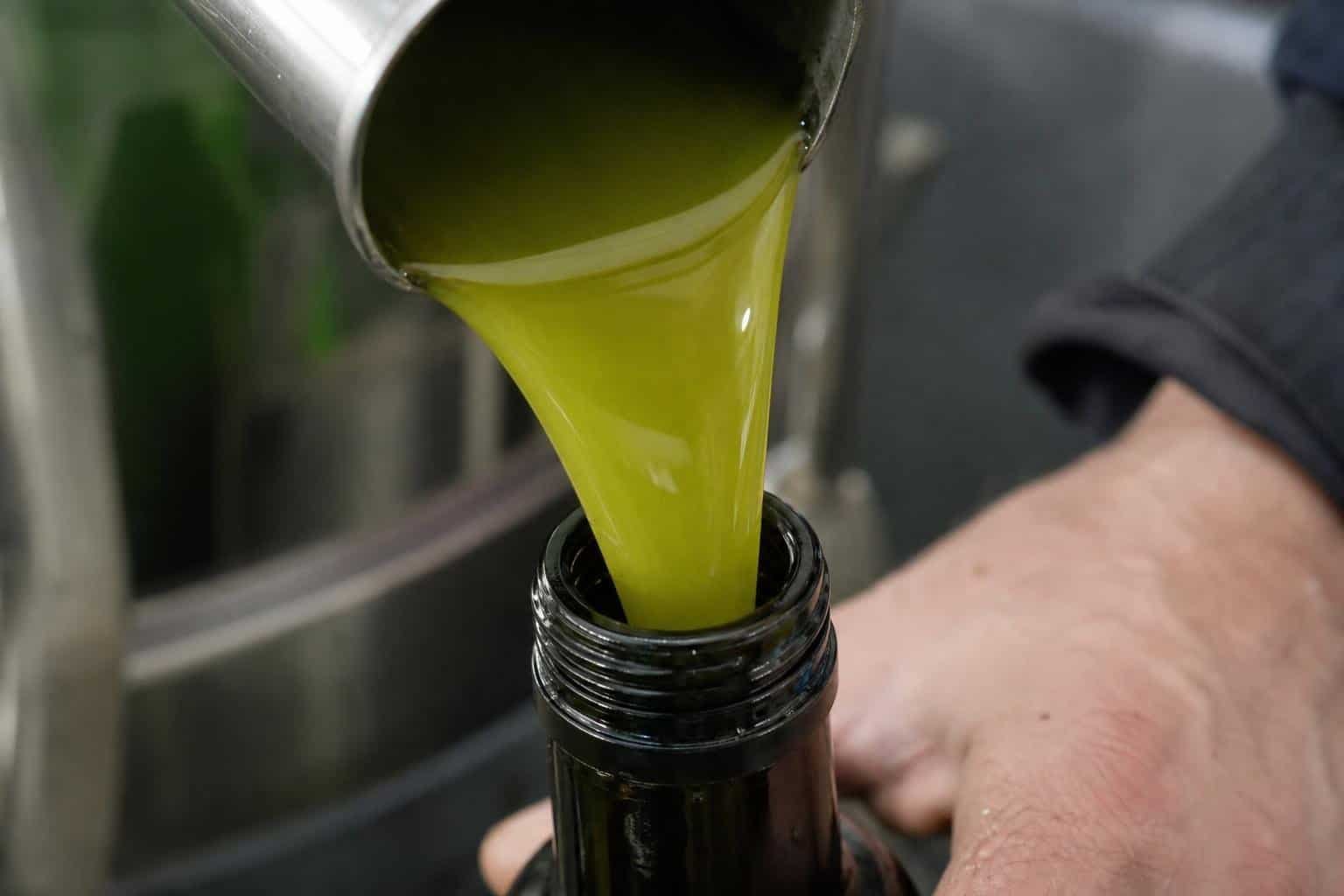
New Tuscan olive oil Pasquini December 2026: What You Need to Know About the 2026 Harvest
New Tuscan olive oil in December is not a coincidence — it is the direct result of how Tuscany’s harvest calendar works. The Italian Concierge confirms that the Tuscan olive harvest runs between mid-October and early December, with the exact window shaped by altitude, climate, and variety. Pasquini’s freshly pressed extra virgin olive oil from the 2025 campaign follows that same rhythm — and December is precisely when it becomes available outside Tuscany.
The Tuscan Harvest Calendar: Why December Is the Key Month
Tuscany harvests earlier than most Italian regions. The dominant varieties — Frantoio, Leccino, Moraiolo, and Pendolino — are picked while still green or just beginning to turn, a stage known as invaiatura. This is when polyphenol concentration in the fruit is at or near its peak.
The timing matters for quality, not just tradition. Olives harvested green and cold-pressed within hours of picking yield an oil with lower acidity, more intense aroma, and a characteristic peppery finish — the hallmark of genuinely fresh Tuscan EVOO.
How the calendar breaks down in practice:
-
Mid-October: First groves at lower altitude begin picking; earliest Leccino fruit is harvested
-
Late October – early November: Peak of the main harvest across Chianti and the hills south of Florence; Frantoio and Moraiolo at their best
-
November – early December: Higher-altitude groves and later-ripening sites complete the campaign; milling continues
-
December: Freshly pressed oil — olio nuovo — is bottled, sealed, and shipped; this is the moment it reaches international customers
Year-to-year variation is real. A warm, dry autumn can pull the entire calendar forward by two to three weeks; a wet or cool season may delay milling into late November or December. The 2025 harvest conditions in Tuscany resulted in a clean campaign with well-balanced fruit, keeping Pasquini on its typical December delivery schedule.
What Olio Nuovo Actually Is — And Why It Fades Fast
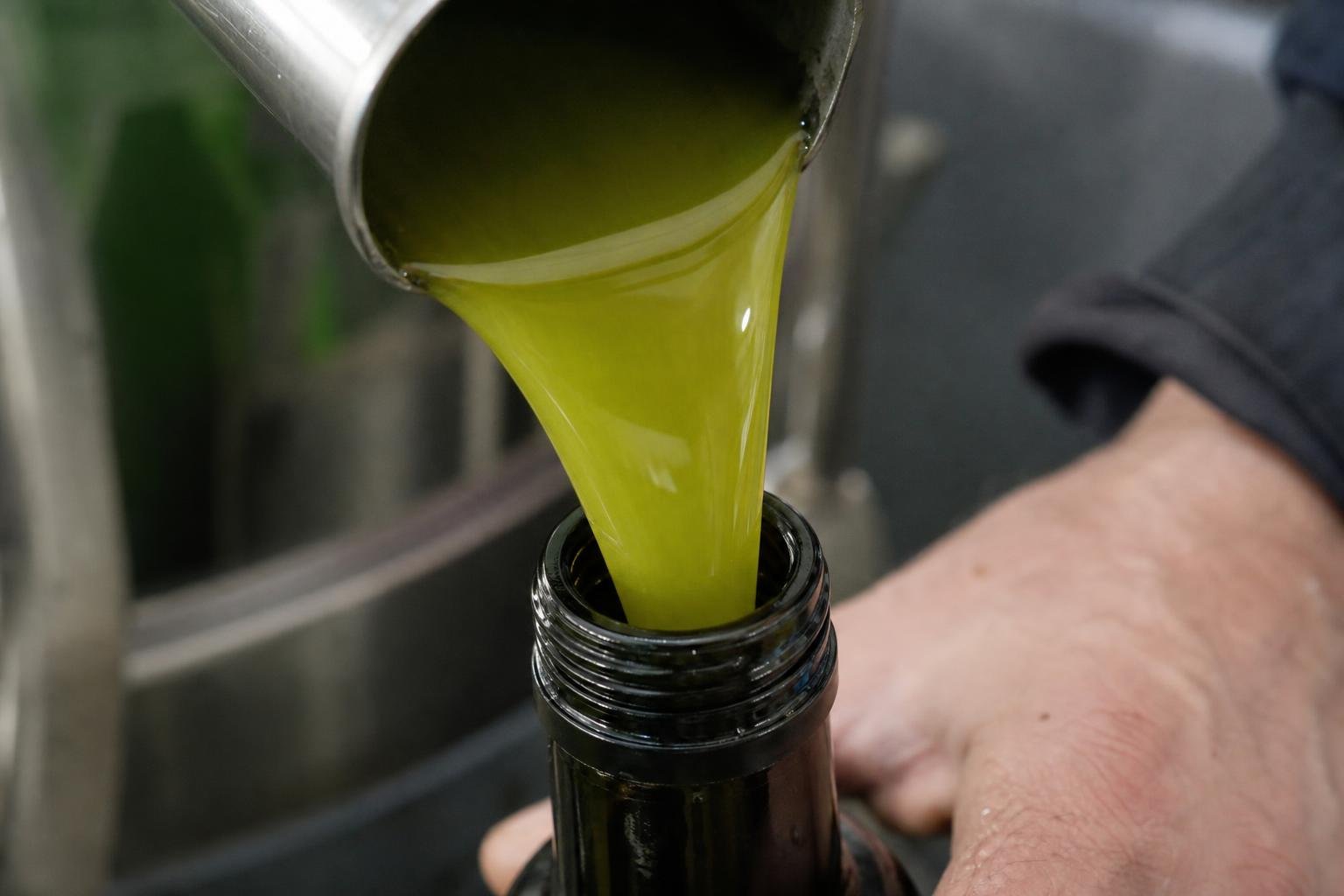
Olio nuovo — literally “new oil” — is freshly pressed extra virgin olive oil consumed close to the moment of production. It is not simply a marketing phrase. It describes a measurably different product: unfiltered or lightly filtered, vivid green-gold in color, often slightly cloudy from suspended olive particles that settle over two to four weeks.
The sensory profile is distinct. Florence culinary school SiChef notes that early-harvest Tuscan oil carries aromas of cut grass, artichoke, tomato leaf, and almond, with a peppery tickle in the throat that signals high polyphenol content. That peppery finish is not a flaw — it is a marker of freshness and quality specific to Tuscany’s main cultivars.
The critical point for buyers: those aromatic compounds are volatile. As the oil ages — even stored correctly — the vivid herbaceous notes soften, the color shifts from bright green toward pale gold, and the polyphenol profile changes. The EU health claim for olive oil polyphenols (Commission Regulation EU 432/2012) requires a minimum of 250 mg/kg; freshly pressed Tuscan EVOO typically sits well above that threshold immediately after pressing, but the margin narrows with time.
This is the reason the Italian saying holds: olio nuovo, vino vecchio — new oil, old wine. Unlike wine, olive oil does not improve with age. The freshest bottle is always the most expressive one. For Pasquini’s 2025 oil, December delivery means you receive it at its most vivid.
A few practical storage principles worth keeping in mind:
-
Keep in a cool, dark place — away from direct light and heat sources
-
Dark glass or tin is preferable to clear glass, which allows light degradation
-
Use within 12–18 months of pressing, with the first three to six months offering the most pronounced character
-
Once opened, try to consume within four to six weeks for peak flavor
How to Read a Label and Recognise Genuine 2025 Harvest Oil
Not all olive oil labeled “extra virgin” reflects a recent harvest. The label is your primary tool for verification — and a few fields tell you most of what you need to know.
The Olio Toscano IGP (Indicazione Geografica Protetta) designation, overseen by its official consortium, requires that every stage of production — from harvest through milling to bottling — takes place within Tuscany according to a defined production specification. That traceability is what the IGP mark guarantees. You can read more about what distinguishes genuine Tuscan EVOO from generic Italian blends in our guide on how to spot the real thing.
Beyond certification, look for these specific label fields:
-
Harvest year or campaign year — e.g. “2025” or “Campaign 2025/2026”; a best-before date alone is not enough
-
Cold-pressed or cold-extracted — EU definition requires processing below 27°C; essential for preserving volatile aromatics
-
Single origin — estate or region named, not a generic blend of EU or non-EU olives
-
Variety disclosure — Frantoio, Leccino, Moraiolo, or Pendolino named on the label signals genuine Tuscan provenance
-
Acidity level — below 0.8% for EVOO; truly fresh oil from a careful harvest often shows 0.2–0.3%
For a deeper breakdown of what each label element means in practice, the Olio Toscano IGP official consortium publishes the full production specification and quality parameters that apply to certified Tuscan oil.
Pasquini 2025 Freshly Pressed: Available in Three Formats for December Delivery
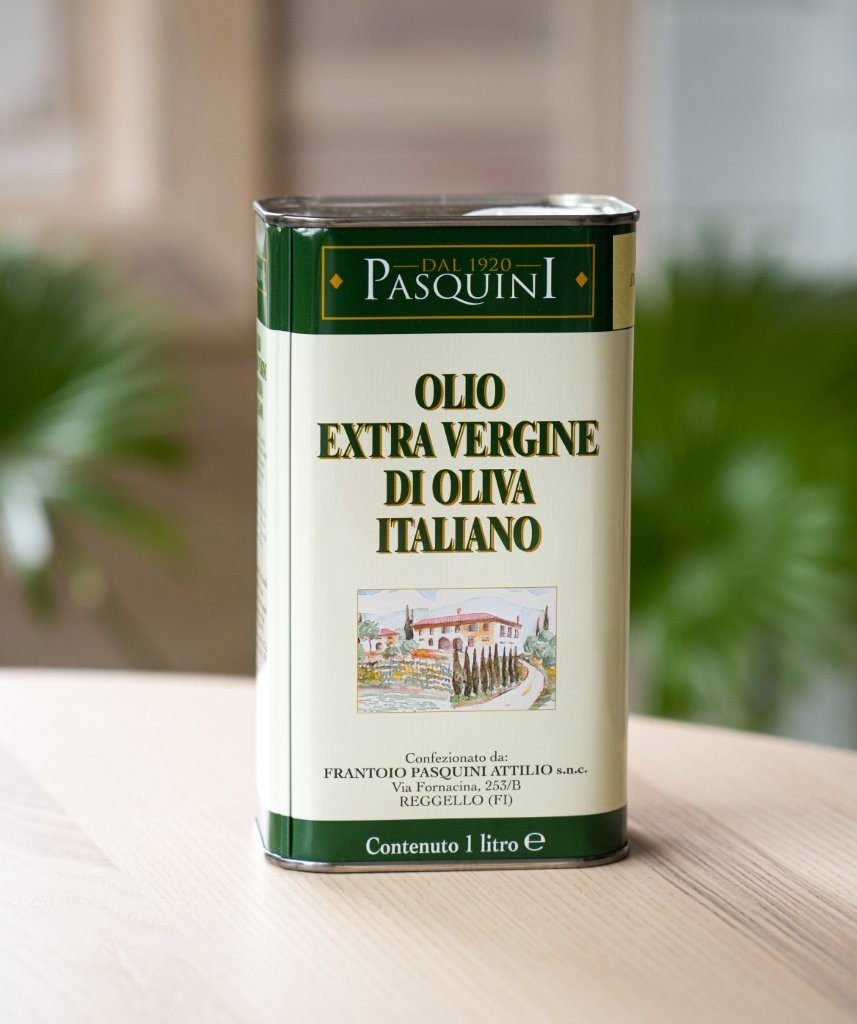
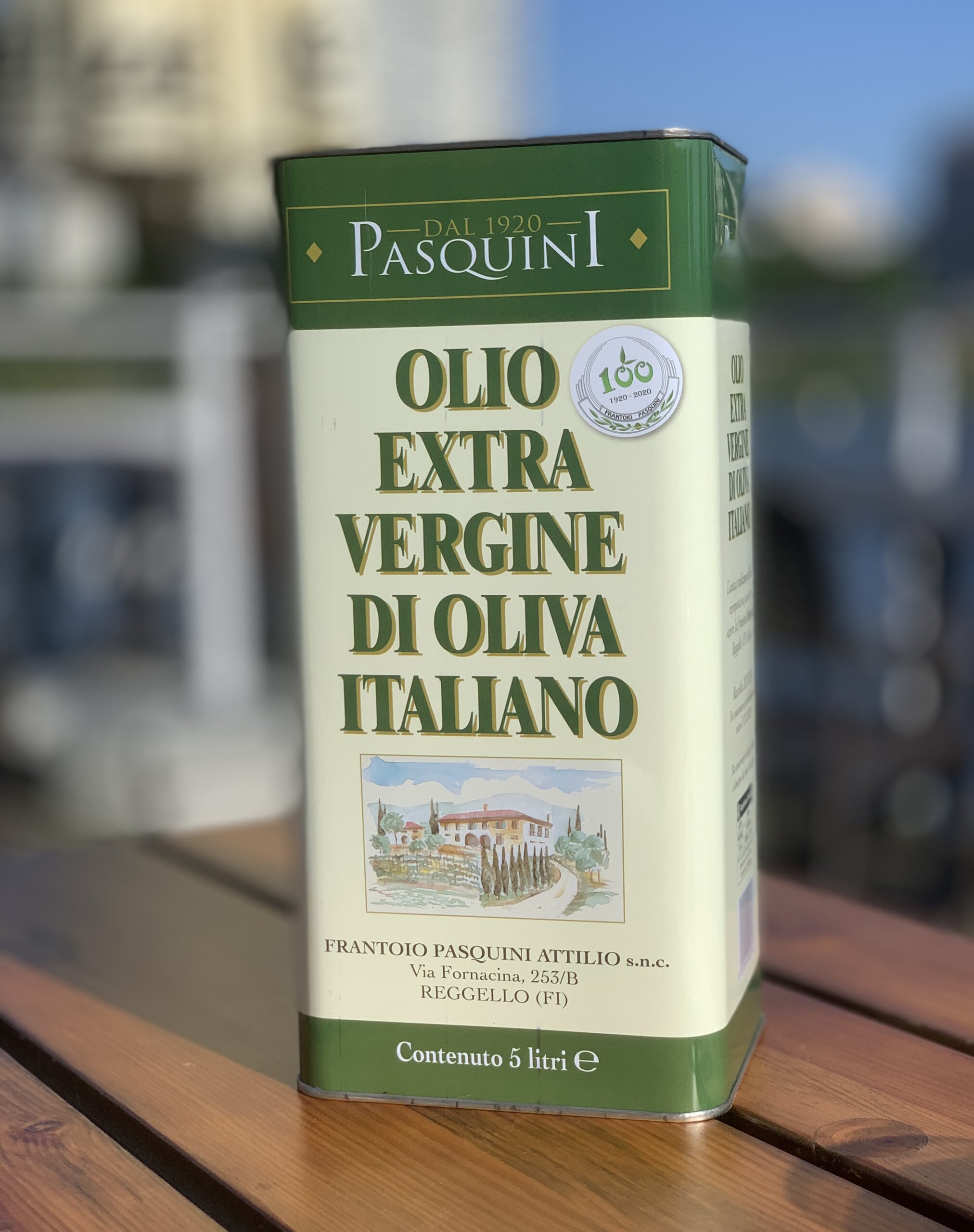
Pasquini’s extra virgin olive oil from the 2025 campaign is pressed from Tuscan olives at the optimal harvest window and bottled for direct delivery. The oil arrives in December — which, as the harvest calendar above shows, is exactly when olio nuovo should reach your kitchen for maximum freshness.
Three formats are available depending on your usage pattern. For occasional use or a first taste of the 2025 harvest, the 1-litre bottle is the right starting point. Regular cooks who go through a bottle every few weeks will find the 3-litre format offers better value without compromising freshness. For households or small food businesses that use quality EVOO daily, the 5-litre tin is the most practical choice — and the format best suited to preserving the oil correctly over time.
If you want to understand the full flavor profile and heritage behind this oil before ordering, the detailed background is covered in our article on Pasquini Extra Virgin Olive Oil: The Taste of Tuscany in Every Drop.

December Is the Right Moment — Don’t Miss the Window
Fresh Tuscan olive oil from the 2025 harvest is a time-sensitive product. The new Tuscan olive oil December availability window is short: once the campaign is sold through, the next olio nuovo won’t arrive until the 2026 harvest — a full year away. Producers like Pasquini press once per year, and the freshest allocation goes first.
The flavor argument is straightforward: an oil ordered in December from the current harvest will taste categorically different from a bottle purchased in a supermarket with no harvest year on the label. That difference — in aroma, in the peppery finish, in the green-gold color — is not subtle. It is the entire point of olio nuovo.
For anyone serious about cooking with quality EVOO, the seasonal guide to Tuscany’s olive harvest makes it clear: the harvest cycle is fixed, the pressing window is narrow, and the oil available in December is as fresh as it will ever be. Order early in the season, store correctly, and use it at its peak.
Frequently Asked Questions
Q: When exactly does Pasquini’s new Tuscan olive oil become available?
A: Pasquini’s freshly pressed 2025 olive oil is available for delivery in December, following the Tuscan harvest campaign that runs from mid-October through early December depending on altitude and variety.
Q: What makes olio nuovo different from regular extra virgin olive oil?
A: Olio nuovo is freshly pressed, often unfiltered, and consumed close to production — it has a vivid green-gold color, intense herbaceous aroma, and higher polyphenol content than oil that has been stored for several months. Its distinctive character fades with time, which is why December delivery matters.
Q: How should I store Pasquini’s freshly pressed olive oil to preserve its quality?
A: Store in a cool, dark place away from heat and light; the 3L and 5L formats are especially well-suited for this since larger, sealed containers limit oxidation until opened. Use within 12–18 months of pressing, and finish an opened container within four to six weeks for the best flavor.