Genuine Tuscan Extra Virgin Olive Oil: What Makes It Real and How to Choose It
That peppery catch at the back of your throat? That’s not a flaw — it’s the signature of genuine Tuscan extra virgin olive oil, and it tells you the oil is rich in polyphenols and freshly made. As the official Visit Tuscany guide to olive oil production explains, extra virgin is the highest quality category in terms of taste, colour, and aroma — and in Tuscany, it’s backed by centuries of know-how. Not every bottle labelled “Tuscan” lives up to the name, though. This guide helps you tell the real thing from the imitation.
What Makes Tuscan Olive Oil Different from the Rest
Tuscany’s hilly terrain, cool nights, and stony soils create conditions that push olive trees hard — and that stress translates into flavour. The climate, the varieties, and the tradition all work together to produce an oil unlike anything you’ll find in a generic bottle.
The main olive varieties grown in Tuscany — Frantoio, Leccino, Moraiolo, and Pendolino — each bring something to the blend. Moraiolo, in particular, is responsible for the robust bitterness and peppery finish that Tuscan oils are known for. Frantoio adds a grassy, fruity freshness. Together, they create a profile that’s bold, complex, and instantly recognisable.
Harvest timing matters enormously too. Tuscan farmers typically pick their olives from October onwards, often while the fruit is still turning — a mix of green and purple. This early harvest is what keeps polyphenol levels high and gives the oil its characteristic bite.
What to expect from a genuine bottle:
- Fruity aromas — fresh grass, artichoke, hints of almond
- A pleasant bitterness on the palate
- A distinct peppery finish (that throat tingle is a good sign)
- A colour ranging from deep green to golden yellow depending on harvest timing
- Polyphenol content that may exceed 400 mg/kg in early-harvest oils
High-quality Tuscan extra virgin olive oil typically registers acidity well below the 0.8% EU limit for extra virgin classification — often around 0.24%, which is a reliable sign of freshness and careful production.
DOP, IGP, and Why These Labels Actually Matter
The alphabet soup on an olive oil label can feel confusing, but these two acronyms are worth understanding — they’re the clearest shortcut to genuine Tuscan oil.
DOP (Denominazione di Origine Protetta) — or PDO in English — is the stricter designation. According to ArtViva’s editorial guide to Tuscan olive oil, DOP oils come from smaller, tightly regulated zones like Chianti Classico, ensuring a strong connection to terroir and time-honoured techniques. Tuscany has four DOP zones in total: Chianti Classico, Terre di Siena, Lucca, and Seggiano.
IGP (Indicazione Geografica Protetta) — or PGI — covers the broader Toscano label. To carry the Toscano IGP seal, every stage of production must happen within Tuscany’s borders: growing, pressing, and bottling. The oil also has to meet strict chemistry targets — free acidity under 0.5% and a peroxide value below 15 meq O₂/kg — and pass sensory panel testing.
In practical terms:
- DOP = smaller zone, stricter cultivar rules, tightest terroir link
- IGP Toscano = region-wide, still 100% Tuscan, still independently certified
- Both are EU-protected — you can trust them as a baseline quality guarantee
- Neither label alone means exceptional quality — harvest date and producer practices still matter
One number to remember: the Toscano IGP Consortium, established in 1977, today counts more than 11,000 members working to protect and promote authentic Tuscan EVOO both in Italy and internationally. That’s a significant infrastructure of accountability behind each certified bottle.
How Genuine Tuscan EVOO Is Actually Made
The production process behind a genuinely good Tuscan olive oil is less complicated than the label jargon, but the margin for error is narrow. Small decisions at each stage — harvest timing, transport speed, pressing temperature — add up to a very different oil in the bottle.
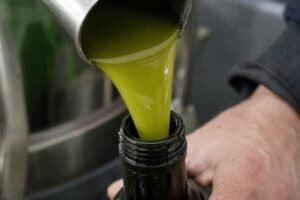
Olives are harvested by hand to avoid bruising the fruit. Once picked, they need to reach the mill quickly: Tenuta Le Mandorlaie’s detailed guide to IGP certification notes that olives should be transported to the mill within 8 hours of harvest to prevent fermentation that would damage flavour and raise acidity.
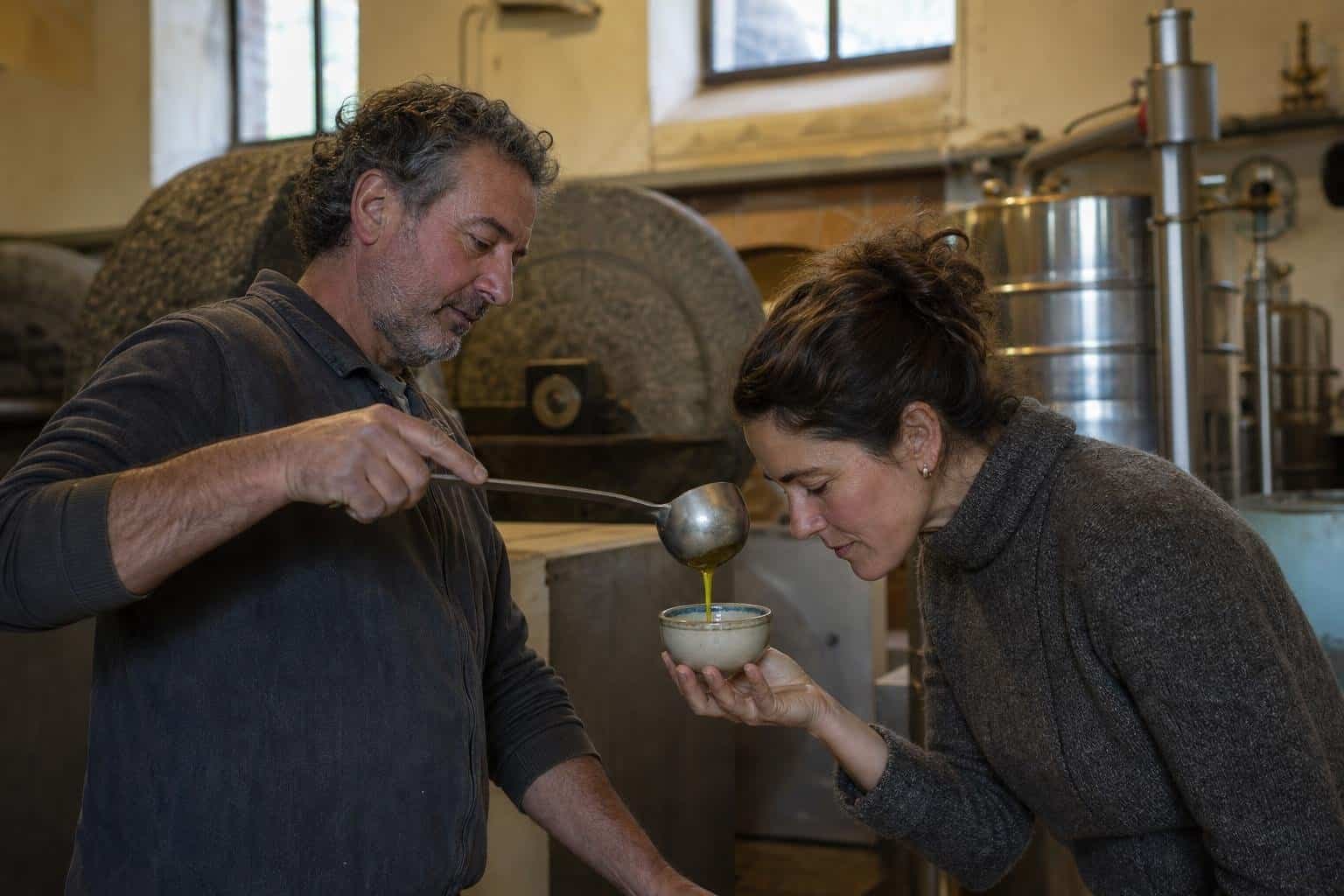
At the mill, cold extraction keeps the temperature below 27°C — a requirement for the “cold pressed” label under EU rules. This gentle process preserves volatile aromas and polyphenols that heat would destroy. The oil then goes through chemical and sensory testing before any certified designation can be applied.
A few things that separate careful producers from mass-market operations:
- Hand-picking rather than mechanical harvesting
- Short journey from grove to mill (ideally under 8 hours)
- Cold extraction below 27°C
- Dark glass or tin packaging to protect against light degradation
- A visible harvest date on the label — not just a best-before date
Polyphenols and volatile aromas peak within the first few months after pressing, then gradually decline. A bottle with no harvest date makes it impossible to know how fresh the oil really is — which is reason enough to look for one that has it clearly printed.
How to Choose the Real Thing: A Practical Checklist
Once you know what you’re looking for, spotting a genuine Tuscan extra virgin olive oil becomes much easier. It’s not about following rigid rules — it’s about reading the bottle the way a producer would want you to.
The complete guide to spotting the real thing on this site goes into further detail, but here’s a quick practical reference to carry with you:
- Look for DOP or IGP Toscano certification — the EU logo, not just the words
- Check the harvest date — fresher than 18 months is better; within 12 months is ideal
- Choose dark glass or a tin — light degrades oil quickly
- Read the origin statement — all production stages should be in Tuscany
- Look for named olive varieties — Frantoio, Moraiolo, Leccino signal traceability
- Trust the tingle — a gentle burn in the throat means polyphenols; bland means little of either
Price can also be a guide, though not a guarantee. Careful small-batch production has a real cost — if the price seems too good to be true for a certified Tuscan oil, it usually is.
Bringing Tuscan EVOO Into Your Kitchen
Genuine Tuscan extra virgin olive oil works beautifully as a finishing oil — drizzled over grilled vegetables, bean soups, bruschetta, or simply onto good bread. Its bold character holds its own against strong flavours: a robust ribollita, a bistecca fiorentina rested and drizzled, or a plate of white beans with sage.
It’s also worth using cold, where you can really taste what you’re working with. A simple salad dressed with a proper Tuscan EVOO and a little flaky salt is a good way to understand what you’ve bought — and to appreciate the difference from an anonymous supermarket bottle. For more everyday cooking ideas, the 10 simple kitchen ideas for using Pasquini olive oil every day is worth a look.
Store it away from heat and direct light — a dark cupboard, not next to the stove. Once opened, try to use it within a couple of months to enjoy it at its best.
Why It’s Worth Getting Right
Genuine Tuscan extra virgin olive oil — certified, harvest-dated, cold-pressed, and made from named local varieties — is one of the most traceable foods you can buy. The DOP and IGP system, as the Visit Tuscany authority makes clear, exists precisely to protect both producers and consumers from the confusion of vague labelling.
If you’ve never tried a proper Toscano IGP or a Chianti Classico DOP side by side with a generic supermarket oil, it’s a useful experiment. The difference in aroma, bitterness, and that characteristic peppery finish is genuinely hard to ignore.
Producers like Pasquini bring this tradition into everyday bottles — and the 2026 Pasquini harvest is a good example of what a carefully made, traceable Tuscan EVOO looks like in practice. The label tells the story; the taste confirms it.
Najczęściej zadawane pytania
Q: What does IGP Toscano mean on an olive oil label?
A: It means the oil was grown, pressed, and bottled entirely within Tuscany, certified by an independent EU-regulated consortium — Toscano IGP has been an officially protected designation since 1997.
Q: How can I tell if a Tuscan olive oil is fresh?
A: Look for a printed harvest date on the label; oils are generally best within 12–18 months of pressing, and polyphenols peak in the first few months after the new harvest.
Q: Why does genuine Tuscan EVOO have a peppery, bitter taste?
A: That bitterness and throat tingle come from polyphenols — natural antioxidant compounds that are highest in early-harvested, cold-pressed oils made from varieties like Moraiolo and Frantoio.