Pasquini Extra Virgin Olive Oil: The Taste of Tuscany in Every Drop
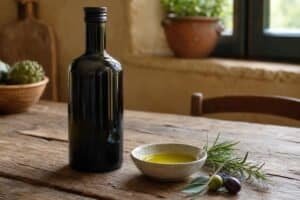
A truly great extra virgin olive oil announces itself the moment you open the bottle — a peppery, grassy lift that’s unmistakably Tuscan. Pasquini extra virgin olive oil is cold-pressed from olives grown in the Tuscan hills, capturing that character in its freshly pressed 2025 harvest. According to EUR-Lex, the EU’s official legal database, extra virgin olive oil must have no organoleptic defects, a fruity aroma, and free acidity no higher than 0.8% — a strict standard that separates the real thing from imitations.
What Makes Tuscan Extra Virgin Olive Oil So Special?
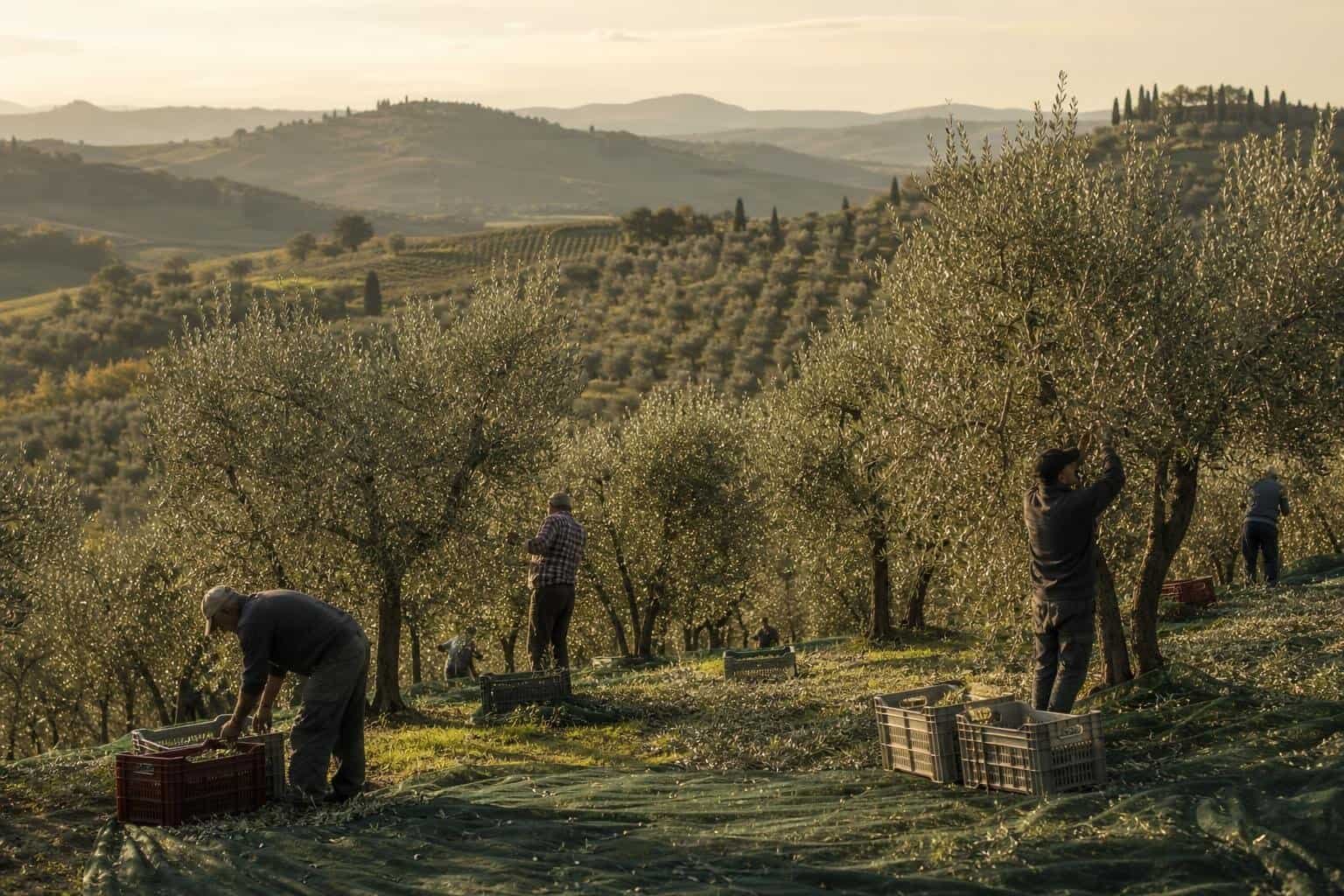
Tuscany is one of Italy’s most celebrated olive oil regions, and its character comes directly from the land. The region’s combination of altitude, cool winters, and well-drained limestone soils creates conditions where olives develop slowly — and with far more complexity than in warmer flatland areas.
The three classic Tuscan cultivars are what give the oil its signature profile. Frantoio contributes fruity, herbal notes and good stability. Moraiolo brings robust bitterness and pungency — and is responsible for the characteristic peppery finish that lingers at the back of the throat. Leccino rounds things out with milder, softer notes that balance the blend.
Research published by the National Institutes of Health confirms that Frantoio, Moraiolo, and Leccino are the three main cultivars typical of Tuscany, each with distinct properties that shape the final oil’s organoleptic character.
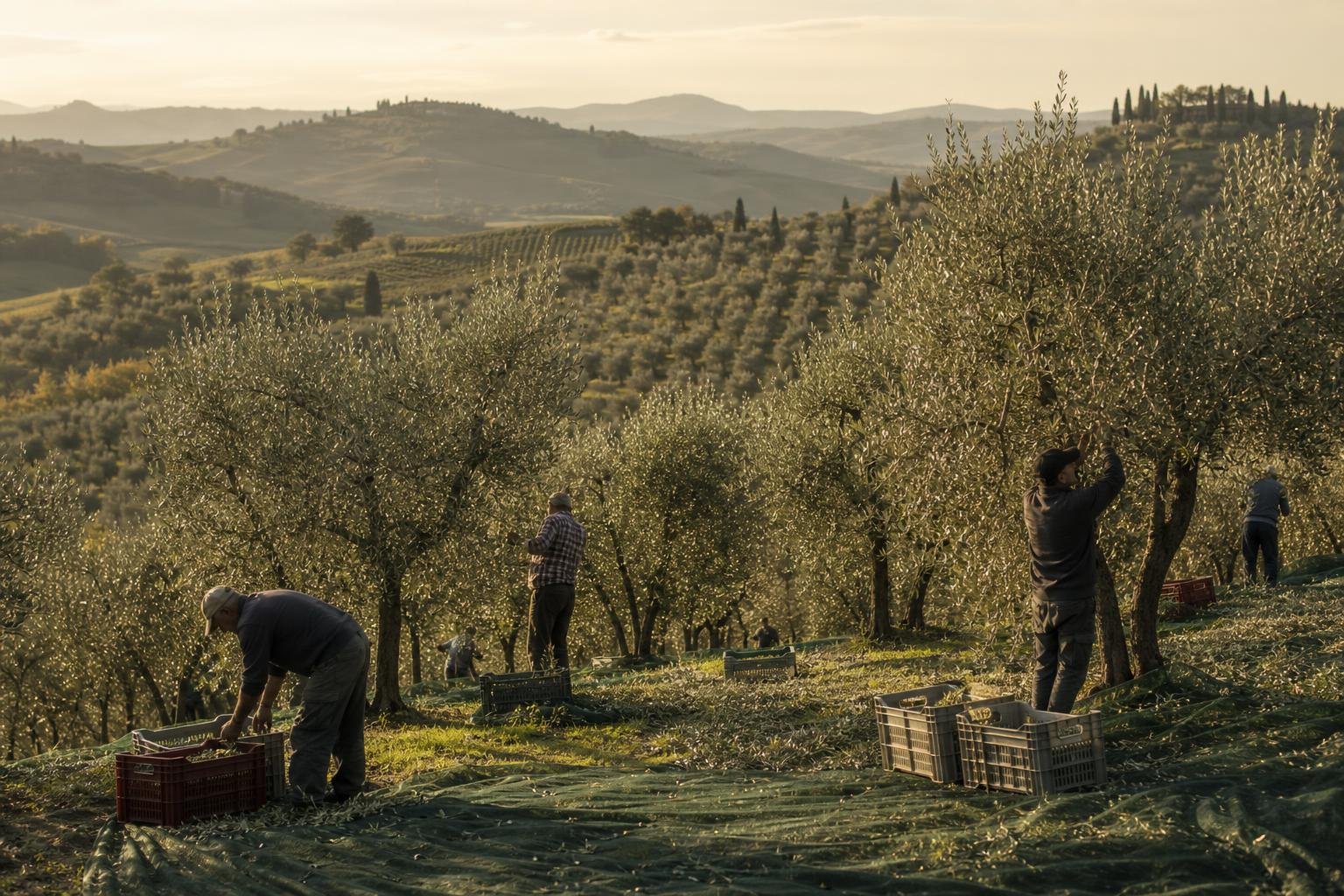
Tuscan farmers also harvest earlier than producers in most other Italian regions — often when olives are still partly green — to beat the risk of winter frosts. This early harvest is one of the key reasons Tuscan EVOOs tend to be so high in polyphenols, the natural antioxidants that drive both flavour intensity and health value.
Good polyphenol levels in quality EVOO typically start from around 300 mg/kg — with very fresh, early-harvest oils often reaching significantly higher. Those compounds are what give the oil its peppery kick and help it stay stable on the shelf.
How to Read an Olive Oil Label — and Spot the Real Thing
Walking down a supermarket aisle, it’s easy to assume every bottle labelled “extra virgin” is the same. It isn’t. Knowing what to look for takes just a few seconds and makes a real difference.
EU regulations set the legal ceiling for EVOO free acidity at 0.8%. The finest oils come in well below that — often at 0.3% or lower — and the best producers publish this figure on the label. Lower acidity means the olives were handled quickly and carefully after picking, with no damage or delay before pressing.
Here are the key things to check before buying:
- Harvest year — not just a best-before date; EVOO is best within 12–18 months of pressing.
- Free acidity — look for under 0.5%; under 0.3% is a very good sign.
- Cultivar or origin — named varieties (Frantoio, Moraiolo, Leccino) signal a producer proud of their raw material.
- Packaging — dark glass or metal tins protect polyphenols from UV degradation; avoid clear plastic bottles.
- “Cold pressed” or “first cold pressing” — EU law allows this label only when extraction happens below 27°C.
Mass-market bottles labelled “Italian olive oil” are often blended from oils of several countries. For a genuine Tuscan taste and traceability, look for a stated Tuscan origin — and ideally a specific producer behind the bottle. You can also explore what authentic Tuscan character actually looks and tastes like in this professional guide to choosing genuine Tuscan EVOO.
Storing properly matters too. Once opened, keep the bottle tightly sealed in a cool, dark cupboard — away from the hob and direct light. Heat and UV exposure are the two fastest ways to degrade even a superb oil.
Pasquini Extra Virgin Olive Oil — Freshly Pressed 2025
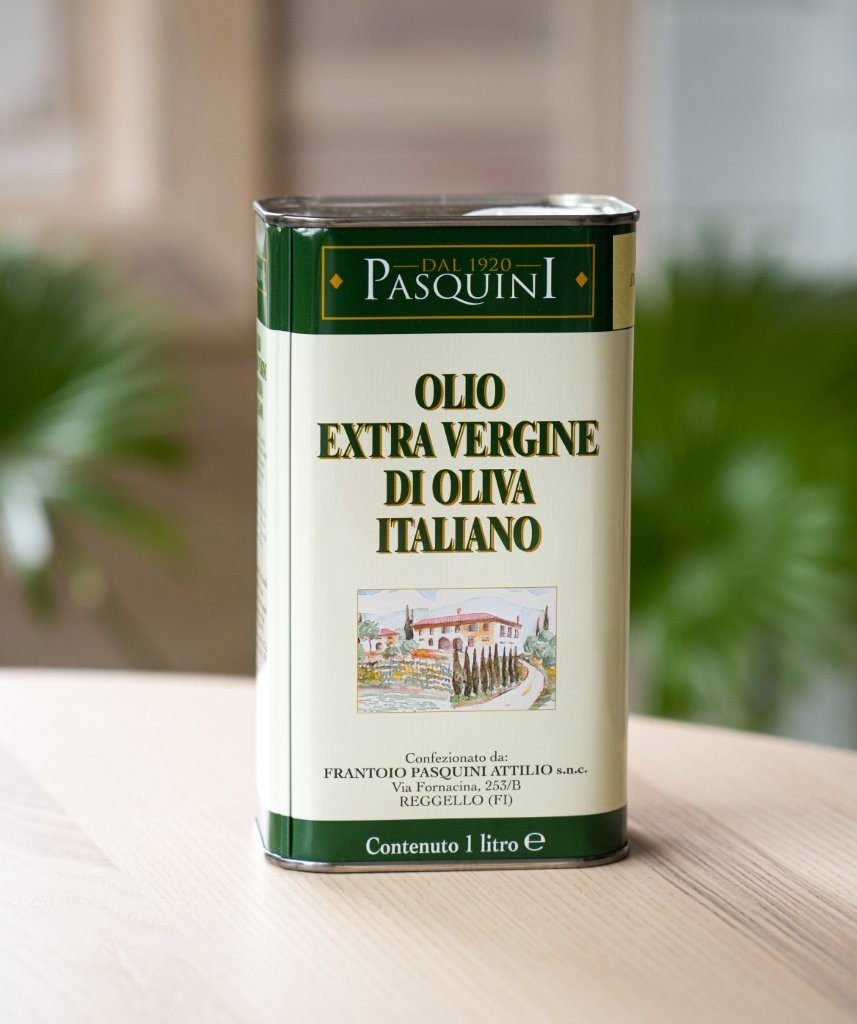
For people who use a quality olive oil regularly — finishing pasta, dressing salads, building the base of a soffritto — having the right bottle at hand just makes cooking more enjoyable. Pasquini extra virgin olive oil is freshly pressed from the 2025 harvest, which means you’re getting oil at its most flavourful, with polyphenols still intact and acidity at its lowest.
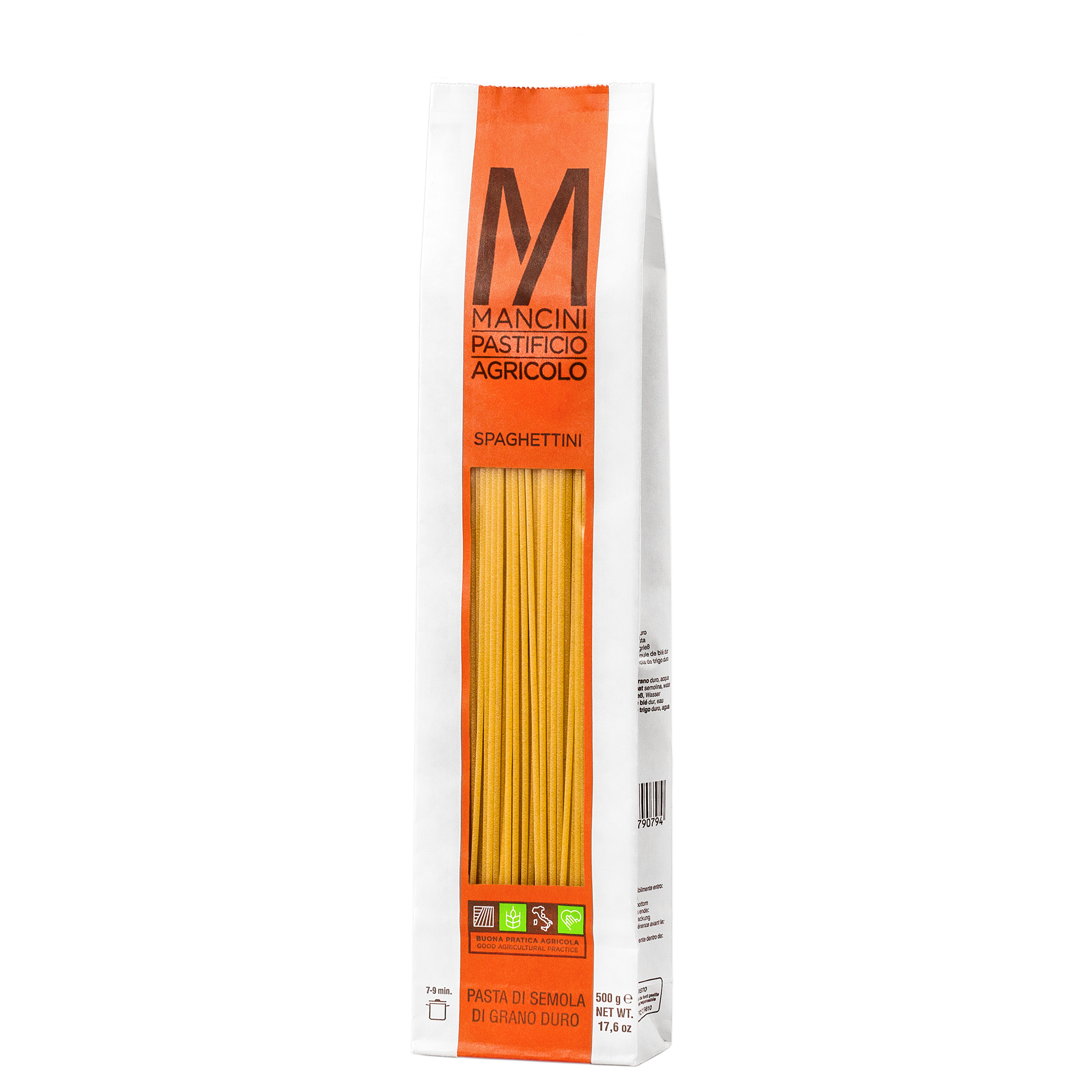
The 1L bottle is a practical, everyday choice — easy to handle and keeps well if you go through a bottle in a few weeks. The 3L format suits households that cook with EVOO daily and want to buy less often without compromising freshness. Paired with a high-quality Italian pasta like Italian pasta Mancini – SPAGHETTINI 500g, it makes a thoughtful gift set or a genuine upgrade to a weeknight kitchen.
If you’re looking for an olive oil on prezent — as a gift for someone who loves to cook — a freshly pressed Tuscan EVOO is one of those things that actually gets used and genuinely appreciated. For a deeper dive into what makes Tuscan olive oil taste the way it does, this guide on why Tuscan olive oil tastes different explains the climate and varietal story clearly.

How to Cook with Extra Virgin Olive Oil (and Why It’s Perfectly Fine on Heat)
One of the most persistent myths in home cooking is that you shouldn’t heat extra virgin olive oil. The Olive Wellness Institute has assessed the evidence and concluded that EVOO is suitable for cooking at all domestic temperatures, noting that its high polyphenol content — not just its smoke point — determines how well it performs under heat.
In practice, this means you can use a good Tuscan EVOO across a wide range of kitchen tasks:
- Raw finishing — a generous drizzle over pasta, bruschetta, grilled fish, or soup just before serving
- Sautéing vegetables — garlic and greens in EVOO is the foundation of half of Italian cooking
- Building a soffritto — the slow, low-heat base of onion, celery, and carrot in olive oil for ragùs and braises
- Baking — swapping butter for EVOO in focaccia or savoury cakes adds depth and keeps things moist
- Dipping and dressing — good bread, good oil, nothing else needed
The key takeaway: the better the oil, the more stable it tends to be. High-polyphenol EVOOs like a freshly pressed Tuscan oil may actually handle heat more gracefully than older, lower-quality alternatives — and the flavour they bring to a dish is something refined oils simply can’t replicate.
The Right Olive Oil Makes a Genuine Difference
Choosing a quality Pasquini extra virgin olive oil isn’t about spending more for the sake of it — it’s about knowing what you’re actually getting. A freshly pressed 2025 Tuscan EVOO brings genuine olive oil smak: peppery, grassy, rounded, and unmistakably alive in a way that a supermarket blend rarely manages.
The EU’s strict classification system — which you can review in detail via EUR-Lex’s olive oil analysis summary — means the “extra virgin” label carries real legal weight. But within that category, harvest year, cultivar, and acidity level tell you the rest of the story.
Whether you’re stocking your kitchen for everyday cooking, searching for the best oliwa z oliwek na prezent, or simply wanting an oil that genuinely improves what you put on the plate — a bottle from the Tuscan hills, cold-pressed and freshly bottled, is a straightforward answer.
Frequently Asked Questions
Q: What is the difference between extra virgin olive oil and regular olive oil?
Extra virgin is the highest quality category, extracted purely by mechanical means with no heat or chemicals, and must have free acidity below 0.8% and no sensory defects. Regular or “pure” olive oil is typically refined and blended, with much lower polyphenol content and a neutral flavour profile.
Q: Can I use Pasquini extra virgin olive oil for frying and everyday cooking?
Yes — a high-quality EVOO is stable at typical domestic cooking temperatures. Its polyphenol content supports oxidative stability, making it suitable for sautéing, pan-frying, and even baking, not just raw use.
Q: How should I store extra virgin olive oil to keep it fresh?
Keep it in a cool, dark place, tightly sealed, away from heat sources and direct light. Dark glass or metal packaging already protects from UV; your job is to keep it away from the hob and to use it within 12–18 months of the harvest date.