How to Recognise Genuine Tuscan Extra Virgin Olive Oil: A Professional Guide to Choosing the Real Thing
Genuine Tuscan extra virgin olive oil — cold-pressed, freshly harvested — has a character that sets it apart from the moment you open the bottle. The aroma of fresh olive oil is immediate and vivid: green, grassy, with a clean peppery finish on the palate that signals real polyphenol richness. According to the Consorzio Olio Toscano IGP, every certified bottle carries full traceability from grove to press to packaging — so knowing what to look for on the label is the first, most reliable step toward buying the genuine article.
What Makes Tuscan Extra Virgin Olive Oil Different
Tuscany produces olive oil from a small set of native cultivars — primarily Frantoio, Moraiolo, and Leccino — grown across a region with varied elevation, clay soils, and a continental-influenced Mediterranean climate. These conditions produce oils that are naturally more robust, more bitter, and more pungent than many southern Italian or Spanish oils.
That bitterness and pungency are not flaws. They are markers of quality. Visit Tuscany, the official regional tourism authority, notes that a bitter taste and pungent sensation should always be present in a well-made Tuscan extra virgin — these are signs of polyphenol content, not of defective oil.
Cold pressing — or more precisely, cold extraction — keeps the process below 27°C (80°F), preserving the volatile aromatic compounds and polyphenols that give the oil its taste and nutritional profile. Oils labelled tłoczona na zimno (cold-pressed) in accordance with EU standards must meet this temperature threshold at every stage of mechanical extraction.
The freshness of the harvest also matters enormously. A freshly pressed 2025 oil (olio nuovo) has a vivid green colour, green-fruity aroma, and a pronounced finish. As Visit Tuscany confirms, the freshly extracted oil is usually green in colour, tending towards yellow over time — so a bright green hue in a new-harvest oil is a genuine indicator of freshness, not a cosmetic addition.
Key Tuscan cultivar characteristics at a glance:
- Frantoio — the only olive variety native to Tuscany; contributes fruity, medium-intense notes
- Moraiolo — valued for high antioxidant and polyphenol content; adds intensity and green bitterness
- Leccino — milder, more delicate; often blended to balance the blend’s sharpness
- Harvest timing — earlier harvest means more chlorophyll, greener colour, higher polyphenols
- Cold pressing — extraction below 27°C preserves aromatic compounds and polyphenol integrity
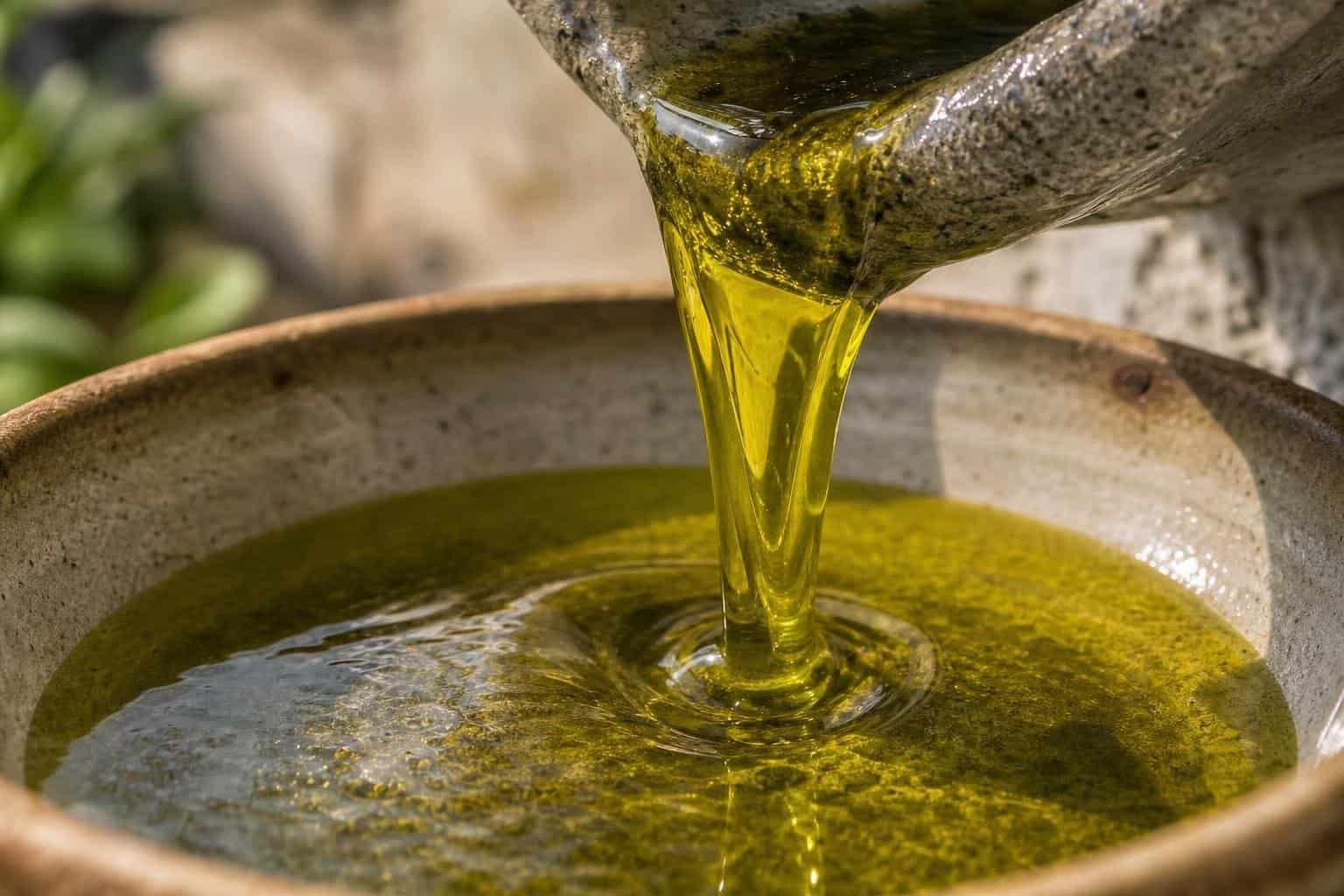
[IMAGE: extreme close-up macro of freshly cold-pressed extra virgin olive oil being poured from a stone mill spout into a ceramic bowl, green-gold liquid catching natural daylight, shallow depth of field revealing oil texture and clarity, candid documentary angle, no text, no logos]
Reading the Label: Certification, Origin, and Traceability
The label is where most purchasing decisions can be verified — or where misleading marketing hides in plain sight. Italy has two main protected designations for Tuscan olive oil: four PDO (Protected Designation of Origin) zones — Chianti Classico DOP, Terre di Siena DOP, Lucca DOP, and Seggiano DOP — and one PGI (Protected Geographical Indication): Toscano IGP.
Toscano IGP is the broadest and most widely available certified designation. To earn it, the oil must be produced wholly within the region of Tuscany — including cultivation, pressing, and final packaging. The Consorzio Olio Toscano IGP enforces this rigorously: it monitors every stage of production from grove to bottle and takes legal action against misuse of the label, as documented by the Tenuta Le Mandorlaie guide to the Consorzio.
Since October 2025, the Consortium has introduced a new digital traceability layer: a QR code on the state-issued seal (Poligrafico dello Stato) that links directly to a digital passport for that specific bottle. Scanning it gives you the olive grove location, harvest date, mill name, and bottling records — information that no counterfeit label can replicate.
What to check on the label before buying:
- The official EU IGP or DOP logo (blue-yellow designation mark)
- Explicit mention of Tuscany as the region of production and packaging
- Harvest year or campaign year — not just a best-before date
- Acidity level — genuine extra virgin must be below 0.8%; premium oils are typically well below 0.3%
- A QR code or unique batch code for traceability (mandatory for IGP-certified bottles packaged after October 2025)
- Cold-pressed or cold-extracted designation, confirming sub-27°C processing
Be alert to vague wording such as “packed in Italy,” “Italian-style,” or “product of the EU” — none of these confirm Tuscan origin or IGP certification. For a deeper look at what distinguishes Tuscan oils in terms of climate, variety, and terroir, see Why Tuscan Olive Oil Tastes Different.
Tasting Genuine Tuscan Extra Virgin Olive Oil
Professional tasters — and the EU’s sensory evaluation panels — assess extra virgin olive oil across three dimensions: fruitiness, bitterness, and pungency. All three must be present in a genuine, high-quality oil. The absence of any one of them is a red flag.
Fruitiness in fresh Tuscan oil typically presents as green apple, freshly cut grass, artichoke, or almond. These aromatic compounds are volatile and degrade over time, which is why the smak oliwy z oliwek (flavour of olive oil) and aromat oliwy (aroma of olive oil) are far more expressive in a freshly pressed oil than in a bottle that has sat on a warm shelf for two years.
Bitterness is felt at the back of the tongue and should be clean, not musty or rancid. A muddy, flat, or greasy sensation indicates oxidation or poor processing. Rancidity — a common defect in old or improperly stored oils — produces a stale, waxy, crayon-like aftertaste that no amount of marketing language can disguise.
Pungency — the peppery catch at the back of the throat — is caused by oleocanthal, a polyphenol associated with anti-inflammatory properties. According to Visit Tuscany, this pungent sensation should always be present in genuine Tuscan extra virgin; its absence in a supposedly premium oil is worth questioning.
A quick sensory check at home:
- Pour a small amount into a dark glass or cup; warm it gently with your hands
- Nose it first — you should detect green, grassy, or faintly fruity notes
- Taste it neat — bitterness and pepper should follow within a few seconds
- Check the finish — it should be clean and lingering, never flat or rancid
- Any sour, fermented, or vinegary smell indicates a defective oil
Pasquini Extra Virgin Olive Oil: Fresh from the 2025 Harvest
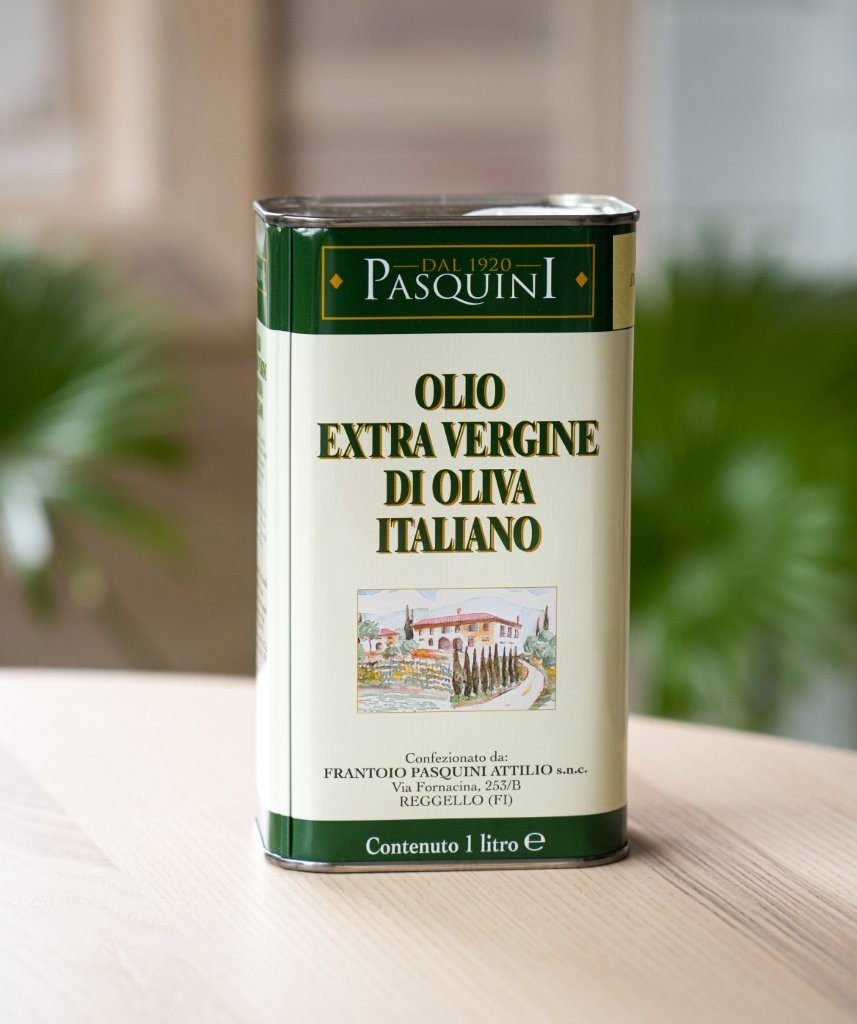
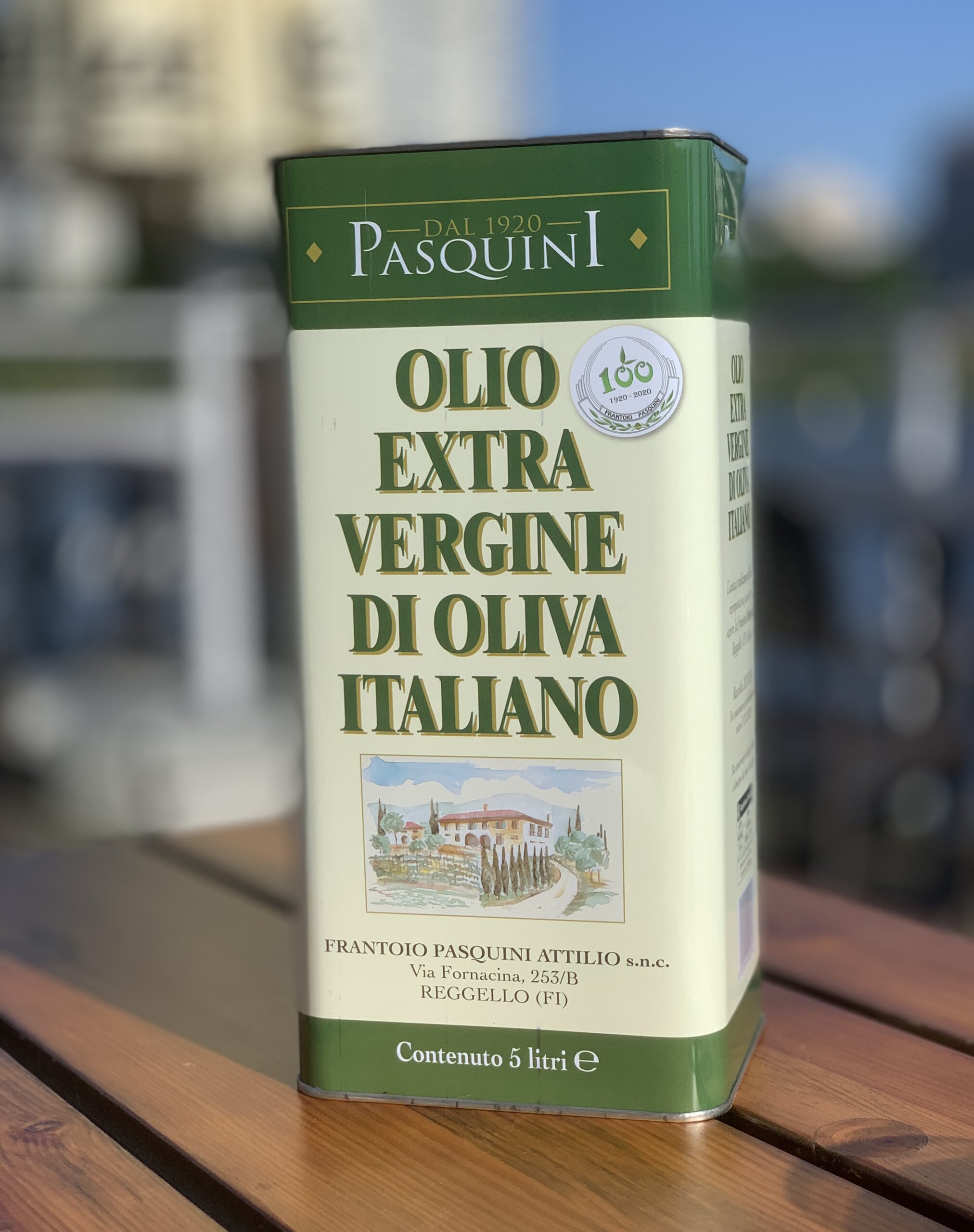
For those who want a freshly pressed Tuscan extra virgin with transparent provenance, Pasquini’s 2025-harvest oils are a strong reference point. The range is cold-extracted to preserve the aromatic complexity and polyphenol content that define a genuine świeża oliwa z oliwek (fresh olive oil) — available in three formats to suit different usage patterns, from everyday cooking to larger household or professional needs.
Whether you use it as a finishing drizzle over soups, a base for salad dressings, or as described in 10 simple kitchen ideas for Pasquini olive oil, the quality of cold-pressed, freshly harvested oil makes a tangible difference in both taste and nutritional value.

Buying with Confidence: Final Checklist
Recognising genuine Tuscan extra virgin olive oil — oliwa ekologiczna or cold-pressed — comes down to a combination of label literacy, sensory awareness, and source transparency. The key signals are consistent: certified designation (IGP or DOP), a stated harvest year, cold-extraction process, and the peppery-bitter sensory profile that Visit Tuscany identifies as the hallmark of authentic Tuscan oil.
Avoid bottles without a harvest year, oils priced suspiciously below market rates for certified Tuscan production, and any label that relies on evocative imagery without verifiable origin claims. As the Tenuta Le Mandorlaie Consorzio guide makes clear, the Consorzio Olio Toscano IGP exists precisely to protect consumers from these ambiguities — and the QR code on certified bottles is now the fastest, most reliable way to verify what you are buying.
For further reading on how Tuscan oils compare to supermarket alternatives, the article Why Does Pasquini Extra Virgin Olive Oil Taste Different from Supermarket Olive Oils? covers the production and sourcing gap in practical terms.
Frequently Asked Questions
Q: What does “cold-pressed” (tłoczenie na zimno) actually mean on an olive oil label?
A: It means the oil was mechanically extracted at temperatures below 27°C (80°F), which preserves volatile aromas and polyphenols. In the EU, this is a regulated claim — it cannot appear on an extra virgin label unless the temperature threshold was genuinely maintained throughout extraction.
Q: Is Toscano IGP the same as a Tuscan DOP?
A: No. IGP (Protected Geographical Indication) requires that all stages of production occur within Tuscany, but covers the whole region. DOP (Protected Designation of Origin) is more restrictive — it ties the oil to a specific sub-zone such as Chianti Classico or Lucca, with tighter varietal and process rules. Both are EU-certified and meaningful; DOP is the narrower, more geographically specific designation.
Q: How long does fresh extra virgin olive oil stay at its best?
A: Most quality extra virgin oils are at their peak within 12–18 months of the harvest date. After that, polyphenols degrade and the characteristic bitterness and pungency fade. Always check the harvest or campaign year on the label, not just the best-before date, and store the opened bottle away from heat and light.