Tuscany off the beaten path: Tuscany Beyond the Obvious: Scenic Towns, Hilltop Landscapes and Places Worth the Detour
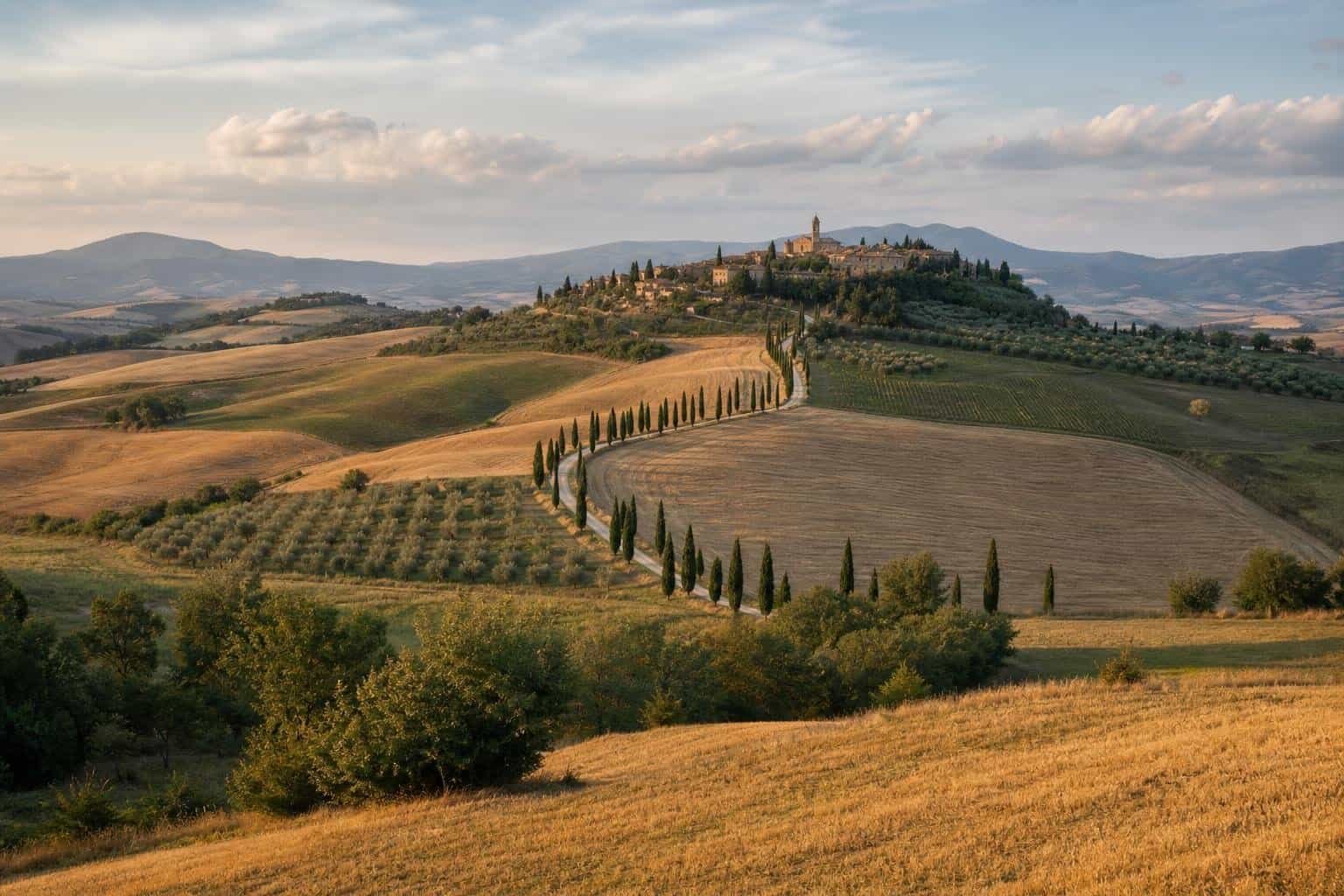
Tuscany off the beaten path reveals a region that most visitors only glimpse from a motorway window — layered, unhurried, and far more varied than its postcard version. Italia.it describes the Val d’Orcia as a landscape redesigned during the Renaissance to reflect the ideals of good government — a detail that tells you something important about the depth of intention behind every hill, every cypress row, every walled village in this region. If you know where to look, Tuscany rewards the effort immediately.
The Tuscan Landscape: More Than a Postcard
The images that define the Tuscan hills — gentle ridges, geometry of vines, stone farmhouses just far enough apart to suggest solitude — are real. But they are also, in significant part, the result of deliberate human design stretching back centuries. Understanding that changes how you travel here.
The most celebrated landscapes lie in the south: rolling clay hills interrupted by conical rises, each topped with a fortified settlement that once controlled the surrounding plain. Tuscany Hidden Places to Visit Off the Beaten Path covers many of these corners in practical detail, and it’s a useful companion if you’re planning a route beyond the obvious circuit.
The variety is easy to underestimate from a distance:
-
Southern Tuscany (Maremma, Val d’Orcia): wide, open, volcanic in places — quieter than anywhere else in the region
-
Central hills (Chianti, Crete Senesi): the iconic wine country, still rewarding once you leave the SR222
-
Northern Tuscany (Garfagnana, Lunigiana): chestnut forests, medieval bridges, almost no tourists
-
Etruscan coast (Bolgheri, Maremma shore): cypress-lined avenues, Super Tuscan vineyards, and the sea
Each zone has its own pace and its own reasons to slow down. A car is the honest answer for most of it — public transport reaches the cities well, but the smaller villages operate on a different logic entirely.
Val d’Orcia: The Landscape That Inspired a School of Painting
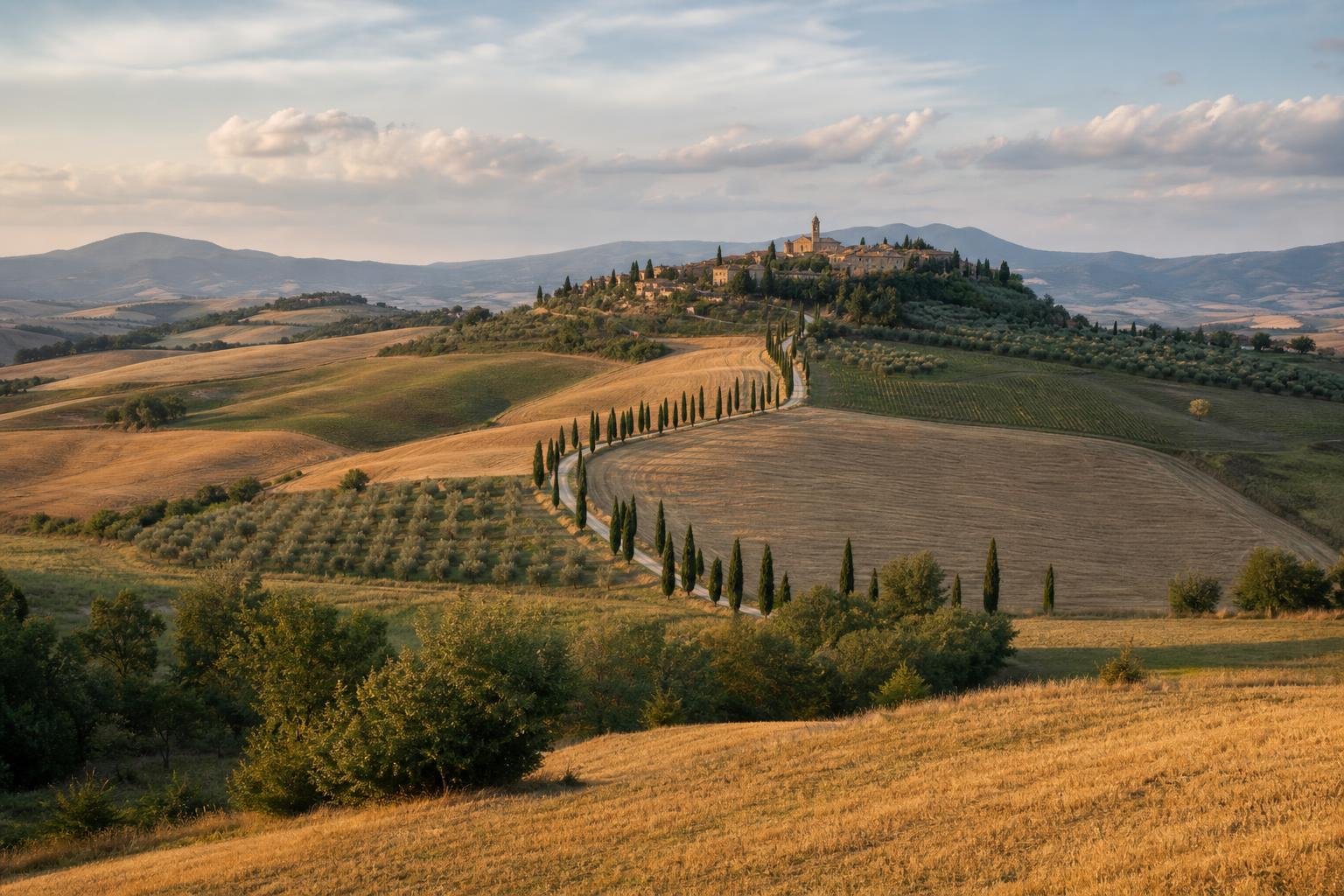
The Val d’Orcia is the part of Tuscany most likely to stop you mid-sentence. The Parco della Val d’Orcia describes it precisely: a UNESCO cultural landscape recognized in 2004 for the excellent state of conservation of its scenery, a direct result of intelligent human interventions over centuries, and for the deep influence it exercised on Renaissance artists.
That influence is not merely art-historical. The painters of the Sienese School documented this valley in works that shaped how European culture understood landscape itself — images where people appear to live in harmony with nature, rather than simply adjacent to it. You feel that when you drive through.
The five municipalities of the protected park — Castiglione d’Orcia, Montalcino, Pienza, Radicofani and San Quirico d’Orcia — each carry a different character:
-
Montalcino: a 14th-century fortress above vineyards that produce Brunello, one of Italy’s most prestigious reds
-
Pienza: rebuilt in the 15th century as an ideal Renaissance city under Pope Pius II — its Piazza Pio II is a UNESCO site in its own right
-
Montepulciano: perched above both Val d’Orcia and Val di Chiana, with a central piazza that functions as a natural belvedere
-
San Quirico d’Orcia: home to the Horti Leonini, a 16th-century Renaissance garden designed by Diomede Leoni — one of Tuscany’s quieter surprises
-
Radicofani: a volcanic ridge town that controlled the Via Francigena, the ancient pilgrim and trade route connecting Rome to northern Europe
The UNESCO inscription also covers the Via Francigena itself, along with its associated abbeys, inns, shrines and bridges — making the whole valley a layered historical document, not just a scenic drive.
For the Chianti corridor, the SR222 between Florence and Siena passes through Greve and Castellina — wine stops, yes, but also proper medieval towns with their own stories. Further west, Bolgheri’s famous cypress-lined viale and the Etruscan coast offer a different register entirely: flatter, breezier, and largely overlooked by visitors who never leave the hill-town circuit.
Siena and the Towns That Surround It
Siena is the anchor of central Tuscany and it deserves the attention it receives. The Piazza del Campo is genuinely one of the best urban spaces in Europe — not overhyped, just hard to photograph accurately. The Gothic Duomo, the Palazzo Pubblico with Lorenzetti’s famous frescoes of good and bad government (which directly inspired the aesthetic planning of Val d’Orcia), and the medieval contrade system that still governs civic life — all of it rewards time rather than a three-hour day trip.
But the towns within reach of Siena are equally compelling, and far less crowded:
-
Monteriggioni: a perfectly circular walled town, small enough to walk in twenty minutes, impressive enough to stay in your memory for years
-
San Gimignano: the medieval tower-house town on the UNESCO list since 1990 — arrive early or in the off-season to see it without the crowds
-
Lucignano (Arezzo province): an elliptical street plan that spirals around a 13th-century fortress — uniquely laid out, almost never on a standard itinerary
-
Pitigliano (southern Maremma): built on tuff rock, with a network of tunnels beneath the town leading to ancient wine cellars — known historically as “Little Jerusalem” for its Jewish community
Florence needs no argument made for it, but one practical note holds: base yourself there for a night or two, then move. The city functions best as a starting point for this wider region rather than as the destination itself.
Bringing Tuscany Home: Pasquini Extra Virgin Olive Oil
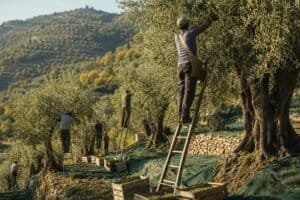
Travelling through the Tuscan hills, you notice olive groves everywhere — on terraced hillsides, around farmhouses, along the edges of vineyards. Olive oil is not incidental to this landscape; it is part of the same agricultural tradition that UNESCO chose to protect. The Val d’Orcia alone has produced extra virgin olive oil from Castiglione d’Orcia for generations.
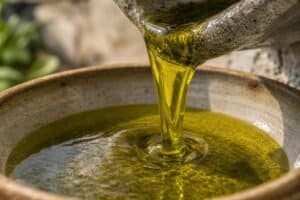
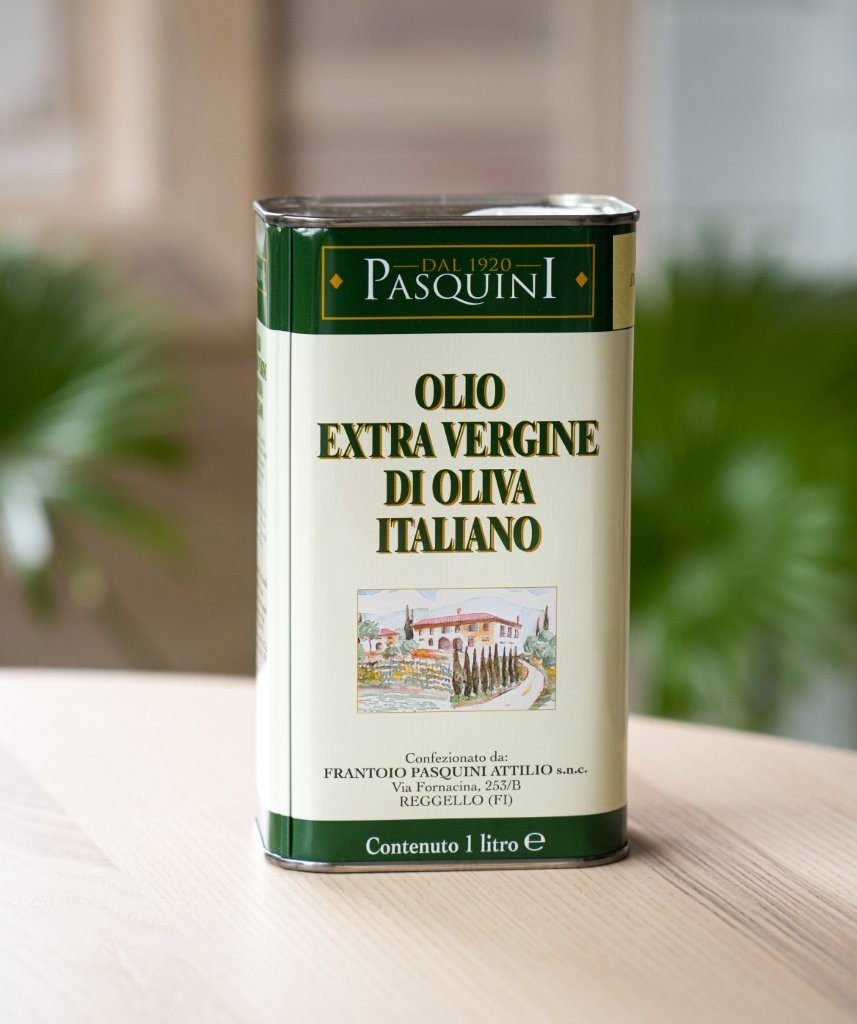
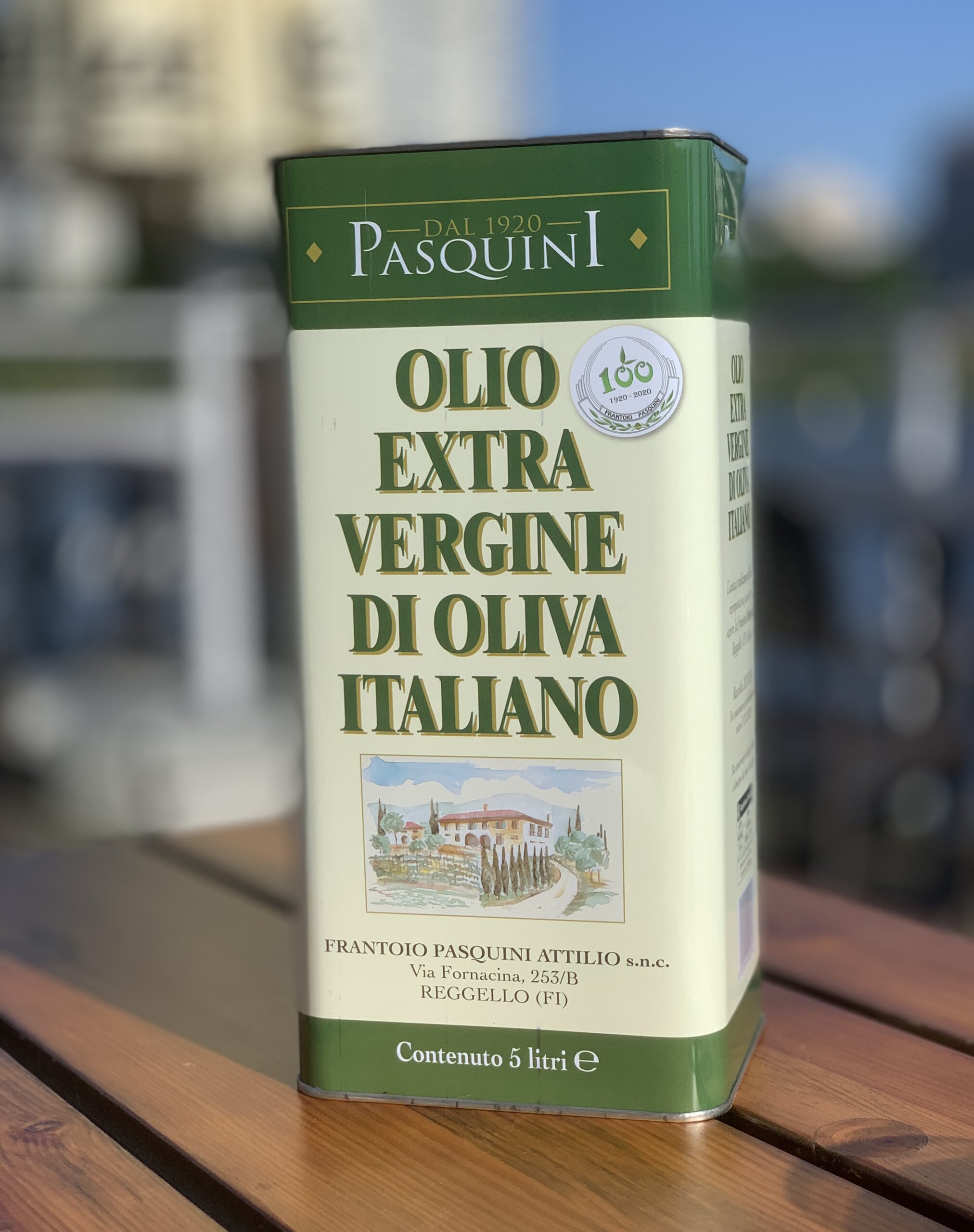
For those who want to carry some of that character home — or who simply use a quality extra virgin olive oil regularly in the kitchen — Pasquini’s freshly pressed 2025 harvest is worth knowing about. You can read more about what makes the Tuscan variety distinct in this guide to Tuscan Extra Virgin Olive Oil: What It Is, Why It Matters, and How to Choose the Real Thing.

How to Travel Tuscany Beyond the Tourist Circuit
The practical case for going off-route in Tuscany is straightforward: the region is dense with quality at every scale, and the less-visited places are often more accessible than they look on a map. A few principles help.
Move by season as much as by itinerary. Spring (April–May) and autumn (September–October) give you the best light, harvests in progress, and manageable visitor numbers. The Val d’Orcia in May — wheat still green, poppies on the verges — looks nothing like the golden August version. Both are worth seeing; they are different landscapes.
Travel by car for anything south of Siena or north of Florence. The Garfagnana region, for instance — chestnut forests, Apuan Alps, medieval bridges over the Serchio — is almost inaccessible without one. The Visit Tuscany editorial team covers many of these lesser-known spots in consistent, practical detail if you want further inspiration on specific routes and sites.
Avoid ZTL zones in historic centres — the restricted traffic areas in Siena, Florence, and smaller towns apply to foreign-registered cars just as strictly as local ones, and fines arrive months later. Park at the edge and walk in.
As a general approach: let the Crete Senesi, the strange lunar clay hills south-east of Siena, absorb at least one afternoon. Let Pitigliano surprise you. Drive slowly past San Quirico d’Orcia at dusk. The region earns that kind of attention — and it returns it, reliably.
Najczęściej zadawane pytania
Q: What is the best base for exploring Tuscany off the beaten path?
Siena is the most practical base for southern Tuscany and the Val d’Orcia; Florence works well for Chianti and the north. For real flexibility, consider an agriturismo between the two.
Q: Is Val d’Orcia a UNESCO World Heritage Site?
Yes — the Val d’Orcia was inscribed on the UNESCO World Heritage List in 2004, recognized as a cultural landscape for its exceptional state of preservation and its influence on Renaissance art and thought.
Q: When is the best time to visit the Tuscan hills?
April to May and September to October offer the best combination of light, landscape colour, and manageable visitor numbers — though each season presents a genuinely different version of the same countryside.