How to Build an Authentic Italian Meal with Mancini Pasta: Shapes, Sauces and the Story Behind the Grain
An authentic Italian pasta meal starts long before you boil the water — it starts in the field. Mancini Pastificio Agricolo grows its durum wheat on its own estate in Le Marche, mills it fresh, and turns it into pasta that genuinely tastes like what it’s made from, as explored in depth by MAISON Ë’s food story on Mancini. If you’ve been wondering how to prepare an authentic Italian pasta meal at home, the answer begins with understanding both the ingredient and the shape in your hand.
The Field Behind Every Forkful: What Makes Mancini Pasta Different
Most pasta brands buy durum wheat on the open market and blend batches from different origins. Mancini does something genuinely rare: it grows four varieties of durum wheat on its own land, grinds the grain fresh three times a week, and controls every step from seed to package. That level of traceability is, as MAISON Ë put it, “utterly unique” in the world of pasta production.
The story starts in 1938, when Mariano Mancini established the family farm in Monte San Pietrangeli, in the heart of Le Marche. His grandson Massimo — an agronomist trained in Bologna and a marketing graduate from Lyon — founded the pasta operation officially in 2010. Massimo’s goal wasn’t to sell anonymous grain by the tonne; it was to transform the family’s wheat into something traceable, seasonal, and worth tasting.
Le Marche turns out to be a near-perfect place for this. The clay-rich soil and the clean wind that blows in from the Adriatic between the mountains and the sea create conditions where durum wheat thrives. In a good harvest year, the fields yield around seven tonnes of wheat per hectare. After harvest, the grain is blended and stored at a controlled 18 °C — cool enough to discourage mould and insects without heavy chemical intervention.
On every packet of Mancini pasta, you’ll find the harvest year printed on the label — much like a vintage on a wine bottle. Since January 2021, a QR code on each pack takes you through the four main production phases. That’s a level of transparency you almost never see in the pasta aisle.
The pasta itself is bronze-extruded, which gives it a slightly rough, porous surface. That texture isn’t just aesthetic: it means sauce genuinely clings to the pasta rather than sliding off. It’s also slow-dried at gentle temperatures to preserve both flavour and cooking consistency.
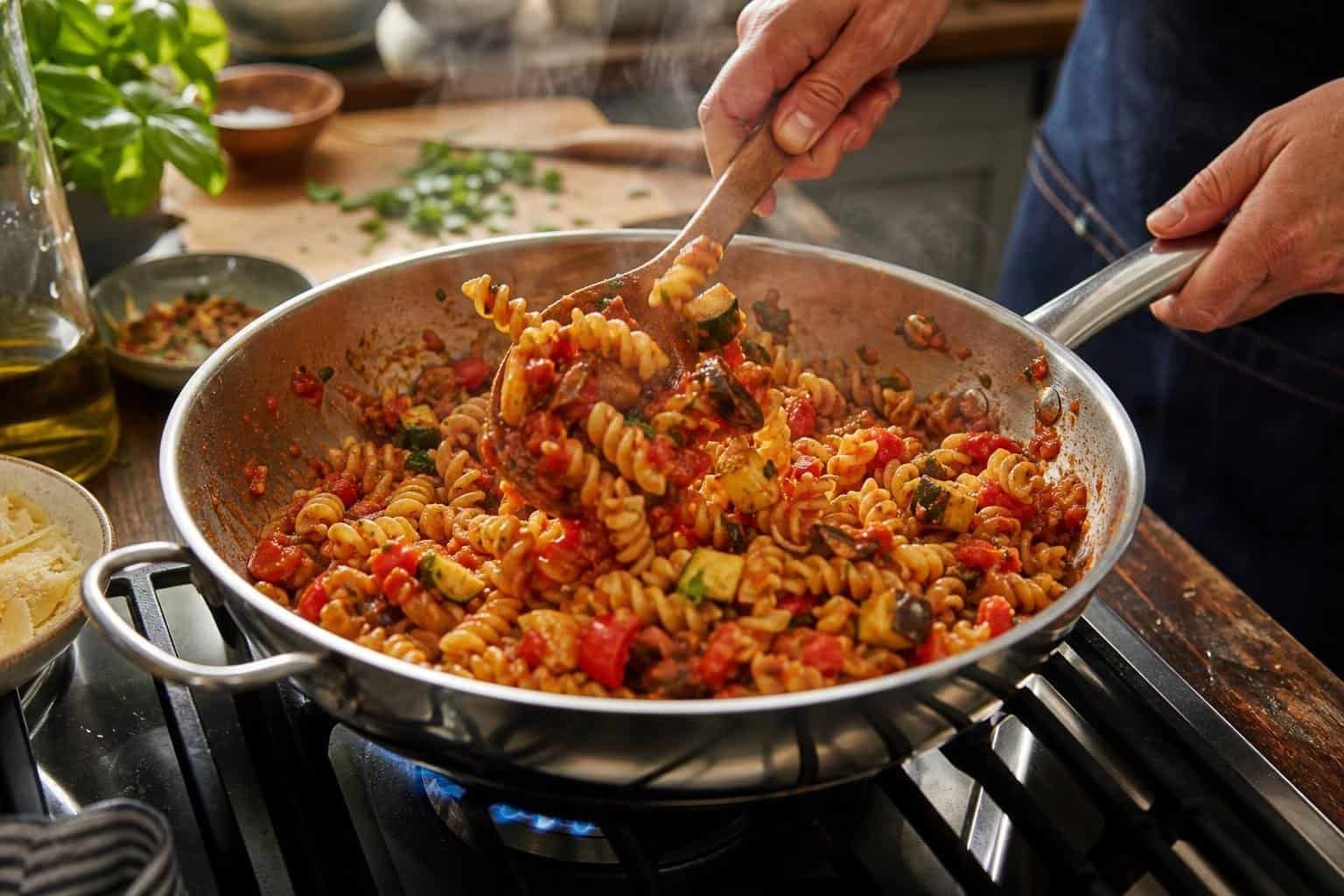
[IMAGE: hands tossing fusilli pasta with a chunky tomato vegetable sauce in a wide stainless steel pan on a gas stove, steam rising, wooden spoon mid-stir, Italian kitchen counter setting, natural overhead light, active mid-prep cooking moment, no text no logos]
The result is pasta with what producers in other sectors would call terroir — a flavour shaped by a specific place and a specific year. Three-star Michelin chefs including Niko Romito and Giovanni Santini serve Mancini pasta on their menus, not because of sponsorship deals, but simply because the product holds up on its own. That’s a quiet but meaningful endorsement.
Matching Shapes to Sauces: How Italians Actually Think About It
Italy has somewhere between 350 and 500 pasta shapes, depending on how you count the regional variants — KUKBUK, one of Poland’s leading food publications, notes around 350 types on the Apennine Peninsula alone, with nearly four times as many regional names. Each shape exists for a reason rooted in how it carries sauce, and getting this right is at the heart of authentic Italian cooking.
The core logic is simple: match the weight and texture of the sauce to the surface area and structure of the pasta. A light olive oil sauce coats a thin strand evenly. A chunky meat ragù needs a shape with ridges or hollows to hold it. A pesto clings best to something with twists and curves.
Here’s how the main categories break down:
- Long thin pasta (spaghetti, linguine): best with smooth, light sauces — olive oil, garlic, simple tomato, seafood. Heavy ragù tends to slide off and pool at the bottom of the bowl.
- Short tubes with ridges (penne rigate, maccheroni): ideal for tomato-based sauces, chunky vegetable sauces, and creamy sauces. The hollow centre and ridges trap every bit.
- Twisted shapes (fusilli, trofie): their spirals grip pesto, vegetable ragù, and sauces with small pieces beautifully — the nooks and crannies do real work here.
- Broad ribbons (tagliatelle, pappardelle): built for rich, weighty sauces like Bolognese. Spaghetti alla Bolognese is, famously, not what they eat in Bologna — they use tagliatelle.
One practical tip worth remembering: finish your pasta in the pan with the sauce for 60–90 seconds and add a small splash of starchy pasta water. This step helps the sauce cling, turns it glossy, and ties everything together far more effectively than simply draining and plating separately. For more on choosing the right shape for your sauce, our guide How to Match Pasta Shapes to Sauces: A Mancini Pasta Shapes Guide goes deeper into the pairing logic.
The other element that elevates a simple pasta dish is the oil you use to build the sauce. A good extra virgin olive oil makes a genuine difference in flavour, whether you’re cooking a soffritto base or finishing the dish with a drizzle. If you’d like to explore that side of the meal, take a look at Tuscan Extra Virgin Olive Oil: What It Is, Why It Matters, and How to Choose the Real Thing.
Three Mancini Shapes Worth Knowing — and What to Cook with Them
Each Mancini shape is bronze-extruded and slow-dried, so they all share that same nutty wheat flavour and sauce-gripping texture. But the shape you choose still matters. Here are three to start with.
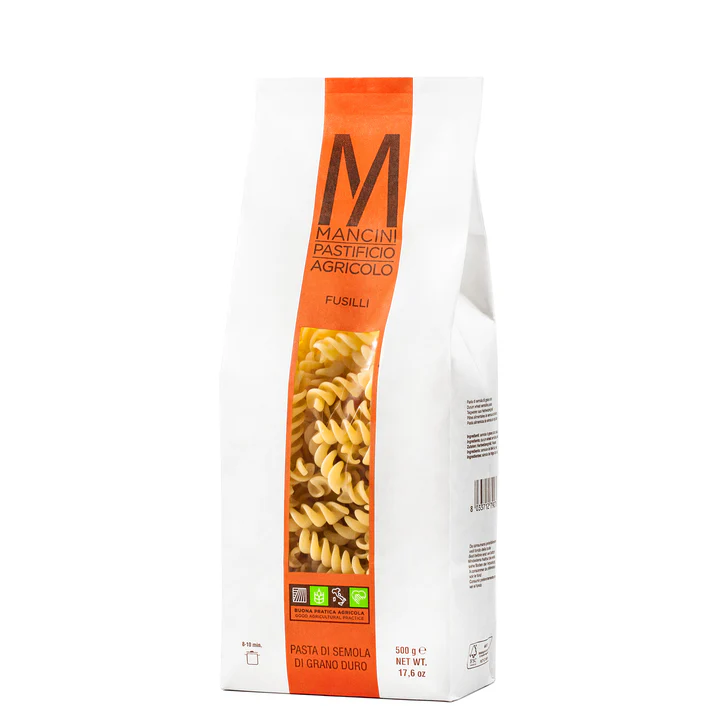
Fusilli
The spiral shape of fusilli is made for capturing sauce in every twist. It works beautifully with pesto — the oil and basil get right into the curves — and equally well with a chunky tomato and vegetable sauce, or a light sausage ragù. It’s also a versatile choice for warm pasta salads in summer.
Maccheroni
Short and tubular, maccheroni is one of the most honest shapes in Italian cooking. It holds rich, flavourful sauces inside the hollow and lets the ridged exterior grip whatever is around it. Think tomato-based sauces with a little depth — slow-cooked with garlic, basil, and good olive oil — or a creamy cheese sauce in the Northern Italian style.
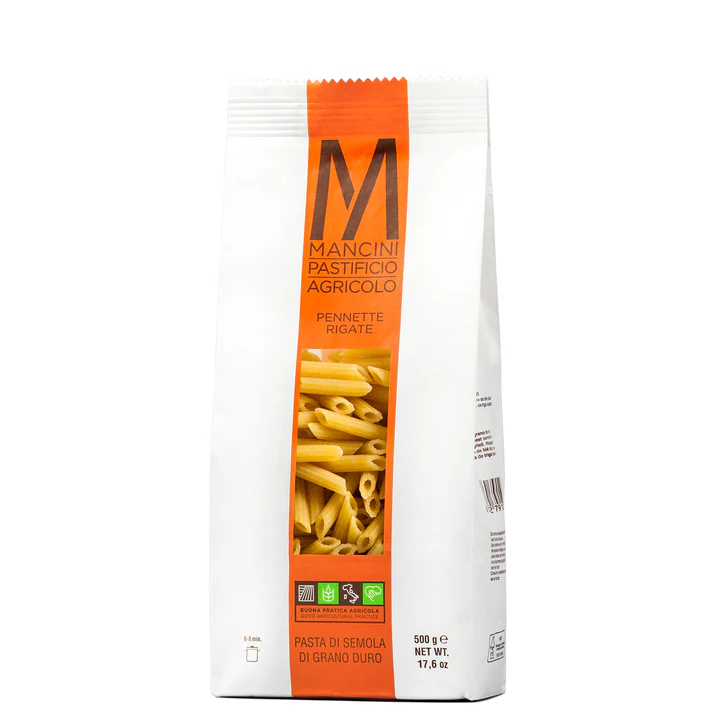
Pennette Rigate
Smaller than standard penne but with the same angled ends and ridged surface, pennette rigate are ideal for assertive sauces: arrabbiata, amatriciana, or a simple tomato with capers and olives. The ridges grip the sauce, the hollow centres fill up, and every forkful delivers a proper bite. According to the Mancini company philosophy, each shape is designed so that the pasta’s natural wheat character comes through — and with pennette rigate, that flavour really holds its own against a boldly seasoned sauce.
Mancini Pasta Shapes to Explore at Home
If you’d like to start building authentic Italian meals with Mancini pasta, these three shapes cover a wide range of sauces and occasions — from a quick weekday dinner to a proper Sunday lunch. Each one is made from estate-grown durum wheat, bronze-extruded, and slow-dried to keep that genuine wheat flavour intact.

Putting It All Together: Your Authentic Italian Meal
An authentic Italian meal with Mancini pasta isn’t complicated — it’s considered. Choose a shape that suits your sauce. Use pasta water to finish the dish in the pan. Start the sauce with a decent extra virgin olive oil. And if you want a sauce that goes with all three shapes above, a classic pesto is hard to beat — you can learn about the full range of Italian pestos in our guide to Types of Italian Pesto: A Friendly Guide to Italy’s Most Versatile Sauce.
What makes this approach — and Mancini pasta specifically — worth the attention is the transparency behind it. You know where the wheat grew, what year it was harvested, and how it was processed. That kind of traceability is unusual, and it shows in the bowl. The pasta genuinely tastes like wheat, holds its bite well, and carries sauce in a way that supermarket pasta rarely manages.
Whether you’re cooking a quick Tuesday dinner or a longer Sunday lunch, the principles are the same: good pasta, the right shape, the right sauce, and a little patience at the stove. That’s how to prepare an authentic Italian meal with Mancini pasta — and it’s far more straightforward than it might sound.
Frequently Asked Questions
Q: What makes Mancini pasta different from other Italian pasta brands?
A: Mancini grows its own durum wheat on its estate in Le Marche, grinds it fresh three times a week, and prints the harvest year on every packet — a level of traceability that is genuinely rare in the pasta world.
Q: Which Mancini pasta shape works best with pesto?
A: Fusilli is an excellent choice — the spiral twists trap pesto beautifully, ensuring the sauce coats every bite rather than sitting at the bottom of the bowl.
Q: What is the best way to finish pasta so the sauce clings properly?
A: Transfer the nearly-cooked pasta into the pan with your warmed sauce and toss for 60–90 seconds, adding a small splash of starchy pasta water. This helps the sauce bind to the pasta and creates a glossy, even coating.