Mancini Pasta Types: A Complete Guide to Shapes and Uses
Among artisan pasta producers, few can claim a process as transparent and field-to-fork as Mancini Pastificio Agricolo. The full range of Mancini pasta types — from fine spaghettini to robust penne — stems from a single origin: durum wheat grown on the family’s own estate in Le Marche, central-eastern Italy. The official producer site at Pasta Mancini outlines the philosophy behind every shape in the range.
The Mancini family has farmed wheat since 1938. Massimo Mancini — agronomist and third-generation heir — built a pastificio right in the middle of those fields, turning wheat into pasta within meters of where it was harvested. The result is a genuinely seasonal product: each year’s pasta reflects that harvest’s specific conditions, much like an estate olive oil or wine.
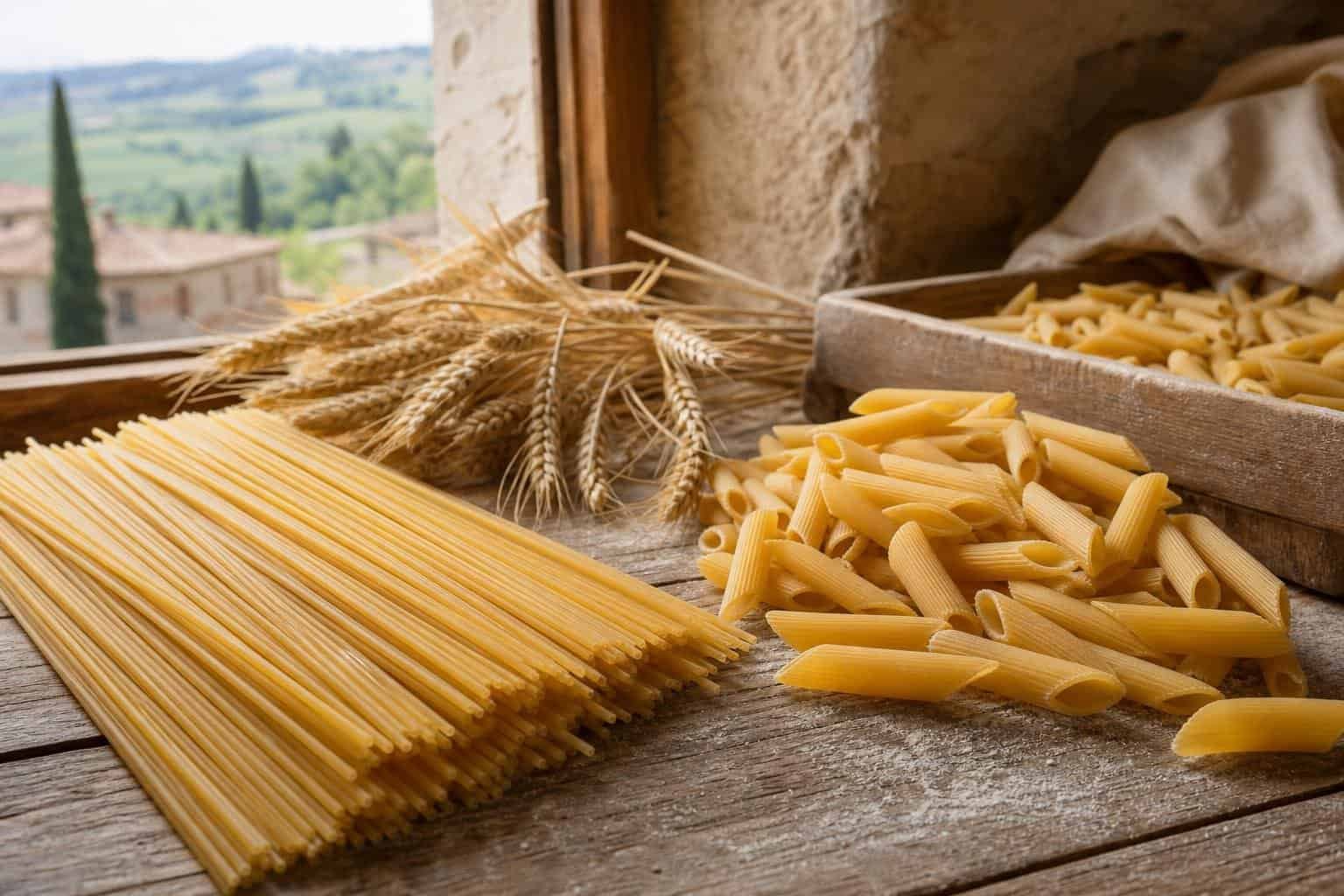
[IMAGE: dry spaghettini and penne arranged on a rustic wooden surface in soft natural daylight, durum wheat stalks nearby, Italian farmhouse kitchen backdrop, no text]
From Field to Bronze Die: How Mancini Pasta Is Made
What separates Mancini from most pasta producers is the closed-loop process. The wheat is grown on the estate, cold-stored at 18°C to avoid preservatives, freshly milled on-site, and then shaped using circular bronze dies. Bronze extrusion creates a rough, porous surface that allows sauces to cling far more effectively than pasta made through smoother Teflon dies.
Drying is equally deliberate. Short pasta takes around 20 hours; long shapes require even more time, all at temperatures kept below 44°C. Slow, low-temperature drying preserves the aromatic compounds of the grain — something you notice as soon as the pasta hits boiling water.
Each package carries the harvest year printed on the label — a level of traceability more common in fine wine than in pasta. A QR code on each bag connects directly to the full production timeline: harvest date, milling date, pasta-making date, packaging date.
- Bronze die extrusion — rough, porous surface for sauce adherence
- Low-temperature drying — below 44°C, preserving grain aroma
- Estate-grown wheat — single-origin, traceable to the field
- Harvest year labelling — seasonal variation, like an estate wine
- No additives — only semolina and water
Mancini Pasta Types: Shapes, Textures and Pairing Logic
Mancini produces three main lines: classic (semolina and water), whole wheat, and turanicum — made from an ancient grain variety revived on the estate, lower in gluten and stone-milled. Within these lines, the shape range covers both long and short formats. As food importer editorial coverage at Four Star Seafood notes, Massimo Mancini asked a key question early on: why grow exceptional wheat without controlling what it becomes?
Each shape has its own drying protocol, adapted to its geometry and wall thickness. The logic of pairing shapes to sauces is not arbitrary — it follows the surface area and structural properties of each format.
- Spaghettini — thin, long; works with light oil-based, seafood, or fresh tomato sauces
- Spaghetti — the benchmark long pasta; versatile across classic Italian sauces
- Penne — tubular, smooth outside yet porous from bronze extrusion; holds chunky sauces, ragù, or baked dishes
- Bucatini — thick with a hollow center; classic with amatriciana or anchovy-based sauces
- Linguine — flat and narrow; suited to shellfish and pesto
- Rigatoni / Paccheri — wide tubes; ideal for robust meat sauces and baked pasta
- Fusilli Lunghi — long spirals; catches chunky or herb-rich sauces in their coils
A useful companion when planning sauce combinations is the guide on choosing the right pesto for pasta — the logic of matching texture and intensity applies directly to Mancini shapes.
Spaghettini and Penne Mancini: Two Essential Formats
Spaghettini is the slimmer sibling of spaghetti — finer in diameter, which means it cooks slightly faster and pairs naturally with lighter preparations. A drizzle of good extra virgin olive oil, fresh garlic, clams, or a simple aglio e olio: the pasta’s own flavour carries each dish. The wheat character of Mancini spaghettini is particularly evident in minimal preparations, where nothing competes with the grain.
Mancini penne, though smooth on the outside, benefits from the same artisan surface created by the bronze die. The result is a tube that absorbs sauce on both inside and outside surfaces — effective with arrabbiata, vegetable-forward sauces, or even a slow-cooked ragù. For something more unusual, penne pairs well with Lampascioni cream — a southern Italian condiment made from wild grape hyacinth bulbs, offering an earthy bittersweet depth that complements the pasta’s structure.
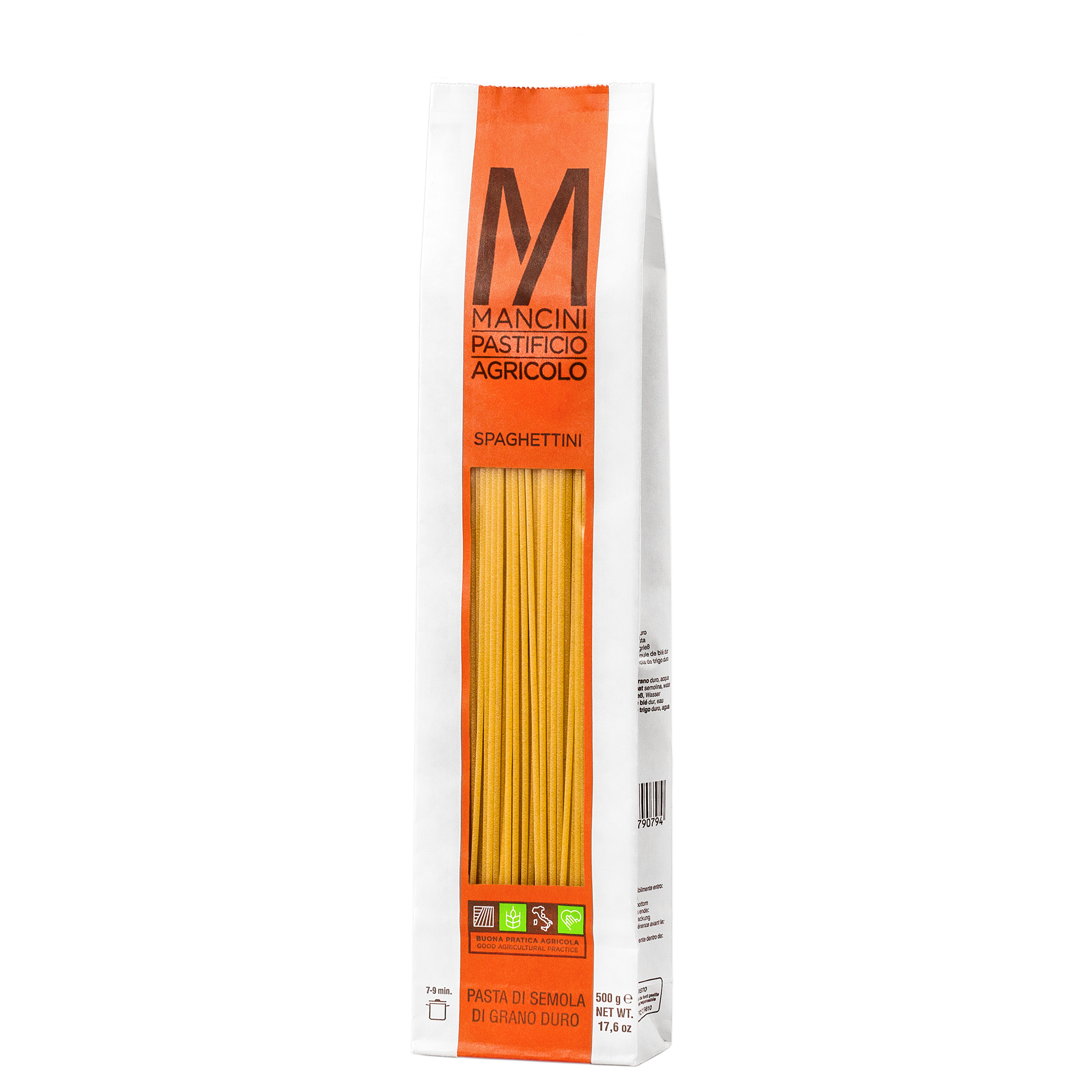

If you want to explore these formats in your own kitchen, all three products are available to order directly.
Why Durum Wheat and Artisan Method Matter
The choice of durum wheat (Triticum durum) is foundational — not cosmetic. Durum has a harder endosperm than common wheat, which produces a semolina with higher protein content and a gluten structure that holds its shape during cooking. The pasta stays firm when cooked al dente, rather than turning soft or sticky. A Polish-language nutritional overview on Akademia Kulinarna confirms the characteristic profile: durum offers more protein, dietary fibre, and a lower glycaemic index than pasta made from common wheat.
At Mancini, the durum is not sourced from commodity markets — it is grown on the same estate where the pasta is produced, which removes the variability introduced by blending wheats from multiple origins. The grain is stored without chemicals, milled fresh, and used within the production cycle of that harvest year. This is what makes each annual release genuinely different — not as a marketing claim, but as a direct consequence of seasonal agriculture.
- Higher protein and fibre content compared to common wheat pasta
- Lower glycaemic index — especially when cooked al dente
- Firm texture that resists overcooking
- Pronounced grain aroma released during cooking
Understanding Mancini pasta types means understanding that the shape is just one variable — the wheat behind it is the constant that ties every format together. Whether you choose spaghettini for a light seafood dish or penne for a slow ragù, the grain quality provides the foundation that makes the difference on the plate.