Why Pasquini Extra Virgin Olive Oil Tastes Different from Supermarket Brands
Pour a little Pasquini extra virgin olive oil onto a spoon and you notice it straight away — there is a grassy freshness, a gentle pepper finish, and a flavour that actually stays. That experience is not accidental, and it is a world away from what most of us pick up from a supermarket shelf. The European Commission’s Agriculture directorate notes that the EU accounts for nearly 72% of global olive oil production — yet genuine quality is far from evenly distributed across that enormous output.
The Real Meaning of “Extra Virgin” — and Why It Is So Often Misused
Extra virgin is not just a marketing phrase. According to the International Olive Council (IOC), true extra virgin olive oil must be extracted using purely mechanical means, with free acidity no higher than 0.8% and a peroxide value no greater than 20 meq O₂/kg. It must also pass a panel of trained tasters who check for any sensory defects.
Those standards sound reassuring — but they only matter when they are actually enforced. Testing by the National Consumers League found that six out of eleven EVOO-labelled products bought from major US retailers failed to meet IOC standards. A UC Davis study went further: researchers tested 14 imported brands from major retailers and found that 69% failed sensory standards for extra virgin olive oil.
What goes wrong in practice? The issues tend to fall into a few recurring patterns:
- Degraded oil sold as fresh — heat, light, and long storage destroy polyphenols and shift the flavour toward stale or rancid notes.
- Blending with refined oil — defective oils can be sent to a refinery, stripped of colour, odour and flavour using heat and chemical solvents, then blended with a small amount of genuine virgin oil and sold illegally as extra virgin.
- Mislabelled grade — oil that never met EVOO criteria in the first place is labelled as if it did.
- Long supply chains — before oil even reaches a question of fraud, its journey through the industrial supply chain works against the freshness that is the hallmark of authentic EVOO.
The result is a product that looks the part — pale gold in a glass bottle, EVOO printed boldly on the label — but tastes flat, greasy, or simply of nothing much at all.
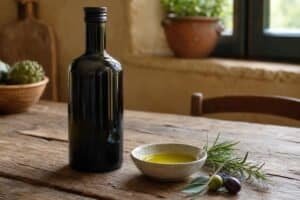
[IMAGE: glass bottle of fresh green-golden extra virgin olive oil beside a handful of green olives on a rustic stone surface, soft Tuscan morning light, candid still life, no text]
What Makes Tuscan Olive Oil — and Pasquini Specifically — Genuinely Different
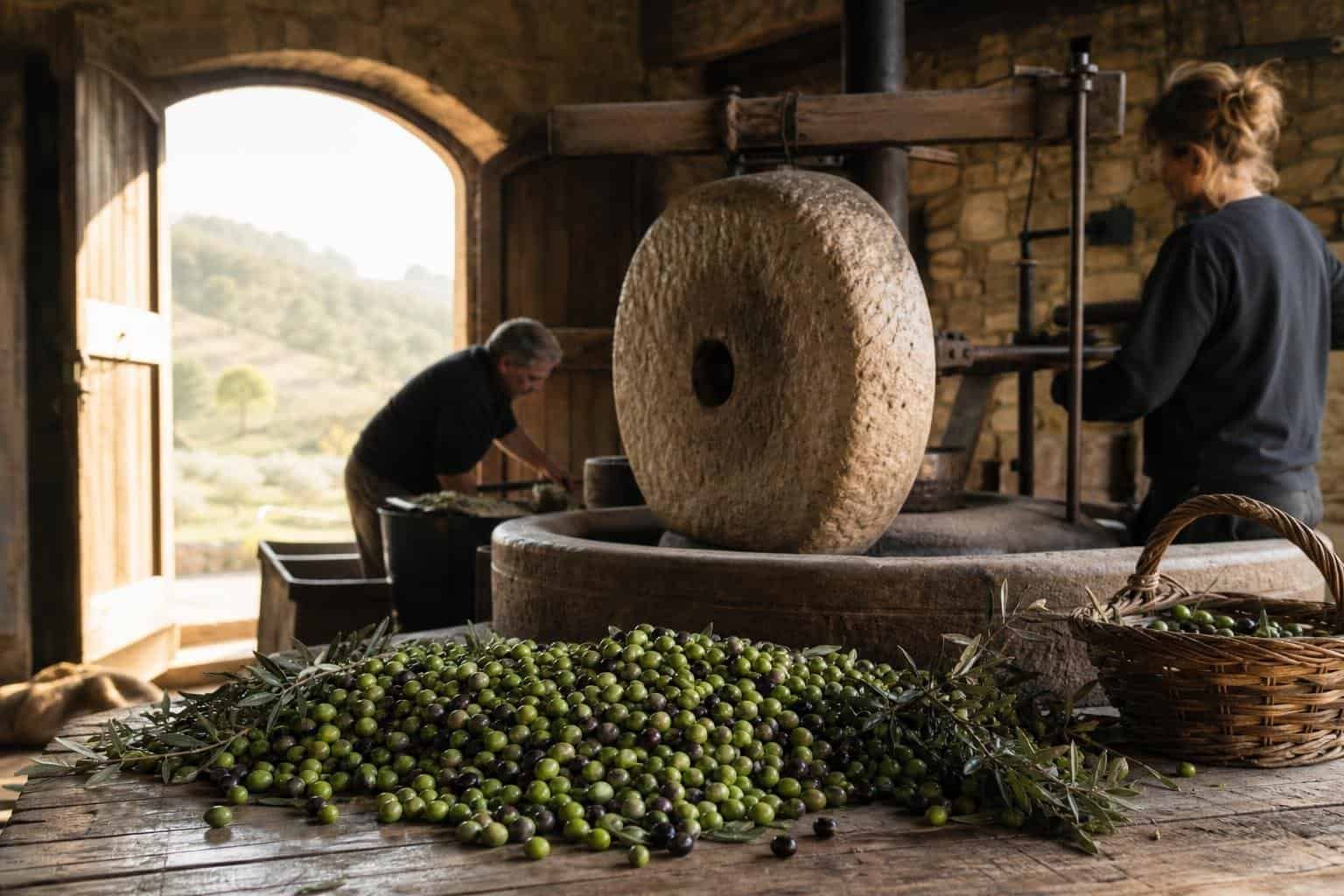
Tuscany has been pressing olives for centuries, and the region’s character shows up in the oil. Newly pressed Tuscan extra virgin olive oil tends toward an intense green colour; the aroma is reminiscent of green vegetables, and a noticeable bitter note with a spicy finish is always present in the taste. Those are not defects — they are exactly what polyphenols taste like, and polyphenols are the compounds associated with olive oil’s best qualities.
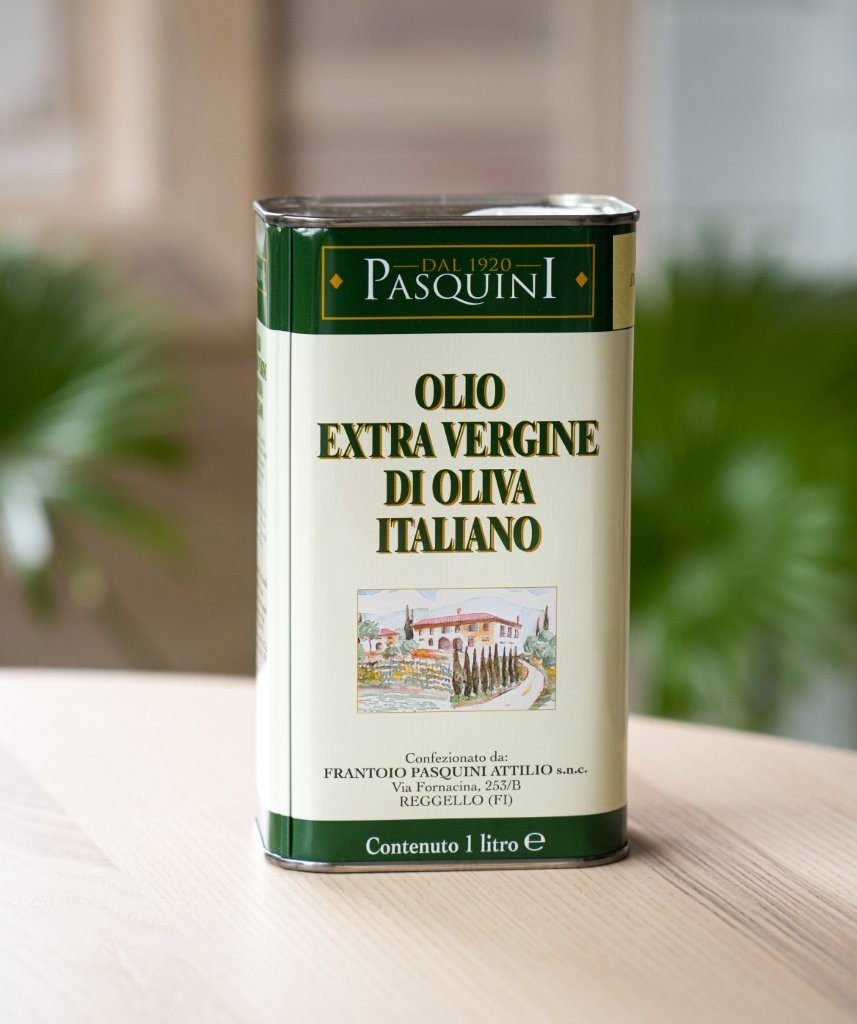
Pasquini is a family-run mill in Reggello, a small town about 30 km south-west of Florence. The 2025 freshly pressed release carries measurable numbers that tell a clear story on their own:
- Free acidity: 0.20% — well below the 0.8% legal ceiling, a strong sign that the olives were healthy and processed quickly.
- Polyphenol content: 502 mg/kg — a level associated with bold flavour and the antioxidant properties that make real EVOO worth seeking out.
- Delta K purity index: 0.00 — confirming there is no blending with refined or lower-grade oils.
- Oxidation markers: excellent — no signs of industrial shortcuts or delays between harvest and pressing.
The olives are picked before full ripeness, which is when polyphenol levels peak. Early harvest means slightly lower yield per tree — but far more character in the bottle.
The sensory result is that characteristic combination of fresh grass on the nose, a rich, enveloping body, and a pleasantly warm pepper note in the finish. It is the kind of flavour that makes sense drizzled over a bowl of Mancini pasta or spooned into a dish of pasta dressed with Italian pesto — where you actually want the oil to be tasted, not just carry other flavours.
How to Spot the Real Thing When You’re Buying
The International Olive Council’s standards and methods define both the chemical thresholds and the sensory criteria that separate genuine extra virgin oil from everything else. Knowing a few key signals makes it much easier to buy well.
The most reliable markers to look for on the label and bottle:
- Harvest year, not just a best-before date — real EVOO is a fresh agricultural product; a harvest year tells you how recent it actually is.
- Low free acidity stated on the label — anything well under 0.8% is a positive sign; genuinely artisanal oils often print the exact figure.
- Origin specificity — a named mill, a named region, and ideally a named town carries more weight than a generic “product of Italy” blended from multiple countries.
- Dark glass or opaque packaging — light degrades polyphenols quickly; serious producers protect their oil.
- Price that reflects reality — small-batch, early-harvest oil from a real mill cannot be produced at supermarket commodity prices.
It is also worth reading the guidance at our friendly guide to recognising genuine Tuscan extra virgin olive oil — it walks through each of these checks in more detail.
Pasquini Olive Oil Extra Virgin — The 2025 Freshly Pressed Harvest
If you have been using a supermarket EVOO as your everyday oil, trying Pasquini once tends to reframe the whole category. The 2025 freshly pressed batch brings everything that makes Tuscan oil worthwhile into a single bottle: low acidity, high polyphenols, zero additives, and a flavour that shows up clearly in salads, dressings, finishing drizzles, and anything where the oil is not completely hidden by heat.
It works equally well as a daily cooking oil and as a finishing oil — the kind of bottle you reach for when the food deserves a little more than neutral fat. Whether you are dressing greens, enriching a soup, or simply dipping good bread, the difference from a mass-market bottle is immediate.
The Bottom Line on Pasquini Extra Virgin Olive Oil
The difference between Pasquini extra virgin olive oil and a generic supermarket bottle comes down to choices made long before the oil reaches you — which olives to pick, when to harvest them, how quickly to press, and whether to blend or stay pure. Those choices show up in the numbers (0.20% acidity, 502 mg/kg polyphenols, zero additives) and they show up even more clearly in taste.
Research consistently finds that a significant portion of EVOO-labelled oils sold through large retail chains do not meet true extra virgin standards — there is growing concern that these standards are inconsistently applied and enforced, particularly in large-scale retail distribution channels, leading to potential consumer deception. The answer is not to give up on olive oil; it is simply to know what genuine quality looks like and to choose accordingly.
A good starting point is understanding Tuscan oil specifically — the region’s native olive varieties, its cooler hillside conditions, and its tradition of early harvesting all shape a flavour profile that stands out. The educational portal Toskania.org.pl offers a thorough breakdown of those standards and the ways that lower-quality oils enter the market under premium labels. Armed with that knowledge, choosing włoska oliwa z oliwek like the Pasquini 2025 harvest becomes straightforward — and the flavour speaks for itself.
Frequently Asked Questions
Q: What makes Pasquini extra virgin olive oil different from cheaper supermarket oils?
A: Pasquini is cold-pressed at a family mill in Reggello, Tuscany, from early-harvested olives, producing very low acidity (0.20%) and high polyphenols (502 mg/kg) — quality markers that most mass-market oils do not match.
Q: Is extra virgin olive oil always genuine when it says so on the label?
A: Not necessarily. Multiple independent tests — including National Consumers League testing and UC Davis research — have found that a substantial share of supermarket EVOO-labelled products fail to meet International Olive Council sensory and chemical standards.
Q: How should I use Pasquini oliwa extra vergine in everyday cooking?
A: It works well as both a finishing oil (drizzled over soups, salads, or pasta) and a light cooking oil. Because it has a strong, distinctive flavour, it shines most when used raw or added at the end of cooking, where its aroma and peppery finish remain intact.