Tuscan Extra Virgin Olive Oil: What It Is, Why It Matters, and How to Choose the Real Thing
Tuscan extra virgin olive oil is one of the most distinctive premium olive oils in the world — deep green when freshly pressed, with a peppery finish that lingers on the back of the throat. According to Visit Tuscany, the official regional portal, extra virgin is the highest-quality category from an organoleptic standpoint — governed by specific European legislation that guarantees its authenticity. Once you’ve tasted a genuinely fresh bottle, going back to a generic supermarket blend is tough.
What Makes Tuscany’s Olive Oil Different
It starts with the land. Tuscany’s hilly terrain, Mediterranean climate, and ancient olive varieties combine to produce oils with a flavour profile found almost nowhere else. Why Tuscan olive oil tastes different comes down to exactly those three factors — climate, varieties, and centuries of tradition working together.
The main olive varieties grown here are Frantoio, Moraiolo, and Leccino. Each brings something to the blend:
-
Frantoio — the backbone of most Tuscan oils; intensely fruity, with a strong olive character
-
Moraiolo — adds depth and a pleasantly bitter, peppery note
-
Leccino — softer and more golden in colour, balancing the blend
The harvest typically begins in October and runs into early November. Olives are picked mostly by hand — or with handheld mechanical combs — and rushed to the press within hours. That speed matters: the sooner the olives are cold-pressed after picking, the more polyphenols and aromatic compounds make it into the oil. Cold extraction at lower temperatures also results in more positive sensory attributes, as confirmed by research published in scientific literature on EVOO production.
The colour of freshly pressed Tuscan oil ranges from vivid green to a golden-green, shifting to a warmer yellow as the months pass. The aroma? Expect fresh-cut grass, artichoke, and ripe fruit on the nose — and that signature peppery kick on the finish, which is a natural sign of high polyphenol content, not a flaw.
[IMAGE: A pair of hands using a small handheld olive comb harvesting olives from silver-grey branches in a Tuscan grove, overcast autumn daylight, loose olives falling into a net below, candid harvest reportage style, no text]
Understanding the Quality Labels: DOP, IGP, and What They Tell You
Labels on Italian olive oil can feel a little overwhelming at first. Here’s the short version: the two official protected designations you want to look for are DOP (PDO) and IGP (PGI). Both mean the oil’s origin has been independently verified.
According to Visit Tuscany’s quality label guide, Tuscany has four Protected Designations of Origin — Chianti Classico DOP, Terre di Siena DOP, Lucca DOP, and Seggiano DOP — plus one regional Protected Geographical Indication: Toscano IGP, which covers the entire region.
To earn the Toscano IGP certificate, the oil must be produced entirely within Tuscany — from growing the olives right through to the final bottling. That’s a meaningful guarantee. It means nothing was blended in from elsewhere, which is unfortunately common with cheaper oils sold under vague “Italian olive oil” labelling.
A few practical things to check when you’re reading a label:
-
Harvest year — fresher is better; look for the most recent season
-
Cold-pressed or cold-extracted — signals minimal processing and higher nutrient retention
-
Dark bottle — protects polyphenols from light degradation
-
DOP or IGP seal — confirms verified Tuscan origin
-
Acidity below 0.8% — the legal threshold for extra virgin classification
Oils with no clear harvest date, clear packaging, or a suspiciously low price are worth being cautious about. A well-made Tuscan EVOO has real production costs built in — particularly when the olives are hand-harvested and cold-pressed on the same day. The European Food Safety Authority (EFSA) confirms that olive oil polyphenols help protect blood lipids from oxidative damage — but only oils with at least 5 mg of hydroxytyrosol and its derivatives per 20 g qualify for that health claim.
If you’d like a deeper look at how to spot the genuine article, this friendly guide to recognising real Tuscan EVOO walks through it in plain language.
Pasquini Extra Virgin Olive Oil — Freshly Pressed 2025
If you want to put all of the above into practice, Pasquini’s freshly pressed 2025 extra virgin is a good place to start. It’s made in the Italian tradition — cold-pressed, naturally processed, and bottled to preserve the oil’s character. The 3L format is particularly useful if you cook regularly: it keeps the cost per use reasonable while ensuring you always have a quality oil within reach.
Premium naturalna oliwa extra virgin like this works beautifully as a finishing oil — drizzled over grilled vegetables, stirred into soups, or poured generously over bruschetta. It also holds its own in everyday cooking at moderate temperatures. For more ideas on making the most of it day to day, take a look at 10 simple kitchen ideas for using Pasquini olive oil.

Making the Most of Your Tuscan EVOO
Genuine włoska oliwa extra virgin deserves to be used well — not just saved for “special occasions” and forgotten at the back of a cupboard. Here’s how it tends to shine most:
-
Raw as a finishing oil — over salads, soups, grilled fish, or fresh cheese; this is where the flavour is most vivid
-
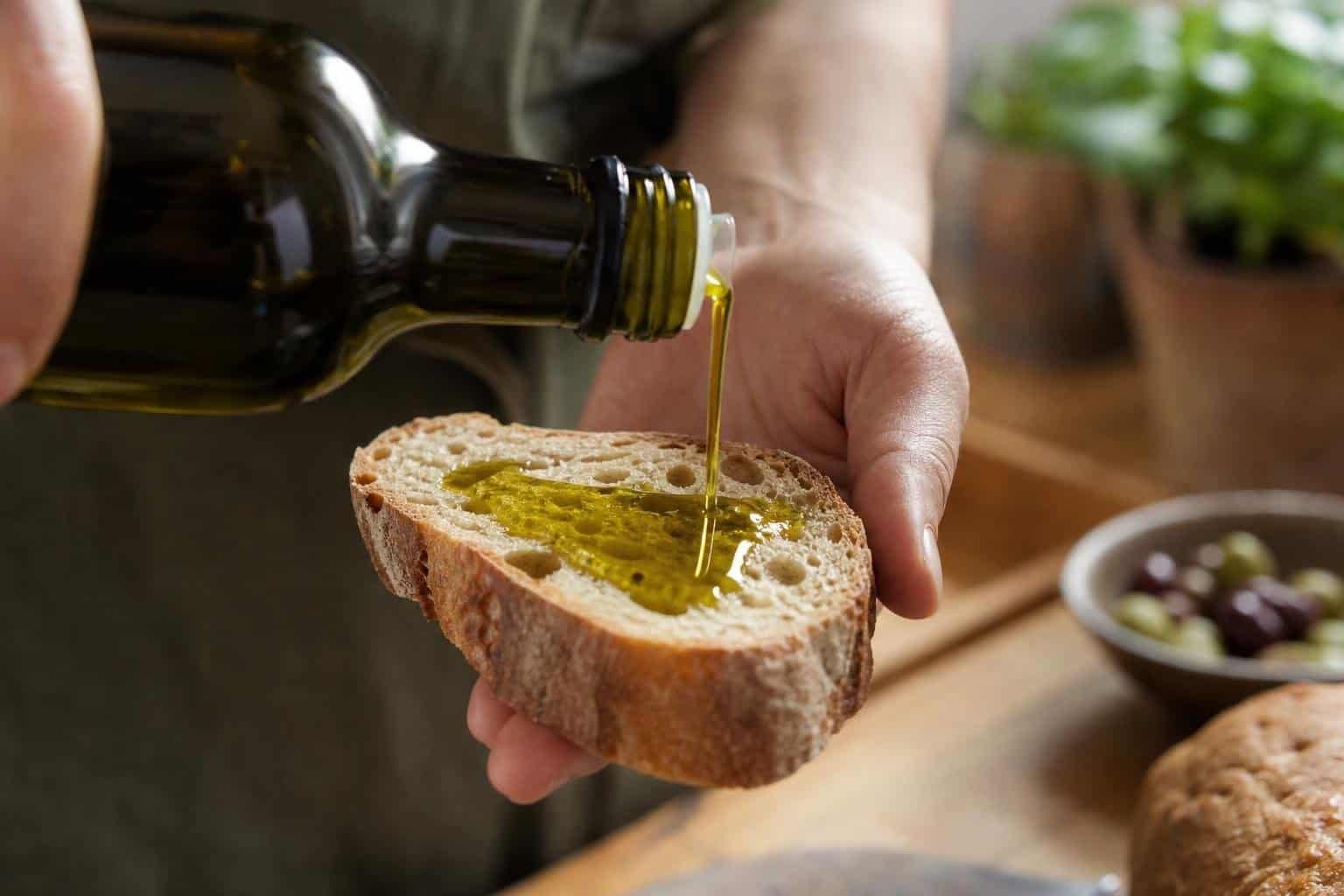
On bread — the classic bruschetta test; a good oil will make you rethink butter
-
Stirred into pasta — a spoonful at the end of cooking lifts the whole dish
-
With vegetables — roasted or raw; the bitterness of the oil contrasts beautifully with sweet roasted flavours
-
In dressings — mixed with a little lemon juice or good vinegar for a quick, balanced vinaigrette
The bitterness and peppery finish — which some people find surprising at first — are signs that the polyphenol content is doing its job. Oils that make you cough slightly on the finish typically contain higher concentrations of beneficial compounds. Think of it as a feature, not a flaw.
One thing worth knowing: even the best olive oil fades over time. Keep the bottle sealed, away from direct light and heat, and use it within 12–18 months of the harvest date. A 3L bottle shared between regular cooks tends to be used up at exactly the right pace.
A Bottle Worth Knowing
Tuscan extra virgin olive oil represents one of those cases where the details genuinely matter — variety, harvest timing, pressing method, and certification all combine to produce something noticeably different from commodity oils. Once you’ve cooked with a freshly pressed naturalna oliwa extra virgin, you’ll find it hard to go back to anything blurry or anonymous on the label.
For more context on what sets Tuscan EVOO apart — and how to use it as part of a proper Italian meal — this guide to choosing the real thing goes into the full picture. The short version: look for the harvest year, a DOP or IGP label, and a dark bottle — then pour freely.
Frequently Asked Questions
Q: What does “extra virgin” actually mean for olive oil?
A: Extra virgin is the top quality tier — the oil is obtained purely by mechanical cold-pressing, with no chemical treatment, and must have an acidity level below 0.8%. It retains the fullest flavour and the highest concentration of beneficial polyphenols.
Q: How do I know if a Tuscan olive oil is genuinely from Tuscany?
A: Look for a DOP or IGP (Toscano IGP) seal on the label. These certifications confirm the oil was produced entirely within Tuscany — olives grown, pressed, and bottled in the region — and are governed by EU regulation.
Q: Is the peppery or bitter taste in Tuscan olive oil a sign of poor quality?
A: Not at all — it’s actually the opposite. Bitterness and pungency are natural indicators of high polyphenol content. The European Food Safety Authority (EFSA) recognises that olive oil polyphenols contribute to the protection of blood lipids from oxidative stress.