How to Build an Authentic Italian Meal: Mancini Pasta, Pasquini Olive Oil and Parente Specialities on One Plate
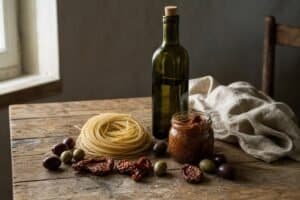
An authentic Italian meal is not built from complexity — it is built from precision: the right grain, the right oil, and the right accompaniments working in concert. That is exactly what happens when you bring together the durum wheat tradition of Italian pasta-making, Pasquini extra virgin olive oil, and the preserved vegetable specialities of Parente — three distinct Italian producers whose products share a common logic: integrity of ingredient from source to plate.
Why the Grain Matters: Mancini Pasta and the Estate Model
Most dried pasta starts with purchased semolina. Pasta Mancini starts with a field. At Mancini Pastificio Agricolo, pasta is produced exclusively with durum wheat grown and harvested annually in the fields of Le Marche, central Italy — resulting each year in a seasonal product that reflects that year’s agricultural conditions.
The story began in 1938, when Mariano Mancini founded the family wheat farm. Three generations later, his grandson Massimo — an agronomist by training — built a pasta factory in the middle of those same fields, with one straightforward aim: to produce pasta using only the durum wheat grown on their own land. That vertical integration is rare at this level of scale.
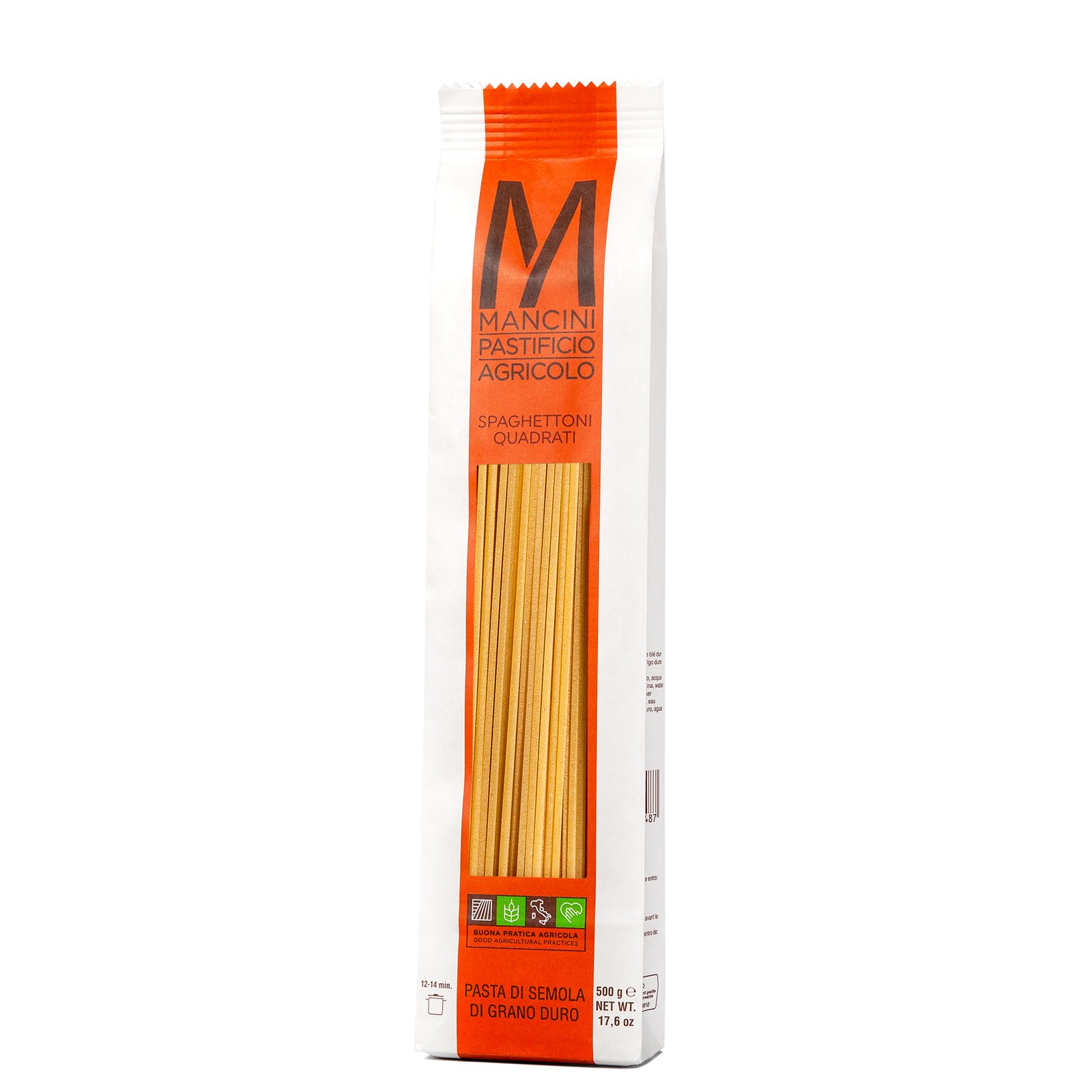
For each pasta shape, a specific die is designed with bronze inserts, which increases porosity and the pasta’s ability to hold sauces. The pasta dries slowly at gentle temperatures, retaining all its wheat flavour and nutrients. These two choices — bronze extrusion and slow drying — are the technical signatures of serious Italian pasta-making.
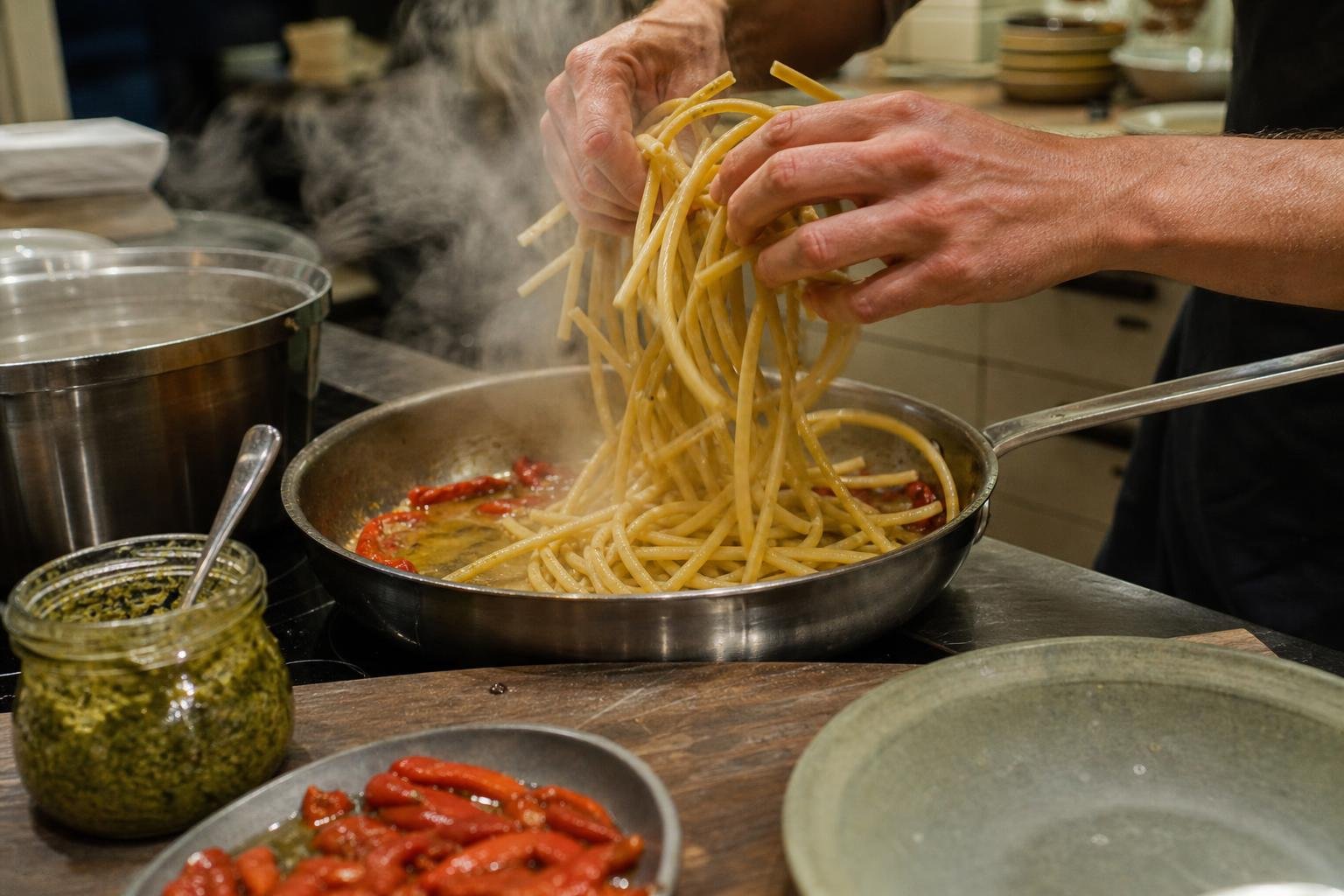
The spaghettoni quadrati format in particular rewards this approach. Its square cross-section creates four distinct edges that grip sauce more effectively than a round strand. Pair it with a quality pesto or a simple drizzle of fresh-pressed olive oil and the difference is immediately apparent.
A few things worth knowing before you cook Mancini pasta:
- Use plenty of water — the Italian standard is roughly 1 litre per 100 g of dry pasta
- Salt generously: the traditional benchmark is around 10 g of salt per litre
- Cook to al dente — the texture holds, and the flavour of the grain comes through clearly
- Reserve a ladle of pasta water before draining — it emulsifies beautifully with olive oil-based sauces
- Check the harvest year on the pack; like wine, each season has its own character
The Role of Extra Virgin Olive Oil in Italian Cooking
Olive oil is not simply a cooking medium in Italian cuisine — it is a structural ingredient. Extra virgin olive oil is not just a complement to Mediterranean pasta; it is the foundation that binds ingredients, enhances taste, and improves texture. That distinction matters when you are choosing between a generic supermarket bottle and a freshly pressed, cold-extracted oil like Pasquini.
All regional expressions of the traditional Mediterranean diet share the regular use of extra virgin olive oil as the main source of fat, both for cooking and for dressing vegetables and other ingredients. In a pasta dish, this shows up practically: sweating aromatics like garlic or onions in olive oil concentrates their flavours, and when combined with starchy pasta water, the oil emulsifies with herbs, vegetables, and seasonings.
The polyphenol content of a quality EVOO also matters nutritionally. The PREDIMED trial — a Mediterranean diet reference study with more than 7,000 participants — found that a Mediterranean diet supplemented with extra virgin olive oil reduced the risk of cardiovascular events among high-risk populations. That is one of the most cited bodies of evidence behind the Mediterranean dietary model.
For everyday use, the Olive Wellness Institute notes that the antioxidant effect of polyphenols in extra virgin olive oil ensures that harmful oxidation of fats during heating does not occur, making all usual forms of cooking in extra virgin olive oil entirely safe. A freshly pressed oil — such as the Pasquini 2025 harvest — retains higher polyphenol levels than oils that have aged on a shelf.
To get the most from a quality EVOO in pasta cooking, keep these points in mind:
- Use it raw as a finishing drizzle over hot pasta — heat destroys volatile aromatics
- Combine with pasta cooking water to create a light emulsified sauce
- Pair with pesto: the oil carries and extends the herb flavour across the dish
- Store away from light and heat; a 3-litre format like the Pasquini tin preserves freshness better than glass once opened
For a deeper look at getting the best from this oil day to day, the guide How to Use Pasquini Olive Oil in the Kitchen covers ten practical applications beyond pasta.
Completing the Plate: Parente and the Logic of Italian Preserved Vegetables
Italy has well over 350 officially recognised pasta varieties — and according to culinary experts, the total count including local variants may reach 600 or more. Each one was designed with a specific sauce or accompaniment in mind. But the logic of Italian cooking extends beyond pasta shape: the vegetables and condiments alongside it deserve the same attention.
Parente’s grilled peppers preserved in olive oil are a direct expression of that tradition. The peppers are charred to develop sweetness and depth, then conserved in oil — which continues to carry flavour into the vegetables during storage. The result is an ingredient that pulls double duty: a topping, a sauce base, or an antipasto that needs nothing added.
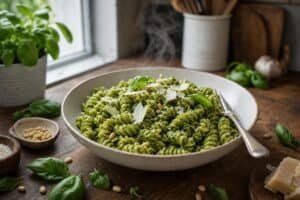
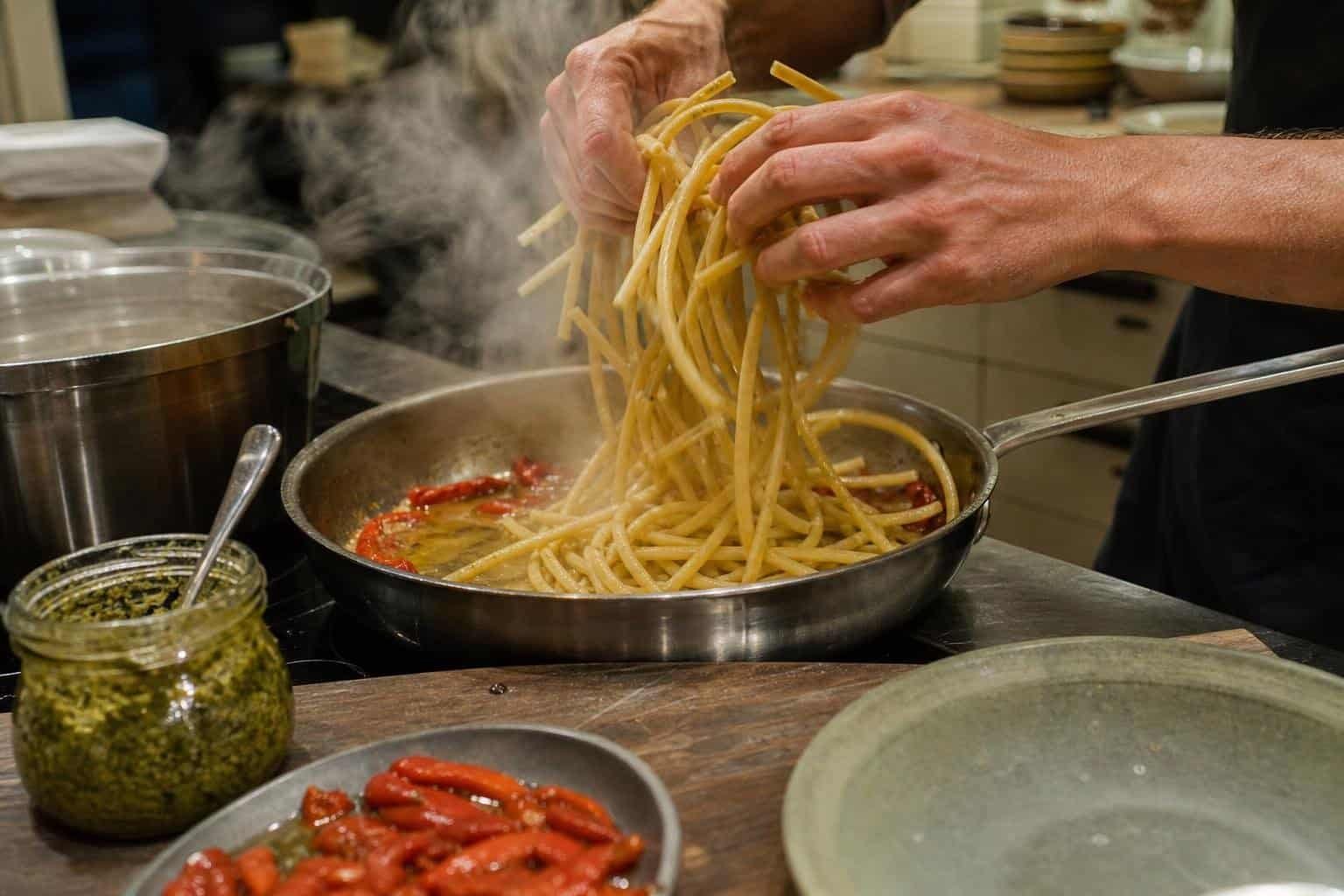
This kind of preserved vegetable is a practical anchor for a weeknight Italian meal. Toss grilled peppers through Mancini spaghettoni with a spoonful of pesto and a generous finish of Pasquini EVOO, and the three producers converge on the plate. The components are separate, the flavours are coherent.
How to use Parente grilled peppers across a meal:
- Stir directly into drained pasta with olive oil and a pinch of chilli
- Blend into a quick sauce with pasta water and garlic
- Serve alongside the pasta as a dressed antipasto
- Layer on bruschetta with a drizzle of EVOO as a starter course
For those thinking about sauce pairings more broadly, the guide on matching pasta shapes to sauces is a useful reference — it covers the reasoning behind why certain shapes work with certain textures and fat contents.
Three Products, One Plate: What to Buy
Mancini Spaghettoni Quadrati, Pasquini Extra Virgin Olive Oil (freshly pressed, 2025 harvest), and Parente Grilled Peppers in Olive Oil represent three distinct Italian production traditions — durum wheat farming, cold-pressed olive oil, and artisan vegetable preservation. Together they cover the structural and flavour needs of a properly built Italian pasta dish. Each is a standalone quality purchase; together, they form a coherent pantry foundation.


Bringing It Together: The Principles Behind an Authentic Italian Meal
An authentic Italian meal is not defined by its complexity — it is defined by the quality of a small number of well-chosen ingredients. That principle runs through everything from the Mancini estate in Le Marche, where grain variety, harvest year, and bronze-cut extrusion all feed into the flavour of a single strand of pasta, to Parente’s preserved peppers, where patience and good oil do the work.
The research behind Mediterranean eating reinforces this. The Olive Wellness Institute confirms that extra virgin olive oil as the primary fat in Mediterranean cuisine is not simply a tradition — it is associated with measurable dietary benefits when used consistently as the main cooking and dressing fat. The pasta tradition of southern Italy — built on semola di grano duro and water, nothing more — reflects the same commitment to doing simple things well.
Building an authentic Italian meal with Mancini pasta, Pasquini olive oil, and Parente specialities is ultimately an exercise in that same discipline: start with the best available ingredients, use them with care, and let the quality do the work.
Frequently Asked Questions
Q: What makes Mancini pasta different from standard Italian dried pasta?
A: Mancini grows its own durum wheat on the estate in Le Marche, extrudes through bronze dies, and slow-dries each shape — meaning every pack carries a harvest year, much like a wine vintage.
Q: Can I use extra virgin olive oil as the only sauce for pasta?
A: Yes — high-quality EVOO emulsifies with pasta cooking water to coat each strand, making it a complete, flavourful base, especially with garlic, herbs, or a spoonful of pesto added.
Q: How should I store a 3-litre tin of Pasquini olive oil after opening?
A: Keep it sealed, away from direct light and heat. A metal tin protects the oil from light oxidation better than glass; use within a few months of opening for best flavour.