Tuscan Extra Virgin Olive Oil: What Makes It Different and How to Choose the Real Thing
There’s a reason Tuscan extra virgin olive oil ends up on so many kitchen tables around the world — and it’s not just good marketing. The combination of native olive varieties, strict certification rules, and a tradition that goes back centuries adds up to something you can actually taste. For a solid overview of the official standards behind Toscano PGI, Visit Tuscany’s regional guide is a reliable starting point.
Why Tuscany? The Land and the Olive Varieties Behind the Flavour
Tuscany accounts for only around 4–5% of Italy’s total olive oil production — far less than the southern regions. Puglia alone produces more than half of Italy’s oil. That relative scarcity is partly what makes authentic Tuscan oil special: the terrain is hilly and the winters can be cold, which stresses the trees and concentrates flavour compounds in the fruit.
The native varieties used in Toscano IGP production — frantoio, leccino, moraiolo, maurino, pendolino, and correggiolo, among others — each bring something different to the blend. Frantoio is prized for its fruitiness; moraiolo for its peppery, polyphenol-rich bite; leccino for balance and smoother finish. Blending them is part of the craft.
The harvest window matters enormously. It typically opens in October and runs through December. Olives picked earlier, while still slightly green, tend to produce oil with more polyphenols and that characteristic green, grassy note. Wait too long and the fruit ripens fully — the oil becomes milder and sweeter, but loses some of its complexity.
- Frantoio: fruity, aromatic, with a pleasant almond finish
- Moraiolo: bold, peppery, high in polyphenols
- Leccino: milder, buttery, good for balance in blends
- Pendolino: delicate, often used as a pollinator variety
- Correggiolo: fresh, slightly bitter, classic Chianti character
Many producers in Tuscany — from small family estates to larger cooperatives — share this deep connection to the land and its varieties. The tradition isn’t just a selling point; it genuinely shapes what ends up in the bottle.
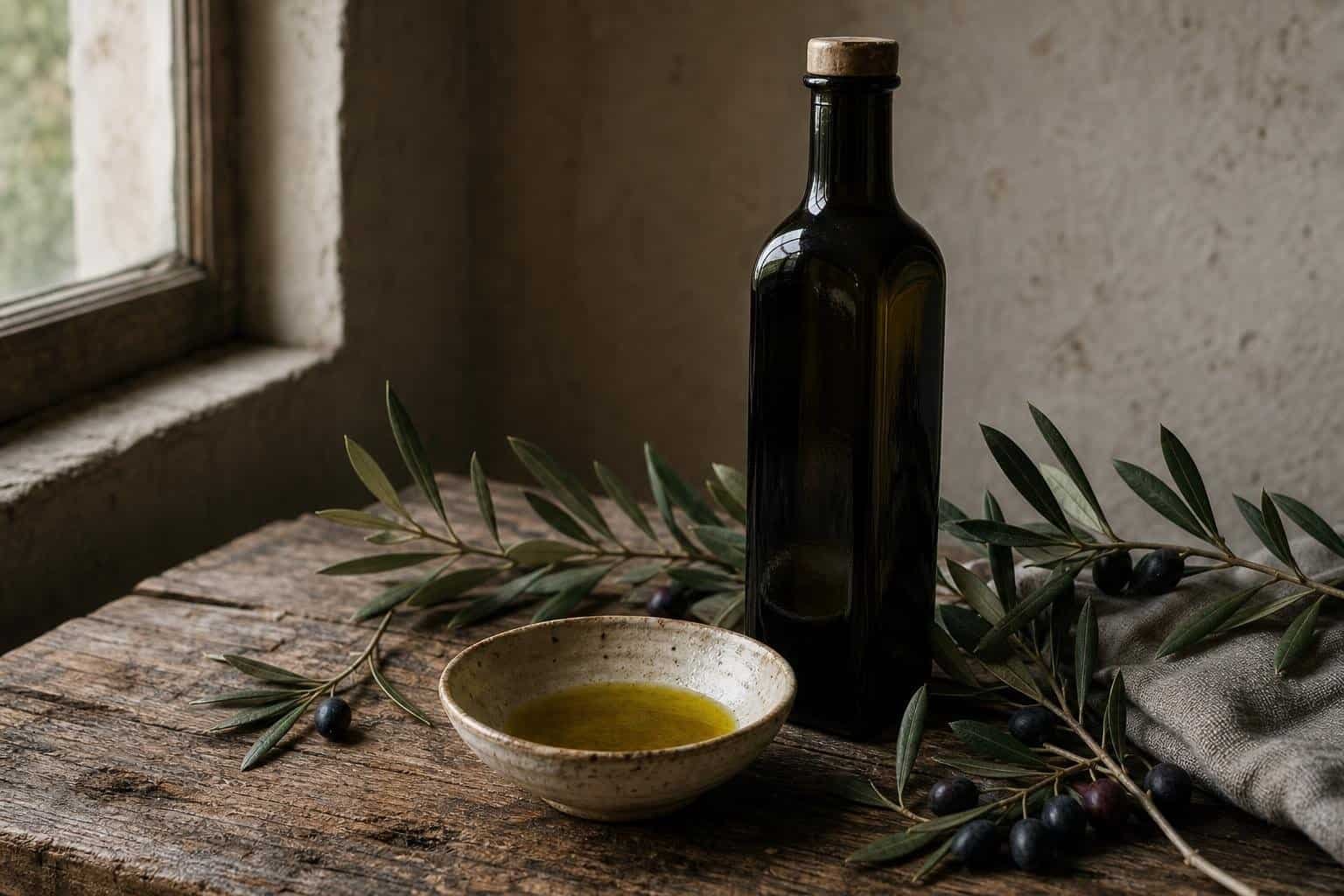
[IMAGE: quiet rustic still life on a worn wooden table: a dark glass bottle of Tuscan extra virgin olive oil alongside a small ceramic bowl with a drizzle of golden-green oil, a few fresh olive branches with small dark olives, soft side light from a nearby window, muted natural palette, no text or labels visible, candid editorial mood]
The Certification System: IGP, DOP, and What They Actually Mean
Since 1998, Tuscan olive oil has been protected under the EU’s geographical indication system. The rules for Toscano PGI (Protected Geographical Indication, or IGP in Italian) require that every stage of production — growing, pressing, and bottling — takes place within the administrative territory of Tuscany, as explained in the Visit Tuscany production guide.
There are four narrower Protected Designations of Origin (DOP/PDO) within the region — Chianti Classico DOP, Terre di Siena DOP, Lucca DOP, and Seggiano DOP — each tied to a specific sub-zone and production method. The broader Toscano IGP covers the entire region and allows a bit more flexibility on varieties while still enforcing strict geographic and quality rules.
To qualify for the Toscano IGP label, an oil must meet four key conditions:
- Olives grown exclusively in Tuscany’s eight provinces
- Pressing completed within 24 hours of harvest
- No blending with oils from outside the region
- Free acidity below 0.5% and peroxide value below 15 meq O₂/kg
The Consorzio Tutela Olio Extra Vergine di Oliva Toscano IGP — which today includes over 9,000 members, from family farms to larger cooperatives — monitors compliance at every stage. Each certified bottle carries a numbered seal and a QR code you can scan to trace the oil back to its grove, harvest date, and mill.
Over 60% of Toscano IGP production is exported, with Germany, France, the Nordic countries, the USA, and Japan among the main destinations. That international demand says a lot about how the oil is perceived beyond Italian borders.
How to Read the Label — Practical Tips for Buying Well
The label is your best tool when choosing a quality Tuscan extra virgin olive oil. A few key things to look for — and a couple of red flags to avoid.
Start with the harvest date. Extra virgin olive oil is essentially a fresh fruit juice, and its polyphenols, antioxidants, and aromas peak within roughly 3–6 months of pressing, then decline steadily. The EU allows “best before” dates of up to 18–24 months from bottling, but that reflects safety, not flavour quality. The harvest date is what matters — look for it on the label and prioritise the most recent one you can find.
Here’s a quick checklist when you pick up a bottle:
- ✅ Harvest date visible — not just a “best before” date
- ✅ Toscano IGP or a DOP seal — blue-and-yellow logo printed directly on the label
- ✅ Dark glass bottle or tin — light degrades the oil quickly
- ✅ Named olive varieties — a sign of transparency and artisan production
- ❌ Vague labels like “packed in Italy” with no origin detail
- ❌ Unusually low price for the claimed quality
- ❌ Plastic packaging or bottles stored in direct sunlight at point of sale
If you want to go a step further, the Consorzio’s traceability portal lets you type in the seal number from the bottle and pull up the full production chain — mill, province, harvest year, and audit status. It takes 30 seconds and is genuinely useful if you’re buying from an unfamiliar producer.
For more context on how authentic extra virgin olive oil from Italian artisan producers differs from mass-market options, the guide on recognising genuine Tuscan extra virgin olive oil is a useful companion read.
How to Use Tuscan Extra Virgin Olive Oil in the Kitchen
Toscano IGP oil is known for its versatility — that balance of fruitiness, bitterness, and peppery finish works well across a wide range of dishes. The bitterness and spice aren’t flaws; they’re markers of freshness and polyphenol content, and they soften beautifully when paired with food.
A few ways it works particularly well:
- Bruschetta and bread dipping — the classic way to taste the oil novo fresh from the press
- Finishing soups and ribollita — a drizzle just before serving lifts the whole dish
- Salads with bitter greens — the peppery note complements radicchio, rocket, or chicory
- Grilled vegetables and white meats — the fruity character adds depth without overpowering
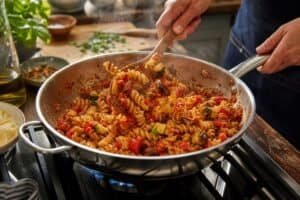
- Simple pasta dishes — a high-quality oil makes even aglio e olio genuinely special
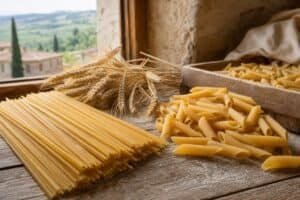
Speaking of pasta — the quality of every ingredient matters when the recipe is simple. If you’re curious about pairing a great Tuscan oil with the right pasta shapes, the Mancini pasta guide covers the differences in detail.
One practical storage tip: keep the bottle tightly sealed, away from heat and light. A cool, dark cabinet — not the shelf next to the hob — will keep the oil at its best for longer.
Is Tuscan Extra Virgin Olive Oil Worth It?
The short answer is: for everyday finishing, salads, and any dish where the oil is front and centre — yes. You’re paying for traceability, a specific terroir, named olive varieties, and a certification system that actually checks what’s in the bottle.
At maximum freshness, Tuscan extra virgin olive oil is rich in antioxidants and polyphenols — plant-based compounds that researchers, including those cited by It’s Tuscany’s olive oil guide, associate with supporting cardiovascular health and reducing oxidative stress. That’s a good reason to use it generously, not just as a special-occasion ingredient.
Tuscan extra virgin olive oil is worth buying fresh and using regularly — not saving for guests. The harvest date, the IGP or DOP seal, and the variety on the label are the three things that matter most when you’re choosing.
Najczęściej zadawane pytania
Q: What is the difference between Toscano IGP and Toscano DOP olive oil?
A: Toscano IGP covers the whole region of Tuscany with broader varietal flexibility, while the four DOPs (such as Chianti Classico or Lucca) are tied to specific sub-zones with stricter rules on cultivars and production methods.
Q: How long does Tuscan extra virgin olive oil stay fresh after opening?
A: For best flavour, aim to use it within 3–6 months of the harvest date. The “best before” date on the label reflects food safety rather than peak quality — always check the harvest date first.
Q: What flavour should I expect from a genuine Toscano IGP oil?
A: Expect a fruity, slightly bitter, and peppery profile — vegetal notes of fresh olive, artichoke, or grass, with a clean catch at the back of the throat that indicates good polyphenol content. Flat or neutral taste can suggest an older or lower-quality oil.