Types Of Italian Pesto, Uses and How to Choose the Best One
Few Italian sauces have travelled as far as pesto. Originally from the Ligurian city of Genoa, the different types of Italian pesto now span the whole Italian peninsula — each one shaped by local ingredients and regional tradition. Wikipedia’s entry on pesto traces the sauce back to a Roman-era paste called moretum, though the basil-based version we know today was first documented only in the 1850s.
Whether you are dressing pasta, spreading it on bruschetta, or stirring it into soup, understanding the main varieties helps you choose more precisely — and eat better.
The Classic: Pesto alla Genovese
This is the reference point for everything else. Pesto alla genovese is made with fresh Genovese basil, extra-virgin olive oil, Parmesan (or Grana Padano), pecorino sardo, pine nuts, and garlic. The name itself comes from the Genoese verb pestâ — to pound or crush — reflecting the traditional marble mortar technique that releases the basil’s natural oils without bruising them.
The Palatifini Association is currently preparing a proposal to have pesto alla genovese included on the UNESCO intangible cultural heritage list, which speaks to just how seriously Italy takes this sauce.
In practice, a few things make a real difference when cooking with it:
-
Never heat it directly — high temperatures turn basil bitter; stir pesto into warm pasta off the heat.
-
Loosen with pasta water — a spoonful of starchy cooking water helps the sauce coat every strand evenly.
-
Classic pasta pairings: trofie, trenette, or linguine — all traditional shapes from Liguria.
Regional Varieties: From Sicily to Calabria
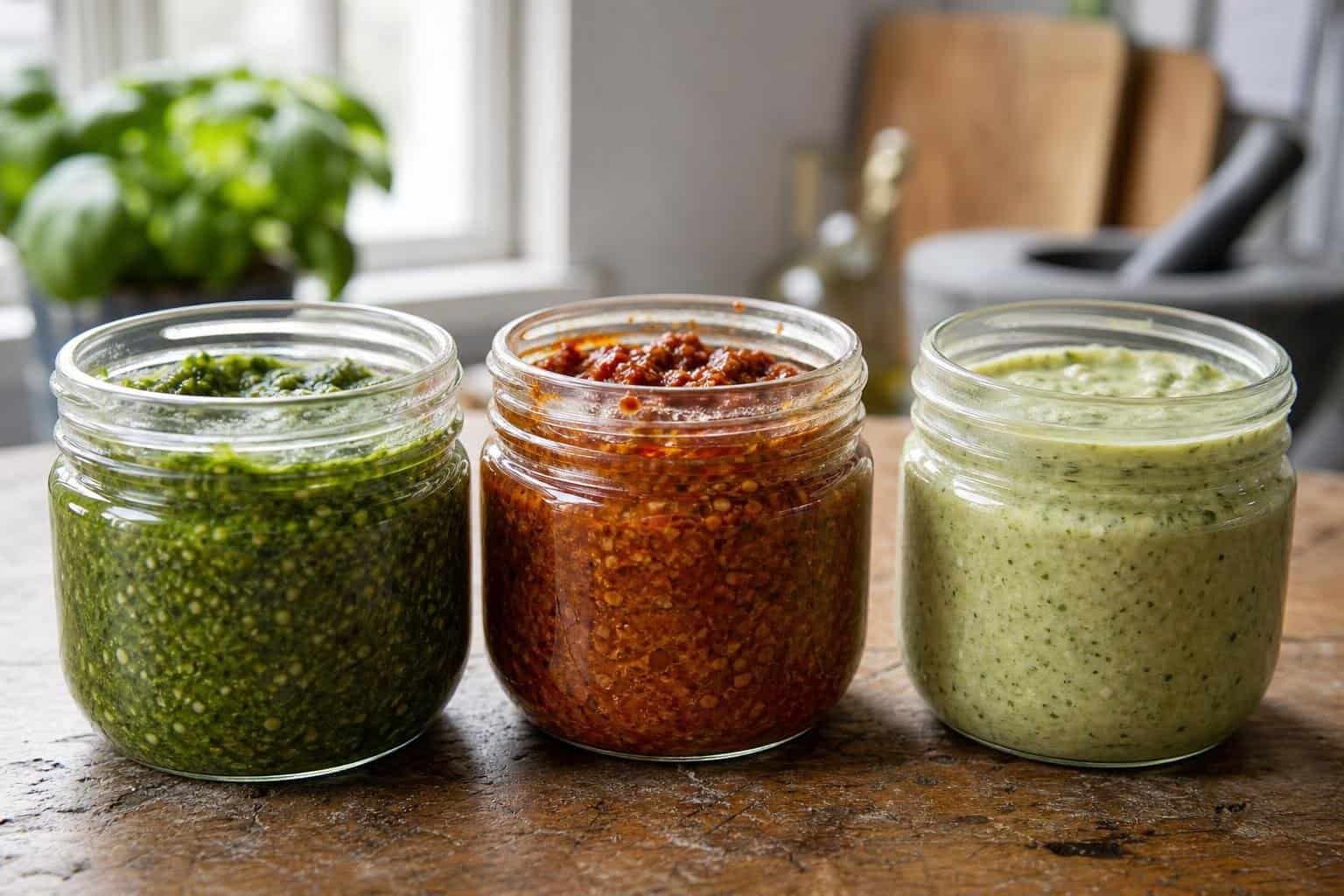
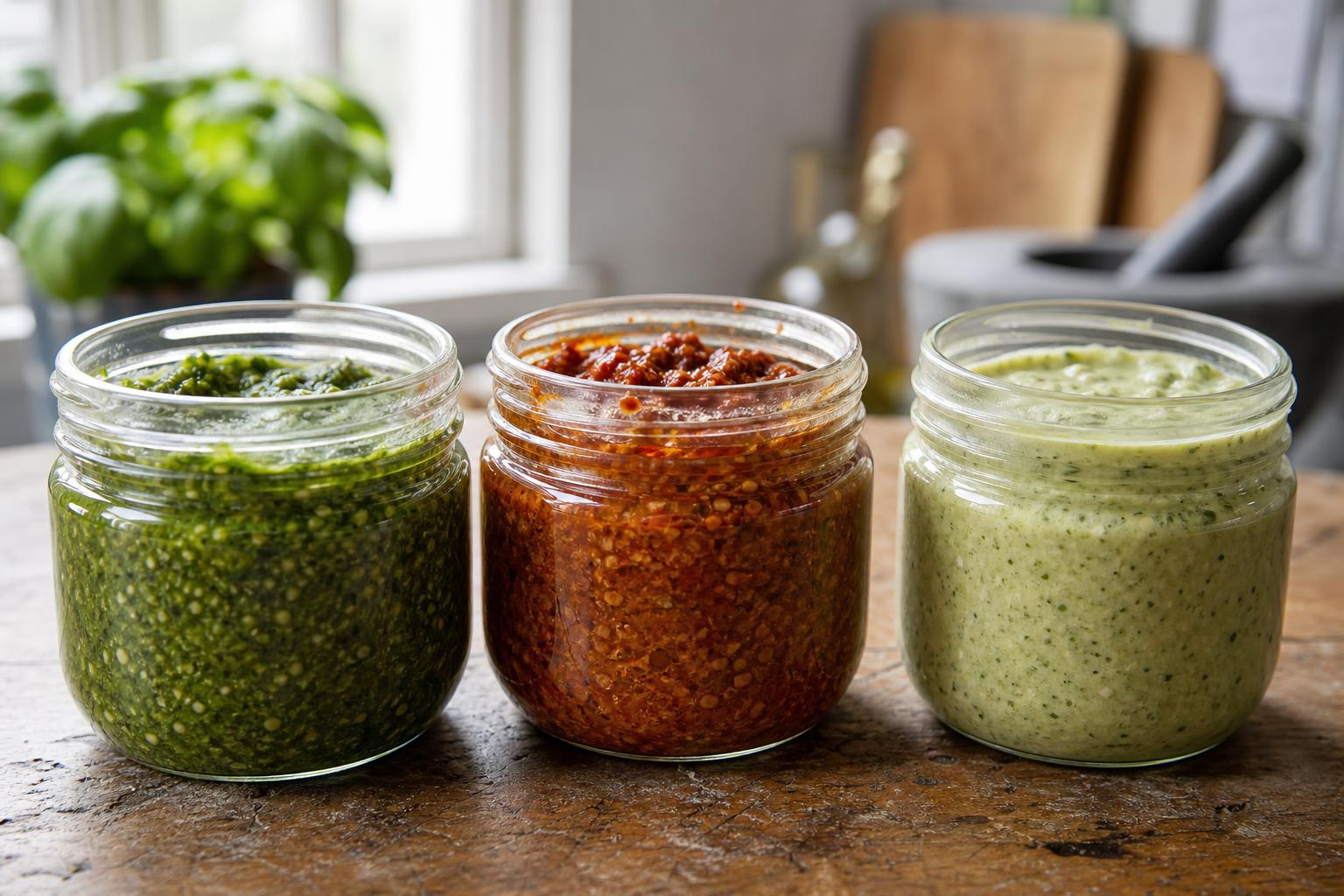
Italy’s pesto landscape extends well beyond Liguria. The Pasta Project’s guide to Italian pesto types lists over a dozen regional versions — proof that the mortar-and-pestle logic applies to almost any local ingredient.
The most important regional varieties worth knowing:
-
Pesto alla siciliana (pesto rosso) — sun-dried tomatoes and almonds replace pine nuts; deep red colour, savoury and slightly sweet; pairs well with pasta, fish, and pizza.
-
Pesto alla trapanese — from the western Sicilian city of Trapani; uses fresh tomatoes, almonds, basil, and olive oil; lighter and more delicate than the rosso version. Traditionally served with busiate pasta.
-
Pesto alla calabrese — roasted red peppers and ricotta give it a creamy, mildly spicy character; distinctly different from the green original.
-
Pesto di rucola — arugula replaces basil for a peppery, slightly bitter flavour; works well on pasta and toasted bread.
-
Pesto di pistacchi — a Sicilian specialty, particularly associated with the town of Bronte, where pistachios grown in volcanic soil deliver an unusually rich, sweet-savoury flavour.
For a closer look at how pesto alla genovese, red pesto, and arugula pesto compare as pasta sauces, the article basil, red or arugula pesto — which to choose for pasta breaks down the differences clearly.
Beyond Pesto: The Artichoke Pâté Option
The pesto category has always been broader than basil alone. Today, spreads and pâtés made from artichokes, olives, or sun-dried vegetables follow the same principle — crushed, oil-enriched, and ready to lift a simple dish. The ARTICHOKE PÂTÉ PR.ALI.NA is a good example: a finely worked artichoke paste that works much like a pesto in the kitchen — as a pasta sauce, a bruschetta topping, or a flavourful addition to grilled vegetables and white meats.
It is an especially useful option for those who cook regularly and want an alternative to the standard basil pesto without sacrificing depth or versatility.

If you would like to explore this artichoke pâté in more detail — ingredients, suggested uses, and format — you can find all the specifics below.
How to Choose a Quality Pesto
The jar label is your most reliable guide. A few clear signals separate a well-made pesto from a mass-produced one:
-
Extra-virgin olive oil first — if the oil appears lower on the ingredient list, quality may be compromised. Supermarket versions often swap EVOO for cheaper vegetable oils.
-
High herb or vegetable content — the named base ingredient (basil, tomatoes, peppers) should appear prominently, not as a minor component.
-
No fillers — potato starch or potato flakes are sometimes added to bulk out commercial pesto and soften its flavour; avoid these if you want the real thing.
-
DOP/IGP markers where relevant — labels like Parmigiano Reggiano DOP or Basilico Genovese DOP indicate certified-quality ingredients.
-
Short ingredient list — as a rule, the fewer the items, the less processed the product.
The artichoke pâté category follows the same logic: look for a clean ingredient list, a good oil base, and no artificial stabilisers.
Choosing the Right Type for Every Use
Understanding the types of Italian pesto makes everyday cooking considerably more precise. Pesto alla genovese for fresh pasta and light dishes; pesto rosso or trapanese for fish, grilled vegetables, and pizza; pesto calabrese where you want creaminess and mild heat; and artichoke or olive-based spreads when you need something more substantial or unusual.
The key, as La Cucina Italiana notes about Sicilian pesto, is that most regional variations take only minutes to prepare — and translate just as naturally to bruschetta and crostini as they do to pasta. Quality ingredients make the difference, whether you are buying a jar or starting from scratch.