How to Match Pasta Shapes to Sauces: A Complete Mancini Pasta Shapes Guide
The right pasta shape can make or break a dish — and once you understand the logic behind the pairing, cooking Italian food feels far more intuitive. This Mancini pasta shapes guide covers everything you need to know about the full range produced by Mancini Pastificio Agricolo on its own durum wheat fields in the heart of Italy’s Le Marche region. As the official Mancini Pastificio Agricolo website explains, every harvest shapes the pasta produced that year — making it a genuinely seasonal, estate product with a character no industrial line can replicate.
What Makes Mancini Pasta Different from the Start
Most dried pasta is made from wheat grown somewhere else, milled somewhere else, and extruded in a factory that has no relationship to the land. Mancini works differently. The family began cultivating durum wheat in Le Marche back in 1938, and took the rare step of building a pasta-making facility right in the middle of their wheat fields — a genuine farm-to-pasta operation that remains one of the very few of its kind in Italy.
Two production choices define the character of every Mancini shape:
- Bronze-die extrusion (trafilatura al bronzo): The dough is pushed through traditional bronze moulds rather than modern Teflon dies. Bronze creates microscopic surface roughness — tiny micro-tears that give the pasta its characteristic matte finish and help sauces cling rather than slide off.
- Low-temperature slow drying: The shaped pasta dries slowly at low heat — typically between 40 °C and 50 °C over an extended period. This protects the wheat’s aroma compounds and keeps the starch structure more intact, resulting in a firmer, more flavourful bite and superior al dente retention even after finishing in the pan.
According to the artisan pasta consortium UNICI, Mancini’s “Estate-Pasta” philosophy rests on ten foundational pillars — all centred on the idea that great pasta begins in the field, not in a mixing room. Food journalists and culinary educators continue to cite this farm-to-fork model as the benchmark for premium Italian dried pasta, and it has attracted sustained international attention as provenance-led food culture has firmly established itself as a mainstream consumer priority through 2024 and into 2025, with market research from Euromonitor International consistently ranking origin transparency among the top three purchase drivers for premium packaged food.
The result is pasta with a pronounced wheaty flavour, an al dente bite that holds up during finishing in the pan, and a surface that genuinely absorbs what you put on it. That last point matters enormously when you start thinking about which sauce goes with which shape.
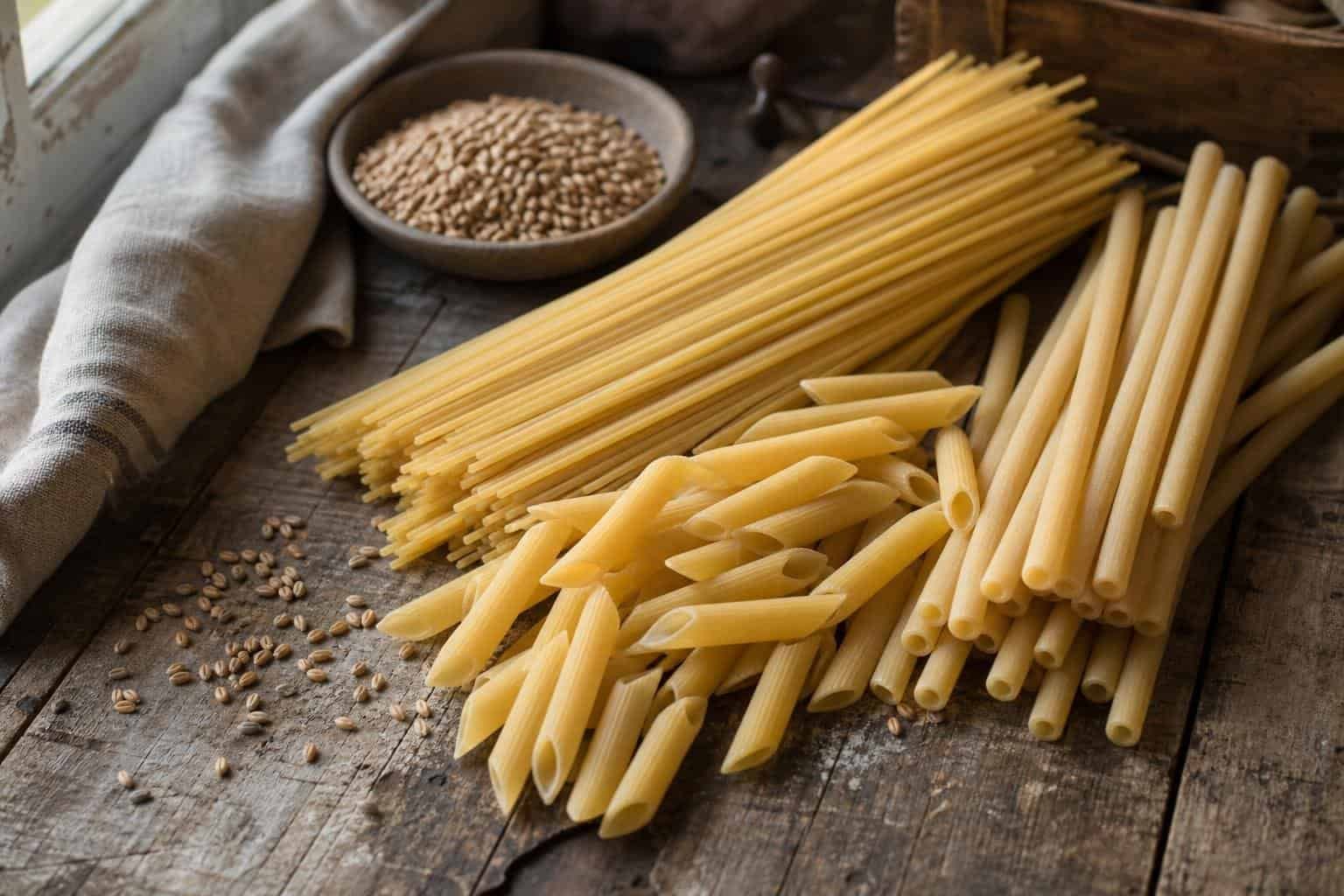
[IMAGE: Rustic tabletop still life of dried pasta shapes — long spaghetti strands, ridged penne, and thick bucatini — arranged on a worn wooden surface, soft side light from a window, durum wheat grains scattered nearby, muted natural palette, candid mood]
The Core Principle: Shape Follows Sauce
Italian pasta culture developed over centuries through regional kitchen logic: the shape of the pasta was always designed to work with the sauce beside it. Olive Magazine’s pasta pairing guide puts it simply — lighter, more delicate sauces suit thinner pasta, while chunky, heavier sauces belong with bigger shapes that collect sauce in their ridges and cavities. Food scientists studying pasta geometry and sauce hydrodynamics have reinforced this point: the shape and surface texture of a pasta format directly influence how much sauce is retained per bite, an effect measurable even at a domestic cooking scale and confirmed by peer-reviewed research in food science journals as recently as 2023.
With bronze-die pasta like Mancini, this principle is amplified. The rough, porous surface means even a long strand holds onto sauce better than a smooth, Teflon-extruded equivalent. But shape still matters — a lot.
Here’s how to think about it in practice:
- Long, thin pasta → coats evenly with smooth, fluid sauces (olive oil, tomato, seafood broths, light cream)
- Long, thick pasta → handles sauces with a little more body (amatriciana, bottarga, squid ink)
- Short, ridged tubes → trap chunky sauces and slow-cooked ragù inside and around the ridges
- Large tubes and wide shapes → built for bold, rich sauces — paccheri with seafood, rigatoni with meat sauce
- Twisted or spiral shapes → ideal for pesto and textured sauces, which nestle into the curves
The surface texture of bronze-extruded pasta means starch is released more naturally during cooking — this helps sauces integrate rather than just sitting on top, even with simple condiments like good olive oil. If you want to explore how a quality extra-virgin oil completes a pasta dish, the guide to Tuscan extra virgin olive oil is a useful companion read.
Matching Mancini Shapes to Specific Sauces
Let’s get specific about the shapes available in the Mancini range and where they shine. Each one is extruded through bronze dies and slow-dried on the estate — which means each one brings a genuine wheat flavour to the plate, regardless of what you dress it with.
Long Pasta: Spaghetti, Spaghettoni, Spaghettini, Bucatini, Linguine
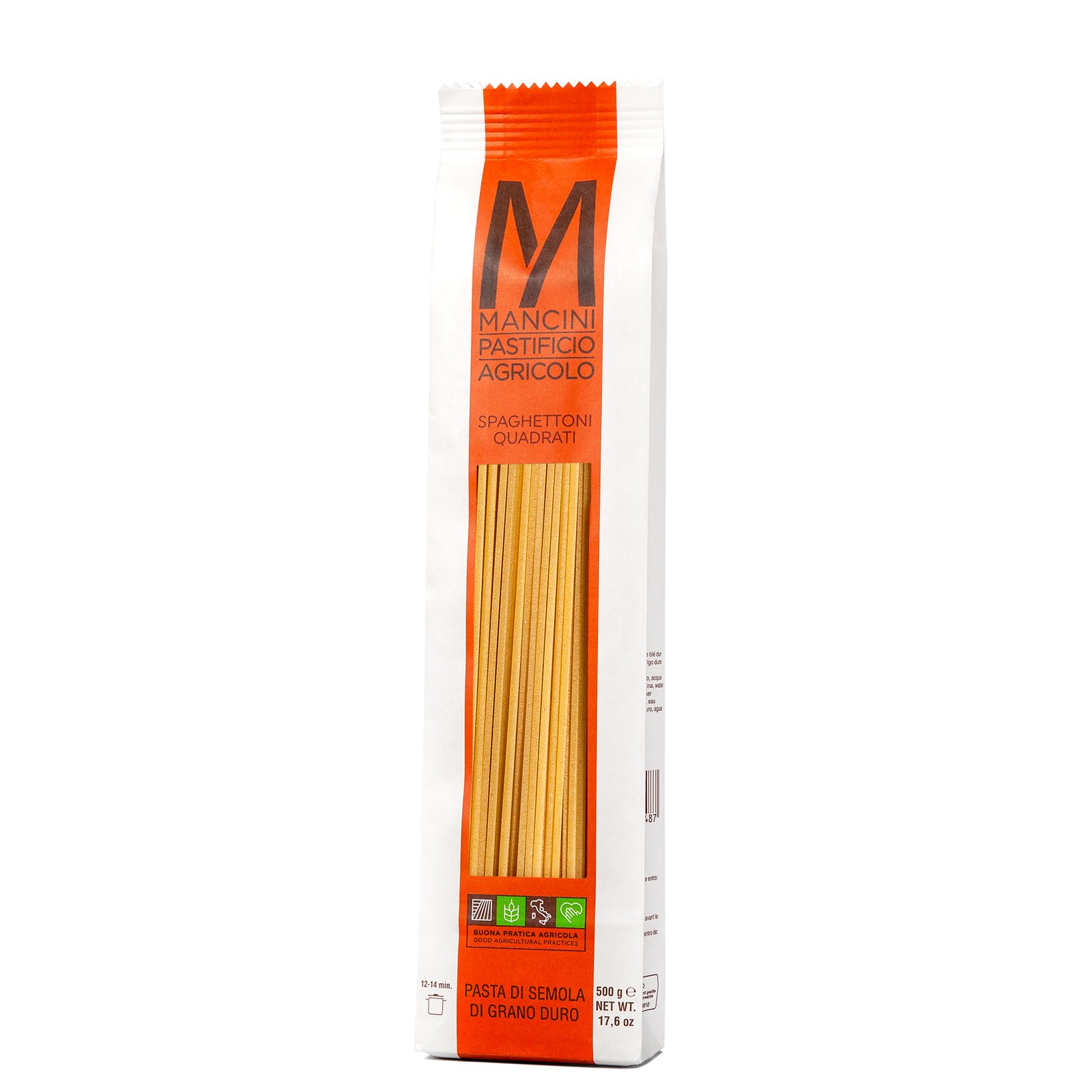
Spaghetti and Spaghettoni Quadrati are a natural match for smooth, coating sauces: aglio e olio, a simple pomodoro, carbonara-style emulsions, or seafood sauces built on olive oil and clam or prawn cooking liquor. The square cross-section of the Spaghettoni Quadrati gives it a slightly firmer bite and a touch more surface area than a round strand — worth noting when you want a little more sauce hold on a long pasta. Pasta specialists and culinary writers have consistently highlighted this format as one of the most interesting contemporary interpretations of the long pasta tradition, prizing it for both textural resilience and remarkable versatility across the range of classic Italian sauce styles.
Spaghettini is the lightest of the long shapes — delicate enough for very light sauces, fresh tomato, or a drizzle of good oil and herbs. Think of it as the shape you reach for when you want the wheat flavour front and centre, with as little interference from the sauce as possible.
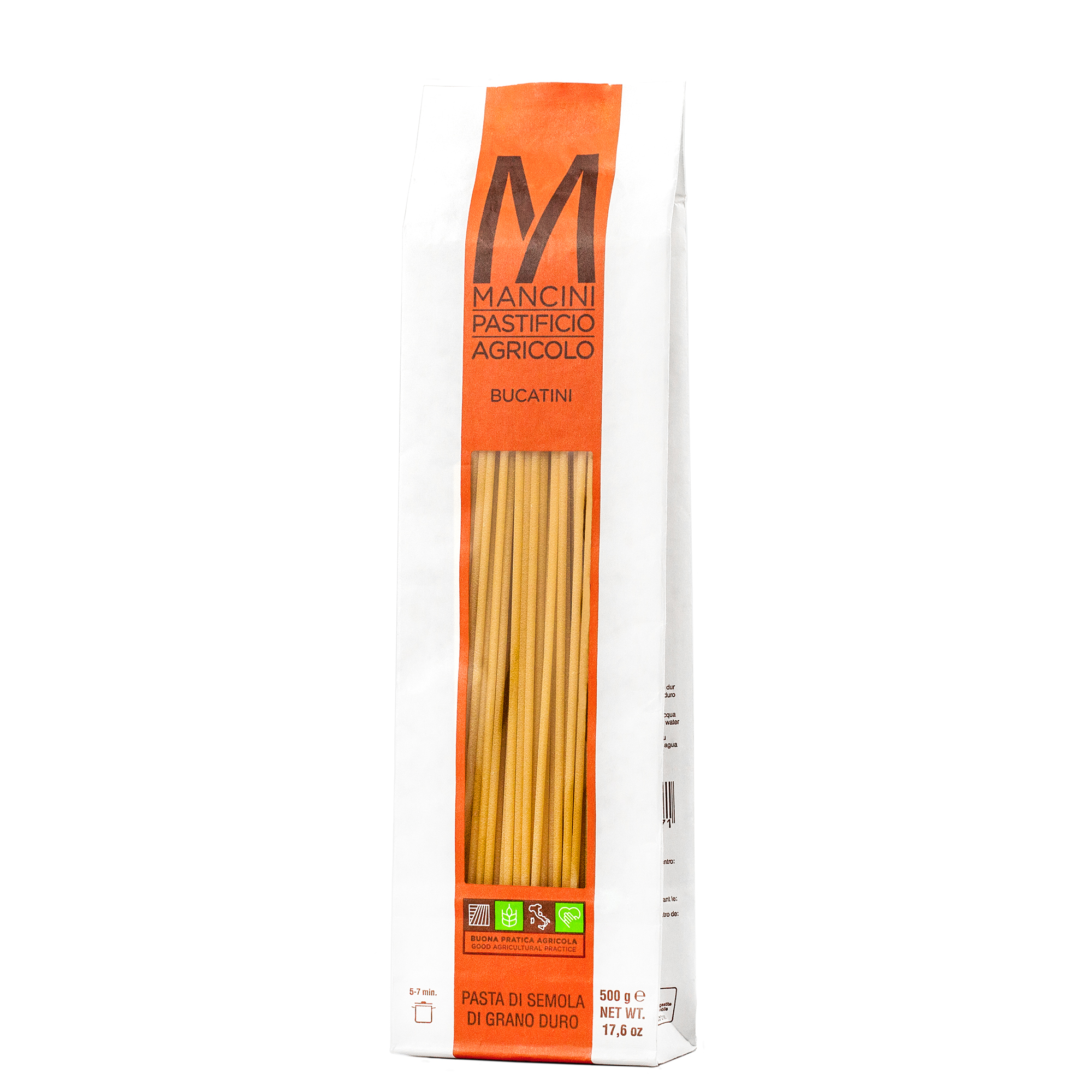
Bucatini is thicker, with a narrow hollow running through its centre. That tube catches sauce on the inside as well as the outside — which is why it’s the traditional choice for amatriciana (guanciale, tomato, Pecorino Romano) and similarly robust smooth sauces. It also works well with bottarga or a simple anchovy and tomato preparation. The late food writer Anna Del Conte memorably described bucatini as “pasta that insists on being noticed,” and it earns that reputation with every well-sauced bowl.
Linguine is flat rather than round, which increases surface contact with delicate sauces. Liguria gave us both linguine and pesto — and that pairing holds up for good reason. Linguine also excels with clams (alle vongole) and light seafood sauces where you want the sauce to coat every strand evenly without any one element dominating.
Short Pasta: Penne Rigate, Rigatoni, Paccheri, Fusilli Lunghi
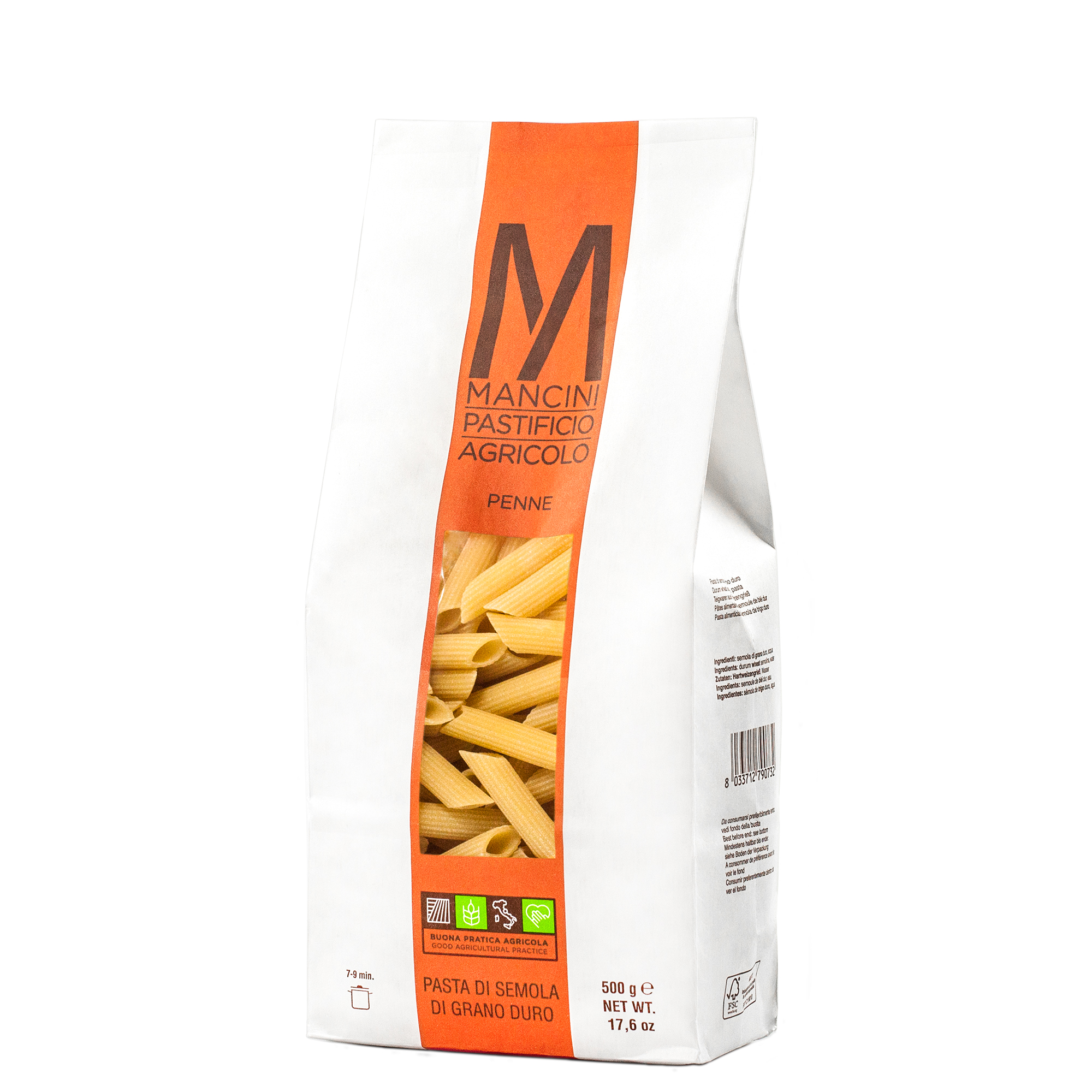
Penne Rigate is one of the most versatile shapes in the range. The ridges catch both smooth and chunky sauces — arrabbiata, Norma, or a vegetable-based ragù all work well. It’s a shape that suits everyday cooking and a wide range of Italian regional sauces, making it a reliable starting point for anyone new to the Mancini range.
Rigatoni is wider and more robust than penne. The larger tube holds chunkier pieces — sausage, braised meat, mushrooms — while the ridges on the outside grip thick sauces. It’s the shape to reach for with a slow-cooked pork or beef ragù, or a rich tomato-based sauce with aubergine. In Rome’s trattorias, rigatoni con la pajata and rigatoni alla carbonara remain benchmark dishes that have endured for generations precisely because the shape handles bold flavours so effectively.
Paccheri are large, open tubes — dramatic on the plate and excellent with bold sauces. Seafood is the classic match (paccheri con sugo di mare), but a generous Neapolitan-style tomato sauce or a slow-cooked lamb ragù works equally well. The hollow interior catches whole small pieces of prawn or mussel, making every bite more substantial. Paccheri has grown significantly in popularity outside Italy over the past decade and, by 2025, is widely regarded by culinary professionals as one of the most photogenic and impressive shapes for entertaining and restaurant service alike.
Fusilli Lunghi (long spirals) are one of the best shapes for pesto. The twisted form captures pesto in every turn, distributing it evenly through the bowl. They also work well with chunky vegetable sauces and meat-based sauces with a coarser texture. For more background on choosing the right pesto to pair with pasta, see the guide to Italian pesto types and uses.
Whole Wheat and Turanicum
Mancini also produces a whole wheat version and a Turanicum pasta made from an ancient Khorasan wheat variety — a grain cultivated in the Mediterranean basin for thousands of years and prized for its high protein content and nutty depth. Both formats have a more pronounced, earthy grain flavour than their semolina counterparts. They suit earthier companions: mushroom-based sauces, walnut and herb sauces, and simple preparations that let the wheat character speak — cultured butter and aged Parmigiano-Reggiano, or just a good cold-pressed olive oil with fresh herbs. Registered dietitians and food scientists note that ancient grain pastas such as Turanicum typically offer a more complex amino acid profile alongside higher dietary fibre content — attributes that have driven a measurable uptick in demand for heritage wheat formats across European and North American premium food markets since 2022, according to data from the International Grains Council.
Three Mancini Shapes Worth Having in Your Pantry
If you’re building a versatile Italian pantry, these three Mancini shapes between them cover most everyday sauces — from a quick weeknight aglio e olio to a slow Sunday ragù. All three are extruded through bronze dies and slow-dried on the Mancini estate in Le Marche, ensuring the same field-to-pasta quality across the range.
The Spaghettoni Quadrati handles long-pasta sauces with a little extra grip thanks to its distinctive square cross-section. The Penne Rigate brings flexibility for short-pasta dishes throughout the week, working with everything from a five-minute arrabbiata to a two-hour braised vegetable sauce. And the Bucatini adds that classic hollow-strand richness for robust, gutsy sauces that need a pasta capable of carrying real weight.
Choosing the Right Mancini Shape: A Quick Summary
This Mancini pasta shapes guide comes back to one simple rule: start with the sauce. Consider its weight, texture, and chunk size — and let that guide you to the shape. With Mancini pasta, the bronze-die surface does a lot of the heavy lifting: even a simple sauce clings better and tastes more integrated than it would on smooth, industrial pasta. The field-to-pasta production chain — from the Mancini wheat fields of Le Marche to slow-dried shapes — means you’re working with a product that genuinely rewards careful sauce matching.
As the editorial team at Gourmail notes, the combination of estate wheat cultivation, bronze-die extrusion, and extended low-temperature drying gives Mancini pasta its distinctive wheat flavour and sauce-holding texture — characteristics that set it apart from the vast majority of dried pasta available today. Consumer demand for provenance-led, artisan food products has continued to strengthen through 2024 and into 2025, with premium dried pasta among the fastest-growing segments in the broader specialty foods category according to Mintel’s 2024 Pasta & Noodles report. Mancini’s model — unchanged in its essentials since the estate first combined wheat farming with pasta production — is increasingly recognised as the ideal expression of this movement. That’s what makes shape selection feel rewarding rather than arbitrary: you’re working with a pasta that genuinely responds to what you put on it.
For a deeper look at the full range of available shapes and how Mancini approaches each one, the complete guide to Mancini pasta types and uses covers the catalogue in detail.
Frequently Asked Questions
Q: Why does pasta shape actually matter when choosing a sauce?
A: Shape determines how much sauce each piece holds and where — long thin strands coat evenly with fluid sauces, while ridged tubes and large hollow shapes trap chunky ingredients inside and around their exteriors. With bronze-die pasta like Mancini, the rough, porous surface amplifies this effect across every shape in the range, so the pairing becomes even more impactful than it would be with smooth industrial pasta. Research published in the Journal of Food Engineering has confirmed that surface geometry and texture together account for the majority of sauce-retention variance between pasta formats, lending scientific weight to what Italian cooks have long understood intuitively.
Q: What makes Mancini pasta different from standard supermarket pasta?
A: Mancini grows its own durum wheat on its estate in Le Marche — a practice dating back to 1938 — extrudes the pasta through bronze dies, and dries it slowly at low temperatures (around 40–50 °C). This combination produces a firmer texture, a deeper and more complex wheat flavour, and significantly better sauce absorption than mass-produced alternatives dried quickly at high heat (commonly above 80 °C, and in some industrial facilities reaching 120 °C or higher for rapid throughput). The estate model also means full traceability from field to finished product, something increasingly valued by consumers and professional chefs alike — particularly in light of growing awareness around food provenance since the early 2020s.
Q: Which Mancini shape is best for a meat ragù?
A: Rigatoni and Paccheri are the strongest choices — their wide tubes and ridged exteriors hold chunky meat sauces exceptionally well. Penne Rigate works for a finer-textured ragù or a Bolognese-style sauce, and Fusilli Lunghi is a good option when the sauce has a coarser, vegetable-heavy texture with large irregular pieces. For a very rich, slow-braised ragù with whole pieces of meat — a Sunday Neapolitan-style sugo, for example — Paccheri’s larger cavity makes it the most dramatic and satisfying option, both visually and in terms of sauce capture per bite.
Q: Can I use Mancini whole wheat or Turanicum pasta in place of regular semolina pasta?
A: Yes — both are interchangeable in most recipes, though their nuttier, earthier flavour profile means they shine brightest with assertive, ingredient-led sauces rather than very delicate ones. Mushroom ragù, walnut sauce, or a simple preparation with good olive oil and aged Pecorino are ideal companions. They also deliver more dietary fibre than standard semolina pasta while retaining Mancini’s characteristic al dente bite. For those exploring ancient grain formats, Turanicum is particularly worth seeking out: independent nutritional analyses have placed its protein content notably higher than modern durum wheat varieties, while its lower gluten index is reported to improve digestibility for some individuals, according to research from the University of Bologna published in 2023.
Q: Is bronze-die pasta really worth the price difference over standard pasta?
A: For most home cooks, the answer is yes — especially when sauce quality or simplicity matters. The rougher surface created by bronze extrusion means sauces genuinely adhere rather than pool at the bottom of the bowl. With a simple sauce like aglio e olio or a fresh tomato, the difference is immediately noticeable. With a complex slow-cooked ragù, it elevates the whole dish. The additional cost per portion is modest relative to the improvement in eating quality, and given Mancini’s estate-to-plate model, you are also paying for full ingredient traceability and a production philosophy that prioritises flavour at every stage. Industry surveys from 2024 consistently show that once home cooks try bronze-die pasta, the overwhelming majority choose not to return to Teflon-extruded alternatives.
Q: How should I cook Mancini pasta to get the best results?
A: Use a generous amount of well-salted water — at least one litre per 100 g of pasta — and cook to just under the packet time before finishing the pasta in the pan with your sauce and a splash of starchy cooking water. Because Mancini pasta is slow-dried and dense with flavour, the final minute or two in the pan is crucial: the pasta absorbs the sauce rather than simply being coated by it, which is where the bronze-die surface really earns its reputation. Avoid rinsing the pasta after draining, as this washes away the surface starch that helps sauce adhere. For particularly starchy shapes like Rigatoni or Paccheri, reserve a larger ladleful of cooking water — the emulsification it enables when tossed with sauce and a knob of butter or a drizzle of olive oil is what gives restaurant-quality pasta its characteristic glossy finish.
Q: Where can I buy Mancini pasta outside Italy?
A: Mancini pasta is stocked by a growing number of specialist Italian food retailers and premium grocers across Europe and North America. Online availability has expanded significantly since 2022, with several dedicated importers now offering the full range — including the Turanicum and whole wheat formats — with direct delivery. When buying online, look for retailers who store the pasta in climate-controlled conditions and provide clear information on the harvest year or production batch, both of which speak to the provenance-first philosophy that defines the Mancini range.